Table of Contents
ToggleAre the US and Iran on a collision course for war or a surprise deal?
The US’s recent military buildup near Iran signals the most significant regional deployment since the 2003 Iraq invasion. With the USS Gerald R Ford, the world’s largest supercarrier, now operating in the Mediterranean Sea and preparing to join the fleet, the strategic shift is clear. Yet, the most striking development involves six E-3 Sentry aircraft, representing almost 40% of the US inventory, stationed to monitor the area.
These airborne surveillance systems serve as “eyes in the sky,” offering over-the-horizon radar critical for managing air defenses against potential Iranian retaliation. Their deployment hints at Washington’s readiness for a larger operation, even as tensions escalate. Analysts suggest such a move could signal a campaign aimed at reshaping the regional balance of power.
Trump’s Strategy and the Cost of Conflict
Despite his reputation for opposing interventionism, Trump has consistently shown a willingness to escalate tensions. His May 2025 speech in Riyadh underscored this approach, aligning with a broader policy of confrontation. Economically, a full-scale war risks derailing his domestic agenda, as oil prices could soar to $90–$200 per barrel, amplifying financial strain.
Trump’s pressure on Israeli Prime Minister Benjamin Netanyahu to conclude the Gaza conflict further implies a desire for de-escalation. This strategy contrasts with the risk of igniting an unpredictable new front, suggesting a calculated effort to avoid prolonged hostilities.
Domestic Setbacks and the Pressure to Act
Recent domestic challenges have intensified the push for decisive action. A Supreme Court ruling, 6-3, declared Trump’s use of emergency laws to impose global tariffs as unconstitutional, dealing a blow to his economic vision. Seeking to mitigate this setback, Trump may lean on a high-profile military intervention as a political countermeasure.
Former Commerce Secretary Wilbur Ross highlighted this motive, stating that the ruling could make a US attack on Iran more probable. The logic is simple: after a public defeat, Trump cannot afford to appear hesitant in the face of Iranian defiance.
The Iranian Leadership’s Dilemma
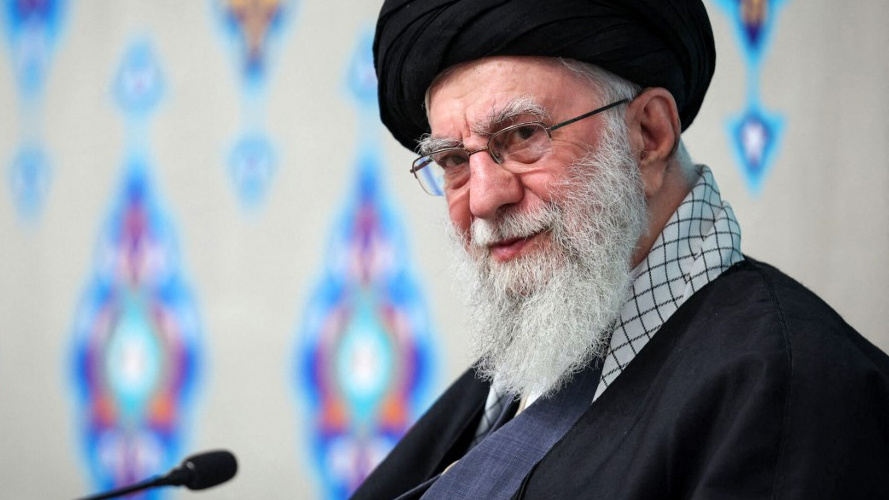
Iran’s leadership, led by Ayatollah Ali Khamenei, faces mounting pressure from within. The nation’s unrest, fueled by January’s mass protests, has left the regime struggling to maintain control. Human rights groups report thousands of arrests, with economic hardship intensifying due to sanctions and internal mismanagement.
Food inflation has surged to triple-digit levels, with the free-market exchange rate reflecting this crisis. The currency’s sharp decline sparked the January uprising, and war now poses a potential final trigger for domestic instability. Khamenei’s defiance, however, remains unshaken, as the leadership seeks to consolidate power amid growing dissent.
Meanwhile, Trump’s envoy Steve Witkoff hinted at a dual strategy. He noted the president’s interest in understanding Iran’s position, despite prior warnings of a limited strike if a nuclear deal fails. “He’s curious as to why they haven’t … I don’t want to use the word ‘capitulated’,” Witkoff said, emphasizing the tension between diplomacy and force.
“Otherwise, bad things happen,” Trump added, framing the situation as a race against time.