Burnham to Argue for More State Control in First PM Speech
Traveloasisspot.com – Andy Burnham to argue for more public oversight of Britain’s essential services is the headline of his inaugural Commons appearance as Prime Minister. Standing at the despatch box for the first time in sixteen years, Burnham will use the platform to outline what his office calls a fundamental reset of how water, energy, and transport are governed. The statement, first detailed by the Guardian, elevates public control over critical infrastructure to a top-tier government priority for the months ahead.
The underlying logic is that decades of market-driven delivery have left households paying more for less reliable services. Burnham to argue for more state stewardship, he contends, is not a retreat from enterprise but a precondition for household relief and wider economic momentum. The framing treats public ownership as an investment in stability rather than a fiscal burden.
Immediate Parliamentary Tests
A source at Number 10 captured the government’s tone in characteristically upbeat language:
“Andy is optimistic about our country’s future. He has a clear plan for how we turn things round. He is determined we make this the moment we bring back hope.”
That optimism faces an immediate stress test. MPs across the chamber will subject the Prime Minister to roughly two hours of questioning on Tuesday, probing not only the services agenda but the full slate of policies announced over the summer. Among those: a VAT reduction on household energy bills taking effect in October, and a sharp cut to business rates for pubs and nightclubs aimed at easing pressure on the hospitality sector.
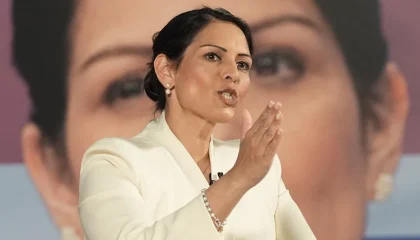
The parliamentary gauntlet extends to Wednesday, when Burnham will face his first Prime Minister’s Questions against Conservative leader Kemi Badenoch. Badenoch arrived at Westminster on Bank Holiday Monday having reshuffled her shadow cabinet, dismissing senior figures including Sir Mel Stride and Dame Priti Patel in a move designed to sharpen the opposition bench before the autumn session.
Inherited Liabilities: Defence, Utilities, and North Sea Assets
Beyond the services manifesto, Burnham inherits a stack of unresolved decisions from the Starmer government. Chief among them is a £4.7 billion shortfall in the defence investment plan. Chancellor John Healey, who stepped down as defence secretary earlier this year over a funding dispute pivotal to Starmer’s political collapse, has pledged that defence will sit at the centre of Treasury planning.
Speaking to The Times, Healey outlined the government’s trajectory toward NATO’s spending commitments:
“For the first time at the spending review, we will set out a clear path about how we meet that Nato commitment in 2035, of 2.5% of GDP. And as part of setting out that clear path, we will set that target date for 3%.”
The question of whether struggling utilities such as Thames Water should be brought under outright government ownership also looms large, as does the fate of two major North Sea fossil-fuel operations, the Rosebank and Jackdaw fields. Both represent billions in potential revenue and thousands of jobs, yet they sit in tension with the government’s stated climate trajectory.
A flagship Bill to tighten immigration law is expected to reach the chamber this autumn, alongside calls from within the government’s own ranks to amend electoral legislation. The SNP has seized on what it characterises as a pattern of policy reversals, urging that Burnham be awarded a “Guinness World Record for U-turns” — a jab that underscores the fragility of his mandate.
Elsewhere on Tuesday, Justice Secretary Alex Norris will present the government’s plan to create an early-release scheme aimed at alleviating chronic prison overcrowding. Following a public backlash, Burnham stated that those convicted of killing Thames Valley Police officer Andrew Harper would be excluded from the scheme. He had initially resisted narrowing the eligibility criteria after it emerged that Albert Bowers and Jessie Cole, convicted of PC Harper’s murder, would otherwise qualify.
Frequently Asked Questions
When does the VAT cut on household energy bills take effect? The reduction is scheduled to take effect in October, as confirmed in the government’s summer policy announcements.
What is the government’s stated NATO spending target? Chancellor Healey has committed to meeting the 2.5% of GDP NATO commitment by 2035 and has set a target date for reaching 3% of GDP.
Will Thames Water be nationalised? The question remains under active consideration. Burnham’s Commons statement elevates public control over utilities to a top priority, but no final decision on outright ownership has been announced.
Who will Burnham face in his first PMQs? Conservative leader Kemi Badenoch, who reshuffled her shadow cabinet on Bank Holiday Monday ahead of the autumn session.