Cambridge’s Youngest Black Professor Found Dead in South London as Plagiarism Row Intensifies
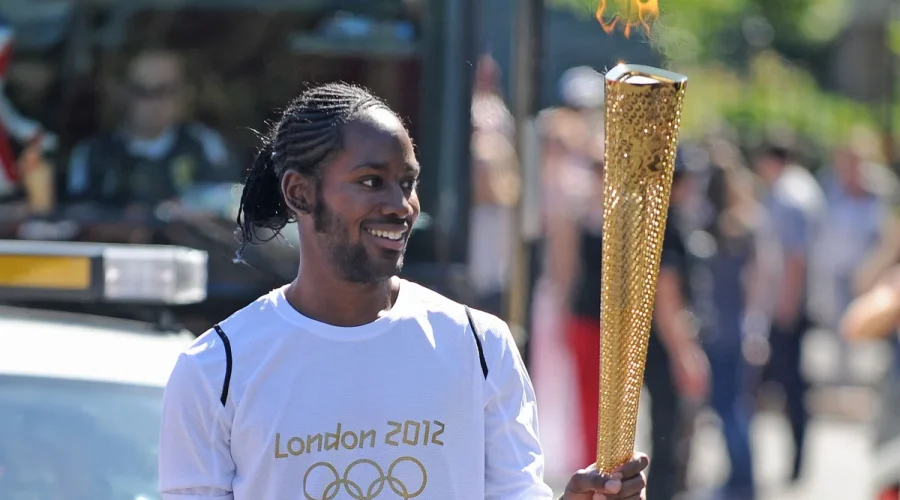
Traveloasisspot.com – Professor Jason Arday, the 41-year-old sociologist who made history in 2023 as Cambridge University’s youngest black professor, was discovered dead in Battersea, south London, on Friday. His death comes days after he stepped down from his chair in the sociology of education following sustained allegations of plagiarism attached to his doctoral thesis and several journal publications.
The circumstances surrounding Arday’s passing have drawn sharp reactions from across the political and academic establishment. At the centre of the storm is a question that has haunted British universities for decades: how quickly institutions rush to celebrate symbolic milestones, and how quickly they retreat when scrutiny arrives.
Chancellor’s Statement: Two Principles Held at Once
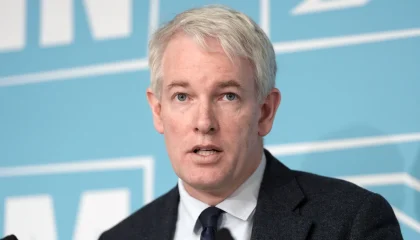
Lord Chris Smith of Finsbury, chancellor of the University of Cambridge, issued a statement — first carried by the BBC — in which he attempted to thread a needle between institutional accountability and human dignity.
“I do believe it is possible to hold to two principles at the same time: to believe in the importance of academic integrity, and where criticisms of plagiarism arise, about any academic, whoever they are, ensure that they are rigorously investigated. And also to refuse to join in a racist feeding frenzy over a particular academic.”
The phrasing was deliberate. By naming racism explicitly while simultaneously affirming the need for rigorous investigation, Smith signalled that Cambridge would not treat the plagiarism question as a pretext for a broader cultural narrative, nor would it dismiss the narrative entirely. The statement landed in a moment when public sympathy had already crystallised around Arday’s family, and when pressure was mounting on the university to explain why its vetting processes had not caught alleged problems earlier.
Cleverly: “Bragging Rights” and the Cost of Speed
Sir James Cleverly, shadow housing secretary and the first black person to hold both the Home Secretary and Foreign Secretary portfolios, spoke on BBC Radio 4’s Today programme to offer a more pointed critique of the appointment culture that propelled Arday into the spotlight.
“It could and should have never come this far. If people within the university establishment, not just Cambridge, had done the robust due diligence and checking that should happen with any senior academic appointment.”
Cleverly argued that the excitement surrounding Arday’s 2023 elevation — the emphasis on his age and ethnicity rather than his scholarly output — created a trajectory that made the eventual fall more damaging.
“I can’t help but feel that the rush to use Jason Arday as a bragging right by some universities – the glee with which they said ‘we’ve got the youngest-ever black professor’, talking about his age and his ethnicity rather than his talent, I think was part of the reason he was lifted so high so quickly. And then when the scrutiny did come – external to the universities – his reputation had so far to fall. I think it was unfair on him and I think it’s been a terrible, terrible situation.”
His remarks touched on a structural problem in UK higher education: the tension between diversity targets and the expectation that every appointment withstands the same evidentiary scrutiny applied to any other candidate. When a hire becomes a headline, the institution’s own marketing department effectively becomes its first critic.
Coronial Investigation Underway
Arday’s death was formally referred to the Coroner for the Inner South District of Greater London on Saturday. No medical cause of death has been provided, meaning the coroner’s office will conduct its own investigation. Officials cautioned that findings may not be available “for several weeks,” and that only after that process concludes will a decision be taken on whether a full inquest should be opened.
The absence of an immediate cause of death has, predictably, fed speculation in online spaces. The coronial system in England and Wales operates on a presumption of inquiry until evidence directs otherwise; a referral does not imply suspicion, but it does mean the matter will receive formal examination before any closure.
Downing Street Weighs an Inquiry
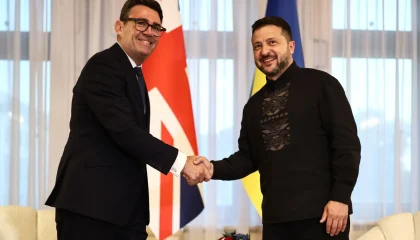
Government spokespeople at No. 10 declined to confirm whether Andy Burnham, the Prime Minister, was contemplating a formal inquiry into the circumstances of Arday’s death. The official line was that it was “right for us to let processes conclude,” pointing specifically to the coroner’s investigation as the mechanism that must run its course first.
When pressed on whether a “Leveson 2” — a public inquiry modelled on the 2012 Leveson Inquiry into press standards — was on the table, a No. 10 spokeswoman reiterated the Prime Minister’s weekend remarks describing the episode as “a tragedy on so many levels” and expressing that his thoughts were with everyone who had known Jason. She added that Minister Pennycook had urged the public to think “compassionately about the situation without getting into a debate,” and to focus on Arday’s family and loved ones.
On whether decisions about a potential inquiry would be deferred until after any inquest, the official repeated that the government would not make “judgments on the specific details at this stage,” leaving the question formally open but practically suspended.
The Plagiarism Question: What Was Investigated, What Was Not
Cambridge initially stated that allegations concerning Arday’s doctoral thesis and certain journal articles had been examined by Liverpool John Moores University (LJMU), which awarded his PhD in 2015, and by the journals involved. LJMU concluded that no plagiarism had occurred.
Nevertheless, last week Cambridge announced an independent investigation into the circumstances of Arday’s appointment itself — a distinct inquiry from the plagiarism question, focused on whether the university’s vetting and hiring processes were adequate. The timing of that announcement, landing in the same week as his resignation, compressed two separate institutional questions into a single public narrative.
For readers unfamiliar with the mechanics: a plagiarism finding and an appointment-process review are procedurally different. The former asks whether a specific text was copied without attribution; the latter asks whether the institution followed its own internal checks before conferring a chair. Both can be answered independently, and neither automatically implies the other.
Why This Story Matters Beyond One Appointment
Arday’s case has become, within a matter of weeks, a pressure test for several institutions at once: a research university’s hiring governance, a coroner’s office, the government’s appetite for public inquiries, and the media’s appetite for narrative. Each of those bodies operates on different timescales and different evidentiary standards, and the collision between them is producing a story that resists simple summary.
What is not in dispute is the human cost. A family in Battersea has lost a son, a brother, a partner. The academic and political machinery surrounding his death will continue regardless of their wishes, and the question of how much weight that machinery should carry — and how much space should be left for private grief — is perhaps the most important question the story poses.
Related Reading
Frequently Asked Questions
What is Cambridge chancellor condemns racist feeding frenzy?
Cambridge chancellor condemns racist feeding frenzy is the main topic of this guide. The article explains the context, practical details, and next steps readers should understand.
Why does Cambridge chancellor condemns racist feeding frenzy matter?
Cambridge chancellor condemns racist feeding frenzy matters because readers are looking for a useful answer, not just a short summary. Good content should match search intent and help them decide what to do next.