Nigel Farage Steps Down as MP to Challenge Clacton in By-Election Amid Financial Scrutiny
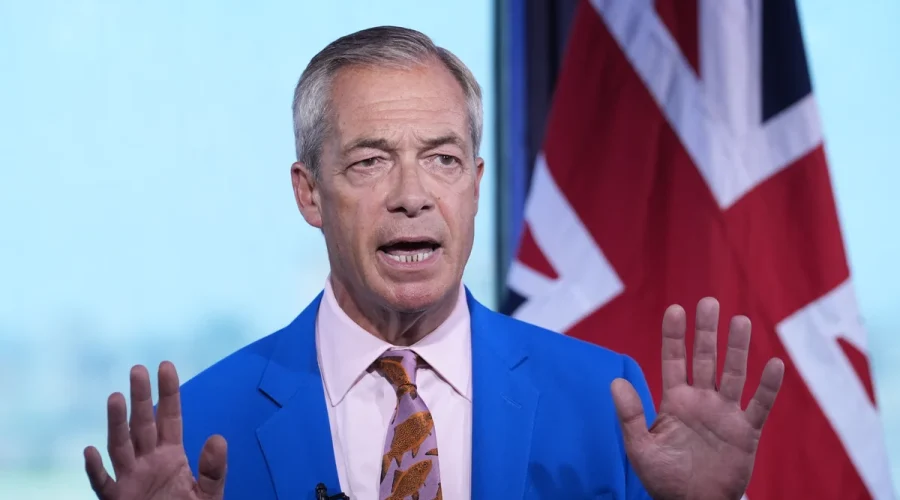
Traveloasisspot.com – Nigel Farage, the leader of Reform UK, has decided to resign from his parliamentary seat to contest a by-election in Clacton, aiming to demonstrate his alignment with voters in a “people versus the establishment” campaign. This move follows mounting pressure from financial investigations that have questioned his financial dealings. Farage claims that the parliamentary inquiry into his conduct is being used as a political weapon, asserting that it reflects the broader establishment’s efforts to undermine his movement.
The Reform UK leader plans to withdraw from the House of Commons in his constituency, triggering the by-election as a form of protest. Political opponents have criticized this strategy, labeling it a “stunt” and accusing Farage of displaying a “hissy fit.” The by-election, which is expected to cost approximately £450,000, has raised questions about the independence of the democratic process, with critics arguing that Farage’s self-funded campaign may weaken public trust in electoral integrity.
Financial Scrutiny and Key Allegations
Farage’s resignation is linked to ongoing inquiries into his financial support. One major focus is the role of George Cottrell, a convicted criminal, who allegedly provided significant backing. Cottrell, 32, is said to have recruited and paid three staff members to manage Farage’s social media activities prior to the general election. Additionally, he continues to rent a five-storey Georgian property near Buckingham Palace for Farage’s use, raising concerns about potential conflicts of interest.
Another point of contention is a £5 million gift from Christopher Harborne, a Thai-based crypto-billionaire. Under the rules of the House of Commons, new MPs must disclose gifts exceeding £300 received in the past year unless they can prove the gift was unrelated to political activities. Farage defended his financial decisions, stating he had followed the rules diligently and received sound legal advice. However, the scrutiny has intensified, with some questioning the transparency of his campaign funding.
Farage’s Defense and Media Criticism
In his statement, Farage accused the media of unfairly targeting his family, claiming they had “harangued” his daughter. He cited an incident where the editor of the Times newspaper published a photo of his daughter’s home without prior notice. “There is no public interest in my daughter whatsoever,” he said, emphasizing that the media’s actions were politically motivated.
“For some reason, last week the editor of the Times newspaper decided to publish a picture of where my daughter lives. There is no public interest in my daughter whatsoever.”
Farage also criticized Sky News for allegedly pressuring his family during a recent investigation. He described the media as a “harassing” force, arguing that their coverage had distorted his public image. “I’ve decided that the people of Clacton should be the judges of my actions,” he stated, framing his decision as a direct appeal to voters rather than a personal attack.
The Times and Sky News have both defended their reporting. Sky News noted it had made “reasonable efforts” to contact Farage with “legitimate questions” about his property holdings. The broadcaster acknowledged that its team had approached the property off-camera, identified themselves, and the occupant had chosen not to engage. The Times, meanwhile, included the photo as part of an investigation into Farage’s asset portfolio, highlighting potential links between his personal and political finances.
Political Reactions and Future Implications
Political rivals have expressed skepticism about Farage’s motivations. Sir Ed Davey, the leader of the Liberal Democrats, called the by-election a “stunt,” urging other parties to avoid participating. Similarly, Conservative leader Kemi Badenoch confirmed her party would not field a candidate, describing Farage’s actions as a “hissy fit.” These criticisms suggest that his decision may be seen as a calculated move to draw attention to Reform UK’s agenda.
Farage’s resignation could have lasting effects on the parliamentary inquiry. Currently, the investigation led by Parliamentary Standards Commissioner Daniel Greenberg is on hold, but it will resume if he wins the by-election and returns to Parliament. If found to have violated rules, a suspension lasting more than 10 sitting days could trigger a recall petition, potentially leading to another by-election in Clacton.
Farage’s decision also underscores the challenges facing political leaders under increased scrutiny. While he maintains that he has acted within the law, the allegations have sparked debate about transparency in public office. His previous election win in 2024, with a majority of 8,405 and 46.2% of the vote, highlights his popularity in the constituency, which may bolster his chances in the upcoming contest.
Broader Context and Public Perception
The by-election is not just a political maneuver but also a symbolic stand against the establishment. Farage has framed it as an opportunity to challenge the status quo, emphasizing his commitment to grassroots support. However, the financial aspects of his campaign have cast doubt on his claims of independence. The cost of holding the poll, estimated at around £450,000, adds to the debate over whether his decision is a genuine protest or a strategic move to secure media attention.
Farage’s allies within Reform UK have likely supported his decision, viewing it as a way to rally voters and reassert his leadership. Yet, the opposition has seized on the moment to question his credibility. Labour sources have argued that a political figure covering the costs of a by-election undermines the fairness of the process, suggesting that Farage’s self-funding may appear as an attempt to control the narrative.
As the by-election approaches, the focus will remain on Farage’s ability to reconcile his financial decisions with public expectations. His resignation has already drawn attention to the broader issue of political accountability, with his critics accusing him of using the parliamentary rules to his advantage. Meanwhile, Farage’s supporters see the move as a bold step to restore trust in his leadership and showcase his dedication to the people he represents.
Ultimately, the outcome of the by-election will determine whether Farage’s strategy is seen as a successful campaign or a political spectacle. The scrutiny over his finances has created a backdrop of tension, but his decision to step down reflects his belief that the establishment’s methods are unfair. As the vote nears, the focus will be on how the public perceives his actions and whether his vision for Reform UK can gain traction in the eyes of voters.