Andy Burnham’s Devolution Pledge Sparks Debate with Scotland’s First Minister
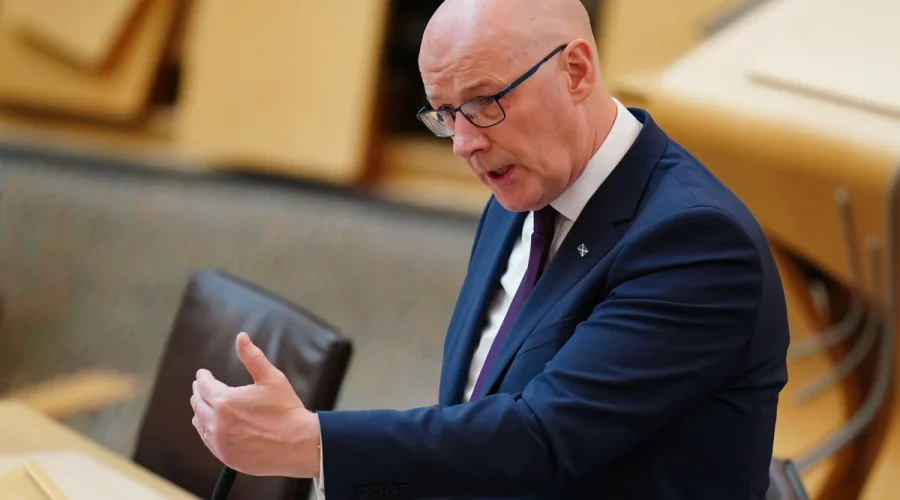
Rhetoric alone will not cut it says – Scotland’s First Minister, John Swinney, has emphasized that “merely speaking about devolution isn’t enough,” as Andy Burnham, the prospective next prime minister, unveiled a plan to restructure Britain’s political landscape. Burnham, who recently won the Greater Manchester constituency, outlined a vision centered on redistributing authority across the United Kingdom, with a particular focus on empowering regions and nations. However, his proposals have drawn scrutiny from Scottish political leaders, who argue that the lack of concrete details undermines the credibility of his promises.
Burnham’s Devolution Vision and Number 10 North
Burnham’s address, delivered in Manchester, marked his first significant speech since Sir Keir Starmer announced his departure from the Prime Minister’s role. The new leader pledged to establish “Number 10 North,” a decentralized hub in the city designed to drive reforms and reallocate power across the UK. This initiative aims to address the perceived disconnect between England’s regions and the central government, with Burnham asserting that “the era of Whitehall resisting the transfer of authority to local areas is over.”
He highlighted concerns about the distance felt by communities like Dundee and Bangor from national institutions, stating that these regions “feel just as detached from Holyrood and the Senedd as they do from Westminster.” Burnham framed Number 10 North as a strategic center to “reimagine Britain’s governance model,” with the goal of ensuring that decisions about economic and social policies are more reflective of local needs. Yet, critics argue that the focus of his speech appears to be more on English regions than on Scotland’s distinct position within the UK.
Swinney’s Push for Scotland’s National Autonomy
Swinney, addressing Burnham’s remarks, stressed that Scotland’s aspirations extend beyond mere symbolic gestures. “Scotland is not just another part of the UK—it is a sovereign nation,” he declared, urging the incoming leader to grant more tangible powers. Specifically, he called for Scotland to have greater control over job creation and energy policy, arguing that these areas are critical for addressing the country’s economic challenges.
“I have listened to Andy Burnham’s ideas, but empty words won’t be enough when Scotland needs stronger tools to boost employment and reduce energy costs. We must see clear action, not just promises,” Swinney said.
The First Minister emphasized that Scotland’s recent pro-independence majority in the Scottish Parliament has gone largely unheeded by previous governments. He challenged Burnham to “recognize the national right to self-determination” by supporting a referendum if the new prime minister believes in empowering people to decide their future.
SNP’s Criticism of Burnham’s Devolution Framework
Dave Doogan, the SNP’s Westminster leader, accused Burnham of “repeating the same hollow pledges” to Scotland while maintaining Westminster’s existing policies. “He’s promising more power for the regions but keeping Brexit, austerity, and Tory spending rules intact,” Doogan remarked. The SNP has long advocated for meaningful devolution, yet Doogan claimed Burnham’s proposals lack the substance needed to improve daily life for Scots.
“Andy Burnham seems to view Manchester as the heart of the UK, when it’s scarcely the core of England,” Doogan added, underscoring the perception that Burnham’s vision is more about English interests than Scottish ones.
Doogan’s critique reflects broader skepticism about the feasibility of Burnham’s plan. He argued that Scotland’s current political status should not be treated as an afterthought, noting that the SNP’s repeated calls for autonomy have been met with little progress over the years. This sentiment echoes concerns that Burnham’s speech may not address the deeper needs of Scotland’s governance.
Scottish Greens Highlight Ambiguity in Burnham’s Policies
Scottish Greens’ local government spokesman, Kristopher Leask, echoed similar sentiments, calling Burnham’s speech “brimming with rhetoric but lacking policy.” He pointed out that while the leader acknowledged the UK’s centralized structure, his proposals failed to outline specific steps for Scotland to gain more authority over energy, employment, and workers’ rights.
“Burnham’s speech was clearly aimed at English regions, with Scotland, Wales, and Northern Ireland sidelined,” Leask said. “If Labour wants to redistribute power, it must trust the people of Scotland to decide their own future.”
Leask also noted the importance of the Scottish Parliament’s recent mandate, urging Burnham to respond to its demand for the power to hold a referendum on independence. “The key test will be how he aligns his promises with Scotland’s right to self-determination,” he argued, suggesting that Burnham’s vision remains incomplete without addressing the nation’s unique needs.
Scottish Conservatives Question Burnham’s Commitment
Russell Findlay, leader of the Scottish Conservatives, joined the chorus of criticism, demanding more clarity on the powers Burnham is willing to cede. “We need to know exactly what new authority he is proposing for Scotland,” Findlay stated, while also expressing apprehension about the SNP gaining further influence. “Scots are wary of handing more control to a party with a track record of policy missteps.”
Broader Implications and Economic Context
Burnham’s speech comes at a time when the UK’s economic stability is under pressure, with the FTSE 100 closing lower due to weak performance from sectors like construction and Babcock. This backdrop highlights the urgency of addressing regional disparities, particularly in energy costs and job creation. The five key takeaways from Burnham’s address include his emphasis on housing, education, and regional governance, but they also reveal a gap between his ambitious rhetoric and actionable measures.
As the Labour Party positions itself for a new era of leadership, the challenge remains to translate promises into policies that resonate with Scotland’s distinct identity. Burnham’s vision for a more decentralized Britain is a significant step, but his critics argue that without concrete details, it risks becoming another political slogan. The coming weeks will be crucial in determining whether his proposals can bridge the divide between England and Scotland, or if they will be perceived as symbolic gestures rather than meaningful change.
Looking Ahead
With Burnham’s plans set against the backdrop of Scotland’s ongoing push for independence, the political landscape is shifting. The question now is whether his devolution strategy will gain traction or be viewed as a missed opportunity. As Swinney and other leaders await further clarification, the debate over power distribution continues to shape the future of the UK’s governance model.