Scottish Labour Leadership Race Narrows to Two as Lennon Falls Short of Nomination Threshold
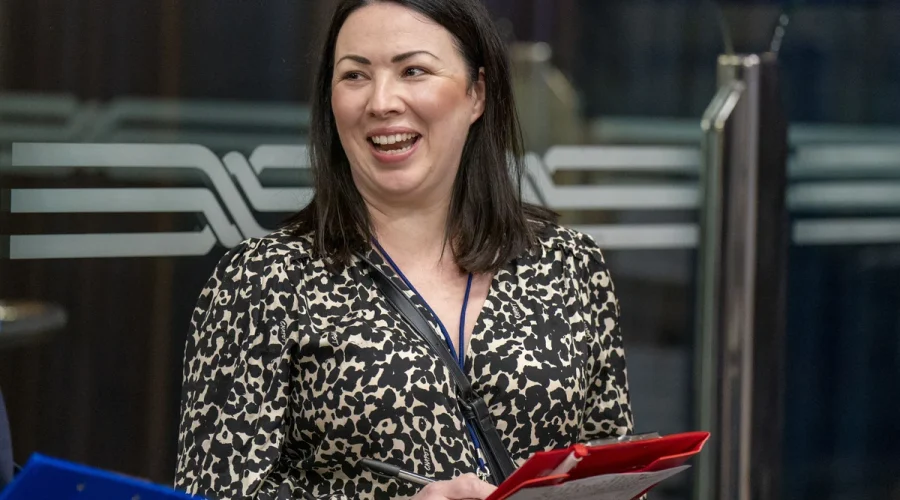
Traveloasisspot.com – The contest to choose the next leader of Scottish Labour has been reduced to a two-horse race after Glasgow MSP Monica Lennon could not gather the minimum three Westminster nominations required to appear on the ballot. With nominations closing on Monday, only Falkirk MP Euan Stainbank and Alloa and Grangemouth MP Brian Leishman put their names beside hers, leaving her one short of the threshold. Fellow Holyrood members Michael Marra and Joe Fagan cleared the bar comfortably and will now face off in a month-long campaign to succeed Anas Sarwar, who departed the Scottish seat to take a ministerial role in the UK Government and a place in the House of Lords.
The Nomination Math That Decided the Race
The final hours before the deadline were dominated by speculation over where MSP Carol Mochan would land her backing. As the last member of the Holyrood delegation to announce her preference, her choice carried the weight of potentially tipping Lennon over the line. In the end, however, it was the Westminster cohort that proved decisive. Lennon attracted just two MPs, while Marra — the party’s finance spokesman and principal author of the manifesto fielded ahead of May’s general election — collected the endorsements of 24 MPs and seven MSPs. Fagan, the former leader of South Lanarkshire Council, drew support from seven MPs and five MSPs.
The disparity in backing underscores a structural reality within Scottish Labour: Westminster MPs, though fewer in number than the Holyrood delegation, wield disproportionate influence over internal selections. Lennon’s campaign had clearly banked on broader grassroots momentum translating into formal nominations, but the arithmetic of the process did not bend in her favour.
Lennon’s Parting Shot
In a statement issued immediately after the close of nominations, Lennon framed her exclusion as evidence of institutional inertia rather than a personal defeat.
“Scottish Labour is stuck in the past. We are not listening to all of our members, the wider movement that built us or the millions of Scots who won’t vote for us. This leadership contest should have been a wide debate, rooted in courage, humility and the imagination to become a modern political party for workers and working class communities in Scotland. Our values mean nothing without vision, conviction and committed action. We must be a party where people can believe in fair work and a healthy planet; where women’s rights and LGBTQ rights are a shared struggle; where engaging in debate about Scotland’s place in the UK and the global community is a strength, not a weakness.”
Lennon, who will return to Holyrood in September to fill the vacancy created when Sarwar resigned his seat, urged the remaining candidates to “lead with decency and act with courage.” Her remarks position her as a continuing voice within the party even as she steps outside the formal contest.
Swinney Accuses the Party of a “Stitch-Up”
First Minister John Swinney, speaking to the Press Association within minutes of the announcement, did not mince words. He characterised Lennon’s omission as indicative of a “stitch-up” in the selection process.
“I think the Labour Party has got to explain its own internal mechanisms for selecting its own leader. I think, increasingly, the nature of the contest demonstrates the desperation of the Labour Party in Scotland today and the fact that a very popular candidate in Monica Lennon is not going to make it onto the ballot paper just rather suggests there’s been some sort of stitch-up within the Labour Party, which would be very typical of the Labour Party in Scotland.”
Swinney’s intervention is notable both for its timing and its tone. As head of the Scottish Government, he occupies a position of considerable independence from Westminster Labour machinery, and his public questioning of internal party processes adds a layer of political pressure on the contest’s organisers. For readers tracking Scottish politics, his remarks also signal that the SNP leadership is watching the Labour leadership race closely, viewing any internal dysfunction as a potential electoral advantage in the next Holyrood contest.
Fagan and Marra Frame Their Campaigns
Joe Fagan, in a statement released after nominations closed, cast his candidacy as a project of reconstruction rather than mere continuity.
“As this contest moves into its next phase, I want to thank every member, trade unionist and affiliate who has backed our campaign and helped us make the case for change. This campaign is about more than understanding what went wrong. It is about what Labour does next. It is about respecting work, backing our communities and giving working people real power over the future, not asking them simply to live with decisions made elsewhere. I want to rebuild Scottish Labour as the party of the working people of Scotland, rooted in our communities, serious about using power to change lives and ambitious enough to make Scotland’s future belong to the people who work, care, build, teach and keep our country going.”
Marra, by contrast, has leaned on his credentials as the architect of the party’s most recent electoral platform. His role in drafting the manifesto ahead of the May election gives him a narrative of accountability and policy continuity that his rivals lack. The two candidates thus occupy distinct rhetorical positions: Fagan speaks of renewal and working-class empowerment; Marra speaks of institutional competence and electoral strategy.
Why This Contest Matters Beyond Party Walls
The Scottish Labour leadership vacancy is not merely an internal housekeeping exercise. Sarwar’s elevation to the UK cabinet and the Lords removed the party’s most senior figure from Holyrood, creating a leadership vacuum at a moment when the SNP dominates the Scottish Parliament and the next general election will test Labour’s ability to hold its remaining Westminster seats in Scotland. The candidate who emerges from this month-long contest will inherit a party that lost ground in May, faces a dominant nationalist competitor, and must articulate a credible vision for voters who have drifted away. Lennon’s exclusion, and the questions it raises about who controls internal selections, will shape the tone of that contest from its first week.
Related Reading
Frequently Asked Questions
What is Scottish Labour stuck in the past?
Scottish Labour stuck in the past is the main topic of this guide. The article explains the context, practical details, and next steps readers should understand.
Why does Scottish Labour stuck in the past matter?
Scottish Labour stuck in the past matters because readers are looking for a useful answer, not just a short summary. Good content should match search intent and help them decide what to do next.