Starmer’s French Farewell coincides with Burnham’s Leadership Ascension
Traveloasisspot.com – As Sir Keir Starmer embarks on the concluding chapter of his tenure as Britain’s Prime Minister, the political landscape is shifting beneath his feet. Following Andy Burnham’s near-certain confirmation as the next Labour leader, Starmer will spend Tuesday in Paris, marking his final official visit to France in this capacity. The timing could not be more significant, as the handover of power from one generation of Labour leadership to another unfolds in real time.
A Distinguished Send-off in the French Capital
The British Prime Minister is anticipated to join an assembly of international dignitaries for the Bastille Day festivities, a celebration that will see British military tradition intertwine with French ceremonial pomp. Soldiers from the prestigious Grenadier Guards will be among those marching in step with members of the French Garde Republicaine, creating a visual symbol of the enduring Anglo-French relationship that Starmer has worked to strengthen throughout his premiership.
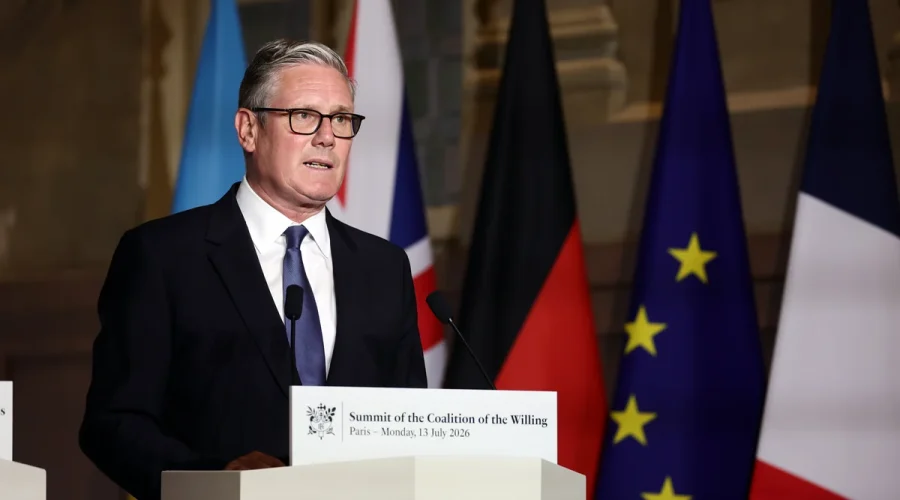
This ceremonial occasion follows closely on the heels of Monday’s pivotal summit, which Starmer described as his last “coalition of the willing” gathering. The event brought together some of Europe’s most influential political figures, including French President Emmanuel Macron, Ukrainian President Volodymyr Zelensky, and German Chancellor Friedrich Merz. Each leader took the opportunity to acknowledge Starmer’s contributions to global affairs during his time in office.
Words of Appreciation from International Allies
The tributes offered to Starmer were both warm and substantive. President Macron expressed his gratitude directly, stating that France “owe[s] you a lot, Prime Minister” for the support provided during challenging times. Chancellor Merz offered a more personal note, suggesting he would “phone you occasionally to get your opinion on this or that,” indicating the value he places on Starmer’s diplomatic insight.
Mr Zelensky, the Ukrainian President, thanked Sir Keir for his “constant, steadfast support”, which the Prime Minister said would continue under his successor.
Perhaps most significantly, President Zelensky’s acknowledgment of Starmer’s unwavering backing for Ukraine was met with a promise from the British Prime Minister that this commitment would not waver under new leadership. This assurance proved particularly timely given the ongoing geopolitical tensions in Eastern Europe.
Burnham’s Mathematical Certainty
The identity of Starmer’s successor has now been virtually guaranteed. Andy Burnham, who previously served as Mayor of Greater Manchester, accumulated the support of 349 Labour Members of Parliament on Monday. This figure places him well beyond the threshold required to prevent any late-breaking challenges from rival candidates.
With merely 54 Labour MPs yet to declare their preference for the leadership contest, the mathematics are clear: no other contender can possibly amass the 81 nominations necessary to mount a credible challenge. This numerical certainty has effectively ended any speculation about alternative candidates emerging from within the parliamentary party.
Nevertheless, the formalities remain. Burnham will receive his official confirmation as Labour leader on Friday, with the ceremonial handover from Starmer scheduled for July 20, three days later. Even though he faces no opposition, Burnham participated in an online hustings session with Labour MPs on Monday, using the platform to articulate his vision for the party’s future direction.
Setting Out a New Agenda
According to party insiders, Burnham utilized the hustings to outline several key priorities for the nation. Central to his message was a commitment to devolving additional powers to local communities, alongside strategies designed to stimulate economic growth throughout the United Kingdom. Addressing the persistent challenge of the cost of living remained another cornerstone of his proposed agenda.
Burnham also took the opportunity to commend Starmer for fulfilling his pledge regarding the Hillsborough Law. This legislation, which is expected to pass through the Commons on Tuesday following an agreement to extend its “duty of candour” provisions to include intelligence services, represents a significant achievement in British political history.
And he pledged to lead from the front on changing the culture within Labour, promising to be more accountable and accessible to MPs and appoint cabinet ministers from across the party.
Looking ahead, Burnham promised to transform the internal dynamics of the Labour Party. His commitment to greater accountability and accessibility suggests a more open approach to governance, while his intention to select cabinet ministers from various factions within the party indicates a desire to build a truly representative government.
The Broader Context
The convergence of Starmer’s farewell tour and Burnham’s leadership confirmation represents more than a simple change of personnel. It marks a transitional moment for British politics, as the country prepares for a new era under different leadership while maintaining continuity in international relationships and domestic policy priorities. The questions facing Burnham as he steps into the role will be substantial, but the foundation laid by Starmer’s final days in office provides a solid platform upon which to build.