America Reinforces Maritime Restrictions as Tensions Escalate in Persian Gulf
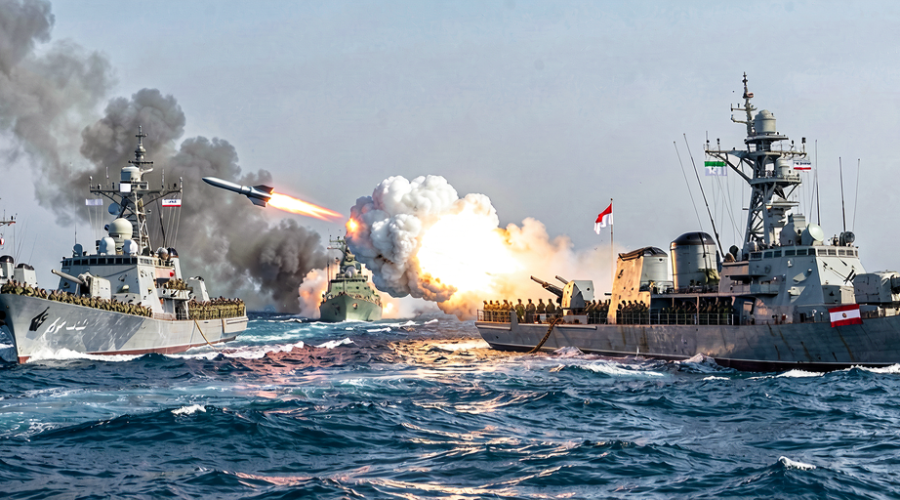
US military intercepts ships trying to run – American military forces have successfully intercepted multiple commercial vessels attempting to navigate through the reestablished naval blockade surrounding Iranian ports. This action coincides with ongoing aerial operations designed to curb Tehran’s aggressive campaign against maritime traffic traversing the strategically vital Strait of Hormuz. The region serves as a critical artery for worldwide energy distribution, making any disruption to shipping lanes a matter of significant international concern.
Recent confrontations within these contested waters have heightened apprehensions that the situation could deteriorate into a comprehensive military confrontation. The naval restrictions were temporarily suspended following an interim agreement reached last month, which was intended to restore normal operations and create conditions favorable for discussions regarding Iran’s nuclear program ambitions.
Diplomatic Progress Meets Military Reality
Despite initial optimism surrounding the ceasefire arrangement, subsequent negotiations have encountered substantial obstacles. The deterioration stems primarily from Iran’s continued assaults on commercial cargo vessels navigating through the region. These aggressive maneuvers prompted President Donald Trump to formally announce the termination of the temporary truce and restore the comprehensive blockade, which officially resumed operations on Tuesday.
Within a single day of the blockade’s reinstatement, United States Central Command, responsible for directing military activities throughout the Middle Eastern theater, confirmed that two separate ships had been diverted from their intended routes. In a statement published on social media platform X, the command emphasized that American forces remain alert and ready to guarantee complete adherence to the established maritime restrictions.
“The US military remains vigilant and prepared to ensure full compliance.”
Iranian Response and Regional Impact
Iran’s paramilitary organization, the Islamic Revolutionary Guard Corps, issued a stern counterwarning regarding potential disruptions to regional energy commerce. The organization declared that oil and gas exports from the Middle East would follow an all-or-nothing approach, potentially affecting global markets significantly. Concurrently, Iranian forces have maintained their campaign of missile and drone attacks targeting American partner nations including Bahrain, Kuwait, and Jordan.
The Strait of Hormuz had experienced relative openness prior to the commencement of hostilities initiated jointly by the United States and Israel on February 28. Following this offensive, Tehran implemented effective restrictions on maritime passage through the waterway, creating immediate challenges for global energy supplies and contributing to increased costs for both fuel and essential food commodities.
“The export of oil and gas from the region will be either for everyone or for no one.”
Competing Claims Over Navigation Rights
Even while maintaining cooperation with American forces through the initial agreement, Iran has persistently utilized its position to influence maritime traffic. The Iranian government has required vessels to obtain authorization before transiting through the strait, simultaneously increasing the likelihood of additional penalties and attacks against non-compliant ships. Tehran maintains that it exercises control over the channel, a position contested by Washington and numerous other nations that reference international legal frameworks supporting freedom of navigation.
Meanwhile, economic indicators suggest that Britain’s financial performance may have remained constrained had the Iranian conflict not impeded broader growth trajectories. This development arrives alongside reports that construction company Barratt has enhanced returns for shareholders despite mounting pressure from investors. In related international news, a British national imprisoned in Iran has received an additional two-year sentence according to family statements.
Presidential and Vice Presidential Statements
President Trump utilized an appearance on Fox News to caution that additional military operations against Iran remain likely. He reiterated previous warnings that critical infrastructure, including bridges and electrical generation facilities, could face targeting if diplomatic efforts do not progress. Addressing Tehran directly, the president emphasized: “You better make a deal, or you’re not going to have anything left.”
“What the president has done very, very capably is said we’re going to use military force in this situation when it’s connected to something we’re trying to achieve so if you shoot at ships, we’re going to shoot at the facilities which you use to shoot at the ships.”
Vice President JD Vance, who has consistently articulated opposition to prolonged American military engagements, has worked to clarify the constrained nature of current operations. He explained that military action would remain purposeful rather than unlimited: “But we’re not just going to do something open-ended, indefinitely. We’re not just going to bomb and bomb and bomb. We’re going to try to use our military force as one of the many tools that we have to solve the problem.”
Simultaneously, diplomatic mediators continue efforts to facilitate renewed negotiations between Washington and Tehran. President Trump has abandoned previously announced plans to implement a controversial twenty percent fee on commercial shipping for secure passage through the strait. This so-called reimbursement mechanism will now be substituted with alternative investment arrangements, according to presidential statements following consultations with allied nations.
As these developments unfold, sports and cultural news continues to capture public attention, with transfer updates indicating Arsenal’s interest in Alvarez and Manchester United’s pursuit of Kone. Additionally, former footballer Wayne Rooney has provided commentary on Thomas Tuchel’s performance following England’s World Cup semi-final defeat, while Harry Kane has offered insights into why Argentina emerged victorious in that crucial match.
The situation in the Persian Gulf remains fluid, with both military and diplomatic channels working to prevent further escalation while protecting vital international shipping routes and energy supplies that sustain global economic stability.