
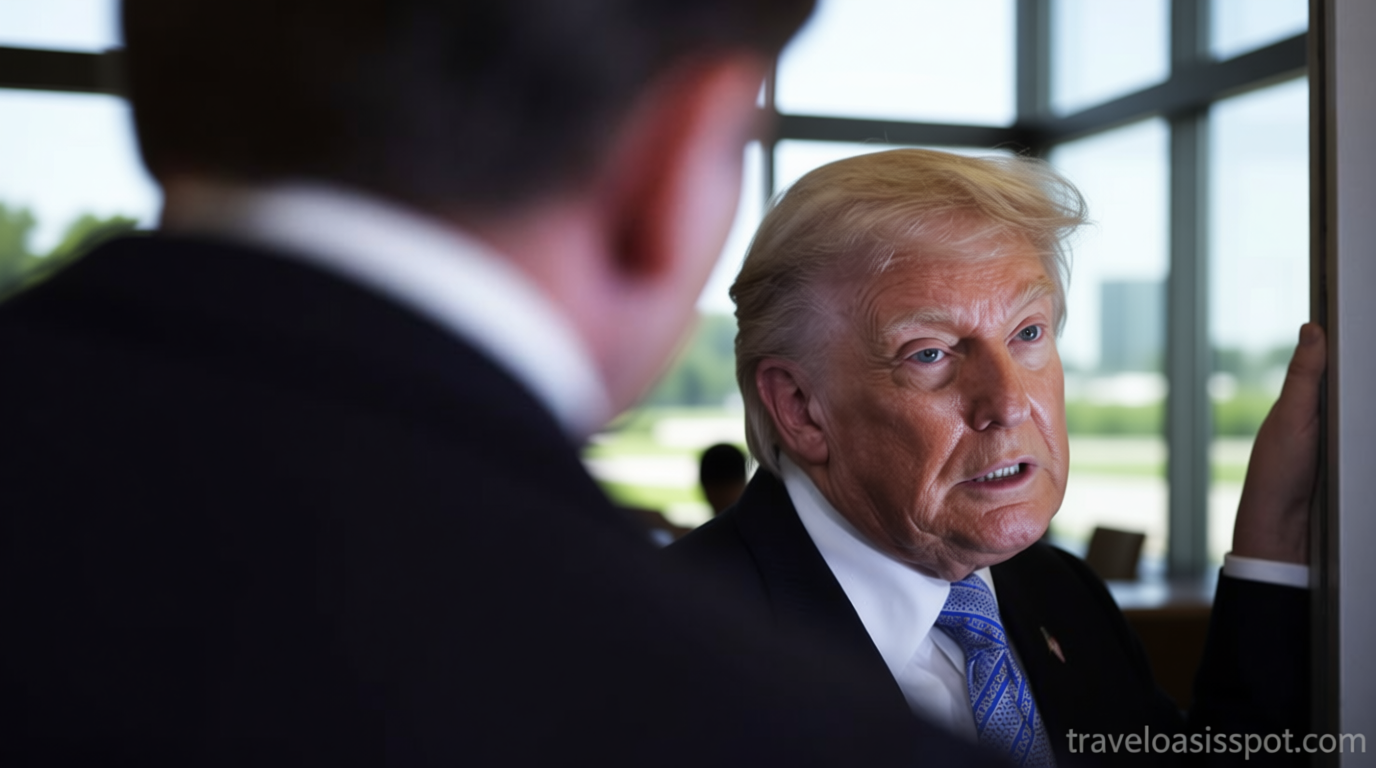
Trump Warns Iran: “Won’t Be Anything Left” After Security Meeting
Won t be anything left – President Donald Trump has issued a stark warning to Iran, declaring that “there won’t be anything left” of the country if it does not act swiftly. This statement came after a weekend meeting with senior members of his national security team at his Virginia golf club, where the administration finalized plans to escalate pressure on Tehran. The meeting followed a surge in confrontations between the U.S. and Iran, particularly over Iran’s recent blockade of the Strait of Hormuz, which has disrupted global oil markets. Officials confirmed the strategy will be reviewed again early next week to ensure alignment with Trump’s aggressive stance toward the Islamic Republic.
Escalating Tensions and Diplomatic Stalemate
Trump’s warning on social media Sunday marked a shift toward more assertive rhetoric, signaling the administration’s frustration with Iran’s diplomatic intransigence. The president’s team has been increasingly focused on curbing Tehran’s influence in the region, especially after the closure of the Strait of Hormuz raised concerns about energy security and economic stability. Despite initial optimism during his recent trip to China, where he sought to broker a deal with President Xi Jinping, the U.S. has not yet reached a consensus on how to proceed with Iran. The administration remains divided on whether to pursue a military strike or continue negotiations through intermediaries.
Iran’s Counteroffer and Role of Pakistan
In response to the U.S. warnings, Iran’s foreign ministry announced that it had already submitted a counterplan to address American criticisms. Spokesman Esmaeil Baghaei emphasized the country’s readiness to engage in dialogue, citing Pakistan’s mediation as crucial to the process. However, U.S. officials remain skeptical, with Trump’s rejection of the 14-point proposal earlier in the week underscoring the deepening divide. The standoff highlights the fragile nature of the negotiations, as both sides struggle to find common ground amid rising tensions.
Strategic Planning and Military Options
Participants in the Saturday meeting included Vice President JD Vance, Secretary of State Marco Rubio, CIA Director John Ratcliffe, and special envoy Steve Witkoff. The gathering followed Trump’s return to Washington after a diplomatic visit to China, where he had been cautious about committing to a clear strategy against Iran. Now, the administration is exploring military options, including precision strikes on Iran’s energy infrastructure, as a means of forcing concessions. Pentagon officials have developed multiple plans to target key facilities, aiming to cripple Iran’s ability to sustain its aggressive actions.
Regional Alliances and Security Coordination
Trump’s call with Israeli Prime Minister Benjamin Netanyahu on Sunday reinforced the administration’s commitment to a unified front against Iran. The conversation focused on shared security interests, with Trump stressing the need for cooperation in countering Iranian influence. Meanwhile, Iranian media reported that Pakistan’s interior minister, Mohsin Naqvi, had been actively facilitating talks with top Tehran officials. These discussions, though ongoing, have not yet resolved the fundamental disagreements between the U.S. and Iran.
Iran’s Diplomatic Strategy and Regional Rhetoric
Tehran officials have reiterated their belief that the U.S. and Israel are undermining Muslim unity in the Middle East. President Masoud Pezeshkian, as quoted by Iran-linked Tasnim news agency, stated:
“The U.S. and Israel have always tried to pit Islamic nations against one another through divisive projects and by fostering distrust, even as Iran seeks sincere, stable relations based on good neighborliness with the region’s Islamic countries.”
This perspective positions Iran as a defender of regional solidarity, while also highlighting its determination to resist Western pressure. As the crisis intensifies, the fate of the negotiations—and potentially the future of Iran—hangs in the balance.





