Playing History’s Weight: Damian Lewis on the Burden of Portraying Real Commanders
Traveloasisspot.com – When the Allied invasion of Normandy was being plotted in the spring of 1944, the decisions made in a handful of cramped briefing rooms would determine whether millions lived or died. That is the world into which director Anthony Maras plunges audiences with his wartime drama Pressure, a film that compresses the agonising 72 hours before D-Day into a tense, character-driven narrative about weather, doubt, and the enormous weight of command.
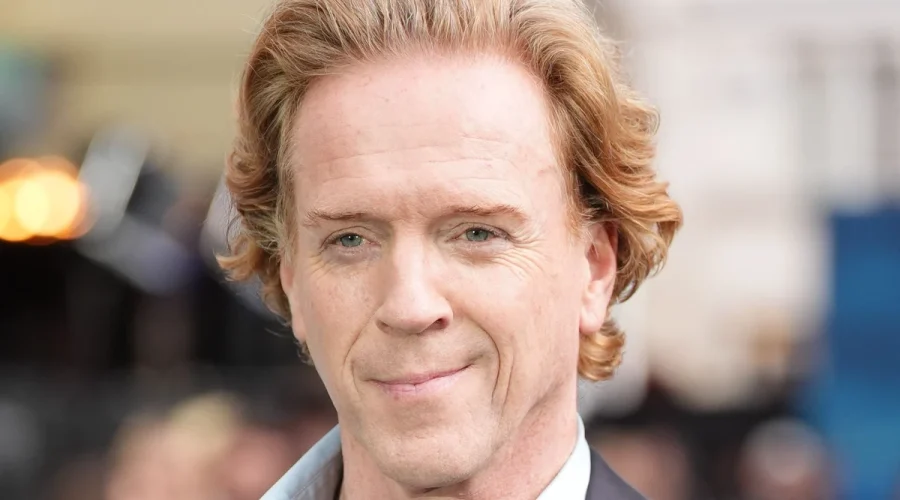
At the centre of that narrative sits Damian Lewis, the 55-year-old English actor best known for his breakout role as US Army Major Richard Winters in the 2001 Spielberg–Hanks miniseries Band of Brothers. In Pressure, Lewis takes on the persona of British Army General – later Field Marshal – Sir Bernard “Monty” Montgomery, a figure whose reputation among Allied commanders was as polarising as it was consequential. Lewis has spoken openly about what it means to inhabit such a role, describing the experience as carrying a “moral responsibility” to represent real human beings with honesty and care.
A Career Built on Real Lives
Lewis is no stranger to the challenge of embodying a historical figure. After Band of Brothers made him a household name, he went on to portray Tudor monarch Henry VIII in the acclaimed drama Wolf Hall and Hollywood icon Steve McQueen in Quentin Tarantino’s Once Upon a Time in Hollywood. Each of those roles demanded deep archival research, dialect work, and an understanding of how the person in question was perceived by those around them.
Speaking at the London premiere of Pressure, Lewis explained why he continues to gravitate toward such parts despite the pressure they entail.
“I do enjoy playing real people. I enjoy the research, the history and finding people they knew and who knew them.”
That research, in the case of Montgomery, led Lewis to a figure he described as “very complex and Marmite” – a commander whose strategic caution was rooted in a genuine reverence for human life, yet whose blunt, unapologetic manner made him deeply unpopular with American counterparts who regarded him as something of an upstart.
“He wasn’t liked by the other Allied command, especially the Americans, who found him a bit of an upstart. But he was the only one who had seen active service and his men adored him. He was cautious strategically because he valued human life, and I think the Americans found that frustrating sometimes.”
The Weather That Hinged a War
The film’s central tension revolves around a single meteorological forecast. Andrew Scott plays James Stagg, the British meteorologist whose readings on cloud cover, wind, and visibility over the English Channel became the decisive variable in whether the invasion would proceed on schedule or be postponed. Brendan Fraser, 57, steps into the role of Supreme Allied Commander Dwight D. Eisenhower, the man who ultimately had to weigh the forecast against the cost of losing surprise.
Fraser, who also appears alongside Kerry Condon and Chris Messina in the ensemble cast, reflected on the sheer scale of what was at stake during the premiere event.
“It wasn’t lost on me that I also had an obligation in playing a role that is not based on, but it is the icon of Dwight Eisenhower, a figure who I must admit I did not know enough about when I first saw the material.”
Fraser went on to describe how he educated himself through documents at the Imperial War Museum in Southbank and through a steady diet of what he called “the dad podcasts” – informal audio histories that made the period accessible. He emphasised that Eisenhower’s defining trait in those final hours was not bravado but listening: a gifted diplomat who weighed every voice in the room before acting.
“There’s a responsibility that I felt I had to show who this guy was on a fateful weekend and the very real human decisions that he had to make, and he always listened to everyone. He was a gifted diplomat.”
Fraser also highlighted Stagg’s quiet heroism, noting that hundreds of thousands of lives “hinged on a weather report” and that the meteorologist was an “unsung hero who stands his ground” – a man whose calm, data-driven insistence shaped the outcome of the largest amphibious operation in history.
Why the Film Matters Now
The synopsis for Pressure frames its premise starkly: “In the tense 72 hours before D-Day, and the fate of the free world hanging in the balance.” That language is not mere marketing. The historical record shows that a postponement of even a few days would have cost the Allies the narrow window of favourable tides and darkness needed for a successful beach landing. An incorrect call, as Fraser put it, could have seen the war “go on for months, if not years, and risk more and more deaths.”
“So it was a huge choice and a great decision by a humble man.”
For audiences in 2025, the film arrives at a moment when public memory of the Second World War is thinning rapidly. Fewer living veterans remain to speak directly about the period, and the bureaucratic machinery of Allied command – the meteorologists, the signal officers, the logistics planners – remains largely invisible to popular imagination. By centring those behind-the-scenes figures rather than the beach landings themselves, Pressure offers a corrective: a reminder that the war was won or lost not only in the surf but in the quiet, smoke-filled rooms where men argued over cloud charts and tide tables.
Pressure opens in UK cinemas on 9 September.
Related Reading
Frequently Asked Questions
What is Damian Lewis feels moral responsibility playing?
Damian Lewis feels moral responsibility playing is the main topic of this guide. The article explains the context, practical details, and next steps readers should understand.
Why does Damian Lewis feels moral responsibility playing matter?
Damian Lewis feels moral responsibility playing matters because readers are looking for a useful answer, not just a short summary. Good content should match search intent and help them decide what to do next.