
Protests and defeat: Chelsea fans run out of patience with club’s billionaire American owners
Protests and defeat – Four years after Todd Boehly’s takeover, the once-thriving Chelsea squad now faces a crisis that has left fans disillusioned. The US billionaire businessman, who led the BlueCo consortium to acquire the Premier League giants in May 2022, had promised a golden era for the club. “We’re all in – 100%,” he assured supporters, envisioning a future where Chelsea would dominate both domestic and international competition. Yet, as the 2026 season draws to a close, Boehly’s vision has unraveled. The club’s bloated roster, lack of coherent strategy, and the mounting frustration among fans have culminated in a humiliating FA Cup final loss to Manchester City, further eroding the bond between the team and its supporters.
The Takeover That Broke the Blues
Boehly’s acquisition of Chelsea was hailed as a transformative moment for the club, bringing a wealth of financial resources and a fresh perspective. However, the transition has not been as seamless as anticipated. The new owners have prioritized high-profile signings and extravagant spending, but these moves have failed to address the underlying issues that have plagued Chelsea for years. With over $1 billion funneled into player transfers since the takeover, the squad has grown larger yet less effective. Fans, once eager to support the club’s new direction, are now questioning whether the investment has paid off.
Chelsea’s current position in the league—ninth place—has become a stark reminder of the gap between promise and performance. The club’s failure to secure a Champions League spot for next season has shattered expectations, as even the most ardent supporters believe this was a bare minimum requirement for a team of Chelsea’s stature. While the FA Cup final run offered a fleeting sense of optimism, it ultimately highlighted the team’s fragility. A 1-0 loss to Manchester City on Saturday left fans in a somber mood, with the stadium echoing the despair of a season that has deteriorated since the turn of the year.
A Billion Dollars, But No Success
Chelsea’s financial power has been a double-edged sword. The BlueCo owners have spent more than $1 billion on transfers, yet the squad’s lack of quality has become a glaring issue. The strategy of signing young talents to lengthy contracts—often in hopes of selling them for a profit—has backfired. Players are now expected to contribute immediately, but the team’s recent performances have been nothing short of disastrous. In seven consecutive league games, Chelsea has failed to secure a single win, a statistic that has left fans increasingly frustrated.
One Chelsea fan, boarding the tube to the stadium hours before the FA Cup final, voiced his concerns: “I think we’re going to get smashed.” His companion nodded in agreement, stating, “I think you’re probably right.” The exchange, though lighthearted, underscored the growing skepticism among supporters. The squad’s depth has become a liability, with too many players competing for limited minutes. This has led to a lack of experience and leadership, two critical factors in building a competitive team. Even the most die-hard fans admit that the club’s recent trajectory has been far from ideal.
Fractured Unity and a Frustrating Season
The FA Cup final was a turning point for Chelsea’s fans, who had already grown weary of the team’s struggles. Despite the loss, the atmosphere inside the stadium remained charged, with supporters rallying behind their team. The chants that once filled Wembley’s stands returned, a testament to the enduring passion of the Chelsea fanbase. However, the players’ efforts were not enough to overcome the team’s structural flaws. The final was a microcosm of the season: a moment of hope followed by a decisive letdown.
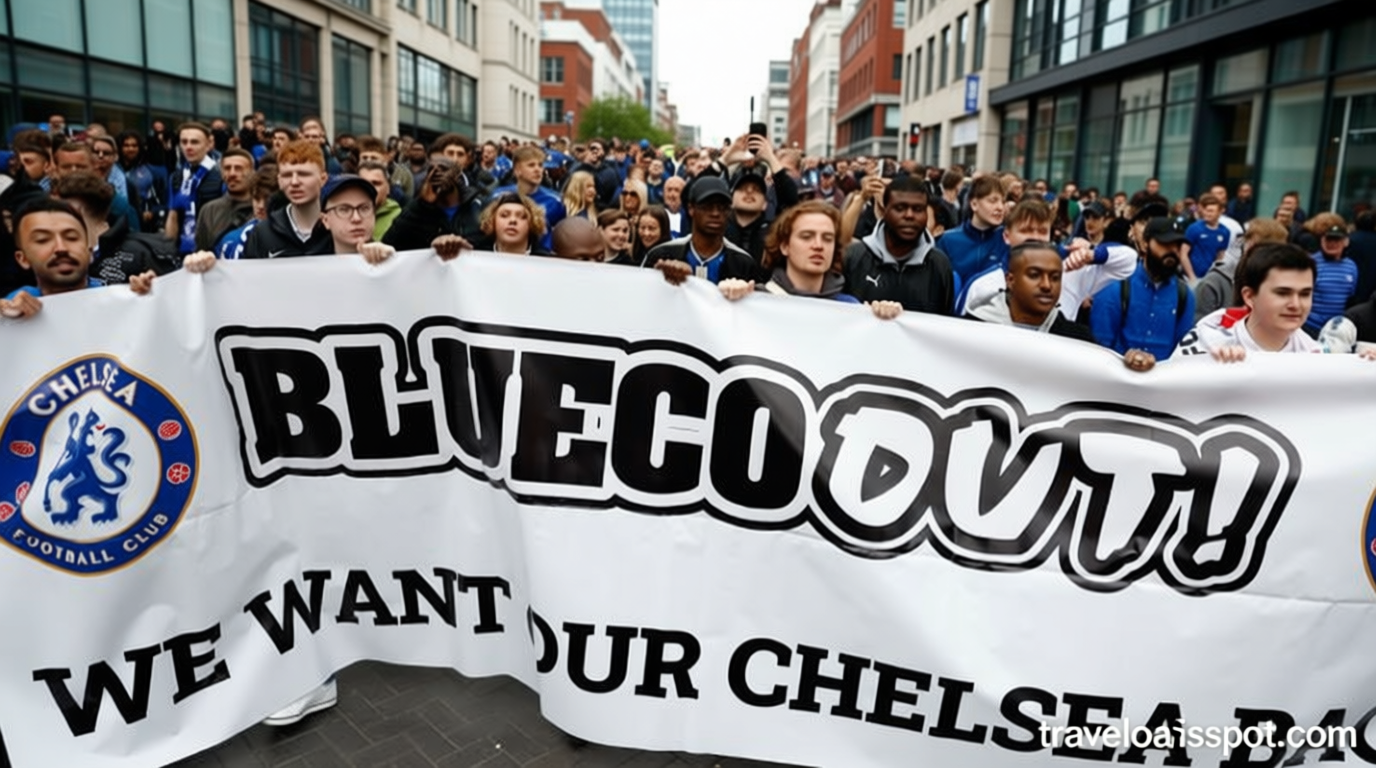
Outside the stadium, the discontent was palpable. A protest erupted before the match, with fans marching down Wembley Way behind a banner that read: “BlueCo out! We want our Chelsea back.” The display symbolized the deepening rift between the club and its supporters. While the owners have prioritized short-term gains and financial flexibility, fans demand consistency and long-term planning. The protest was not just about the final result but about the broader perception that the new regime has lost touch with the club’s identity.
Chelsea’s managerial instability has also played a role in this crisis. Calum McFarlane, who took charge of the team for the FA Cup final, is serving as an interim manager until the end of the season. His tenure has been marked by uncertainty, with fans recalling the turbulent exits of previous coaches. Liam Rosenior, the most recent manager, was dismissed in April after being lured away from Strasbourg, another club under Chelsea’s ownership. Before him, Enzo Maresca—once a rising star in coaching—left in January, citing the inability to work under the current system. These departures have only amplified the sense of disconnection among supporters.
The Road to Recovery
On Sunday, Chelsea unveiled its next step, appointing Xabi Alonso as the new manager on a four-year contract. The former Bayer Leverkusen and Real Madrid boss will take charge on July 1, tasked with reviving the club’s fortunes. His arrival signals a shift toward more stability, but fans remain cautious. The previous management changes have left a trail of unresolved problems, and Alonso’s success will depend on his ability to restructure the squad and restore confidence.
Despite the new leadership, the relationship between the club and its supporters has been severely tested. The somber atmosphere following Saturday’s loss reflected a deeper divide. Even in victory, the fans’ loyalty has been shaken. The team’s inability to consistently deliver results has made it difficult to sustain unity. While some supporters cling to the hope that Alonso can turn things around, others are skeptical, believing the club’s problems run deeper than just the manager.
For many Chelsea fans, the season has been a nightmare of missed opportunities and poor decisions. The club’s once-celebrated tradition of success is now in question, with the new owners accused of prioritizing financial gain over footballing excellence. The FA Cup final, though a fleeting highlight, has not been enough to erase the growing discontent. As the 2026 campaign concludes, the challenge ahead is clear: can Chelsea’s leadership rebuild the trust that has been eroded over the past four years? Or will the club’s future continue to be defined by its failures and the frustrations of its supporters?
The path forward is uncertain, but one thing is clear—Boehly’s tenure has not lived up to the high expectations set during his arrival. The fans, who once celebrated the club’s achievements, now demand accountability. The protest at Wembley, the league’s poor form, and the managerial changes all point to a club in transition, struggling to find its footing. With Xabi Alonso’s appointment, there is a chance for renewal, but time will tell whether the new direction can restore Chelsea’s former glory or simply delay its inevitable decline.





