
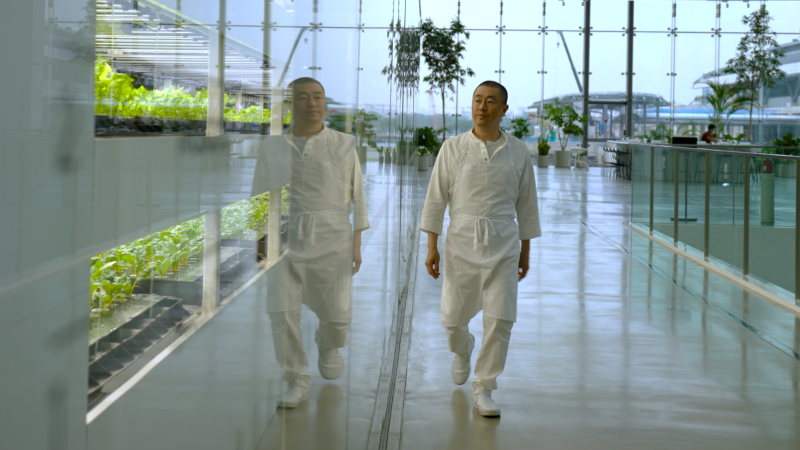
Corey Lee: A Culinary Journey from French Techniques to Korean Innovation
Before Korean food was cool Corey – Corey Lee, now 48, stands as a pivotal figure in the evolution of Korean cuisine, having earned the distinction of being the first Korean chef to secure three Michelin stars. His journey from a New Jersey suburb to international acclaim reflects a profound redefinition of Korean food, blending traditional roots with avant-garde techniques. Before the global popularity of Korean culture—embodied by K-pop, K-beauty, and the widespread appeal of kimchi—Lee was already reshaping the narrative of what Korean cuisine could be, long before it became a culinary trend.
Early Life and the Korean Food Landscape
Lee’s childhood was shaped by the scarcity of Korean food in the United States. Growing up in a suburb of New Jersey, his family’s meals were often simple, relying on ingredients that were not readily available in the region. Gochujang, the fermented chili paste now synonymous with Korean flavor, was a rarity in his home. Kimchi, too, was not a common dish, let alone a trendy garnish in urban restaurants. “During the formative years of my career, I never imagined serving kimchi at a fine dining establishment,” he reflects, highlighting the stark contrast between his upbringing and his later culinary achievements.
The Korean cultural phenomenon, known as Hallyu, has permeated global trends over the past decade. From music to fashion, this wave has elevated Korean culture to unprecedented heights. Yet, in the early 2000s, the same momentum had not yet reached the culinary world. Korean food exports, such as kimchi, saw a record-breaking surge last year, and the number of overseas outlets for Korean food companies increased by nearly 25% since 2020. These developments created a fertile ground for chefs like Lee to reimagine Korean cuisine on a global scale.
A Career Shaped by French Traditions and Korean Roots
Lee’s professional trajectory began in the kitchens of French culinary masters. After moving to the U.S. at age five from Seoul, he spent his formative years in New York and Tenafly, New Jersey, where his Korean heritage was not immediately reflected in his culinary environment. His parents, who had settled in the country, instilled a love for home-cooked meals but did not expose him to the world of cooking shows or the dream of becoming a chef. That changed in 1995, when Lee, still in high school, took a summer job at Blue Ribbon Brasserie in New York. It was there he discovered his passion for the culinary arts, captivated by the rhythm of the kitchen, the precision of technique, and the collective drive of chefs working toward a shared vision.
“I was instantly captivated from the moment I stepped into the kitchen,” Lee recalls, his voice carrying the weight of a transformative moment. “The intensity, the creativity, the physical demands—it all felt like a calling.”
Despite his mother’s initial resistance, Lee’s parents eventually supported his pursuit. His mother, a generation of Korean mothers familiar with the rigors of cooking, had long considered it a secondary profession. It took international recognition and a feature in a Korean newspaper celebrating his culinary success before she fully embraced the idea of cooking as a viable career path. This shift marked a turning point for Lee, who would later draw on his family’s culinary traditions to craft a unique identity in the restaurant industry.
The Influence of Thomas Keller and a Return to Heritage
After his summer at Blue Ribbon, Lee’s career took him to London, where he refined his skills under French-trained chefs. By 2001, he joined Thomas Keller’s team at The French Laundry, a Michelin-starred institution in California. There, he ascended to the role of head chef, mastering the art of fine dining while absorbing Keller’s philosophy of merging personal memory with culinary innovation. “Keller transformed the way I thought about food,” Lee says. “He celebrated the everyday—like mac and cheese—by infusing it with meaning, showing that authenticity could be as refined as it was relatable.”
When Lee ventured out to open Benu, his East Asian-inspired restaurant in San Francisco, he carried this ethos forward. The menu was a testament to his Korean heritage, blending quintessential Chinese ingredients such as 1,000-year-old eggs and Jinhua ham with Japanese elements like sake and wasabi, alongside Korean staples like perilla and fermented chili. This fusion, paired with French fine dining techniques and the freshness of California’s local produce, created a dynamic culinary experience that was both innovative and deeply rooted in tradition.
Lee’s work has since expanded beyond San Francisco. He now oversees a Michelin-awarded Korean barbecue concept in a Singaporean car factory, a testament to his ability to adapt Korean cuisine to diverse settings. His collaboration with a prominent South Korean kimchi brand further underscores his commitment to elevating traditional dishes through modern reinterpretation. “The goal is to honor the past while making it accessible to new audiences,” he explains, emphasizing the balance between cultural preservation and creative evolution.
Family Influence and the Philosophy of Balance
Lee’s mother’s cooking style, characterized by its simplicity and clean flavors, has played a significant role in shaping his approach. Her emphasis on umami through aromatic herbs and rich broths, rather than pungent spices like onion and garlic, highlights a traditional Korean dietary philosophy rooted in Buddhist principles. This influence is evident in his dishes, where the interplay of bold and subtle flavors becomes a central theme. “My grandmother’s strict diet taught me the power of restraint,” Lee notes. “It’s about layering flavors without overwhelming them.”
As he continues to redefine Korean cuisine, Lee remains dedicated to bridging the gap between heritage and modernity. His restaurants serve as platforms for storytelling, where each dish carries the essence of his upbringing and the lessons learned from his mentors. “Korean food is more than just ingredients—it’s a way of life,” he asserts, underscoring the cultural significance of his work. Through his efforts, the global appreciation for Korean cuisine has only grown, proving that the culinary world’s embrace of Korean flavors was not a sudden trend, but a long time coming.
For those interested in exploring Lee’s journey further, the CNN Original Series *K-Everything*, hosted by Daniel Dae Kim, delves into the global impact of South Korean culture. The series premieres on CNN International on May 9 at 8 a.m. ET and is available for streaming via the CNN app. This multimedia exploration aligns with Lee’s mission to showcase the versatility and depth of Korean cuisine, ensuring that its rich history and evolving identity are recognized worldwide.





