Government Urged to Address Funding Disparities in Northern Ireland as Budget Talks Begin
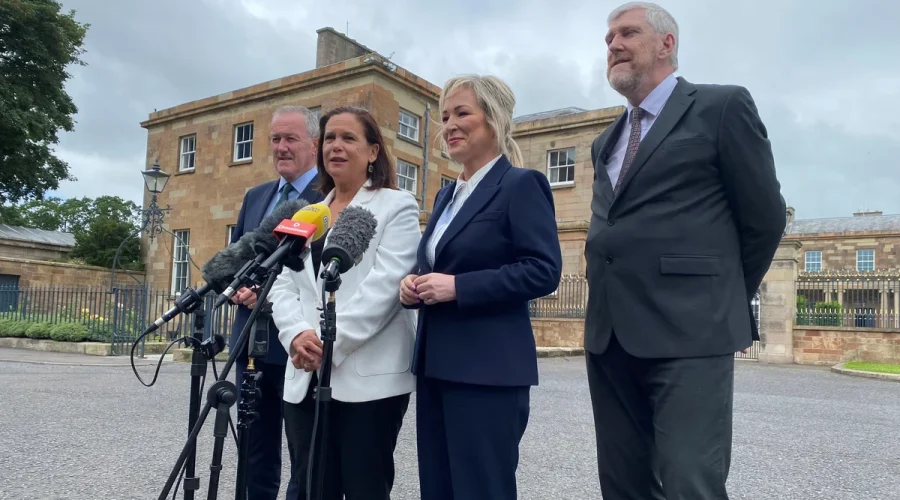
Government urged to fix NI funding – As the UK Government prepares to engage with Northern Ireland’s political leaders over ongoing financial challenges, a call for systemic reform has intensified. The discussion centers on a perceived imbalance in how the region is funded, with ministers emphasizing the need to resolve this issue before it escalates further. The meeting, set to take place at Hillsborough Castle, brings together representatives from Sinn Féin, the DUP, the Alliance Party, and the Ulster Unionists, signaling a critical moment in addressing the crisis.
Central to the debate is the disparity in funding models between Northern Ireland and other UK regions. First Minister Michelle O’Neill has framed the talks as a pivotal opportunity to set the stage for future governance, particularly under the leadership of Andy Burnham. O’Neill, who has been a vocal advocate for equitable resource allocation, stated that the current financial discussions are “scene-setting” for the next prime minister’s tenure. This remark underscores her belief that the core problem of underfunding persists regardless of who holds power at Westminster.
Joining O’Neill at the meeting is Lucy Rigby MP, the chief secretary to the Treasury, who has been tasked with negotiating the terms of the funding agreement. Rigby’s presence highlights the growing recognition of the financial shortfall and the urgency to find a sustainable solution. However, the situation remains tense, as Stormont ministers have yet to agree on a budget for the current financial year. Since April, departments have been relying on emergency contingency plans to maintain operations, a temporary measure that has only exacerbated concerns about long-term stability.
“The British government and the state have failed to provide adequate funding for this region, and it’s not just a passing issue—it’s a persistent problem that affects our public services,” said Mary Lou McDonald, Sinn Féin’s leader. McDonald emphasized that the funding model has created a “very, very significant deficit” compared to Scotland and Wales, where regional governments receive more than sufficient support. Her comments reflect a shared frustration among political leaders who are now united in demanding structural changes to the financial framework.
McDonald’s statement was echoed by other participants, who highlighted the unsustainable nature of the current system. “This isn’t a one-time event; it’s a fundamental issue that needs to be addressed,” she added. The repeated reliance on short-term financial injections has left the Assembly in a precarious position, with leaders forced to advocate for basic funding to sustain essential services. O’Neill, who has served as first minister for several years, pointed out that this pattern has continued across multiple administrations. “In the past decade, we’ve had seven British prime ministers, and the problem has remained unchanged,” she noted, a critique that has drawn attention to the inefficiencies of Westminster’s approach.
The meeting is expected to focus on the “faultline” in funding distribution, a term used to describe the systemic inequality that has plagued Northern Ireland’s finances. O’Neill argued that this gap is not just a financial issue but a reflection of broader policy choices. “Even as the face of government changes, the underlying policies remain the same,” she said, highlighting the cyclical nature of the crisis. This sentiment resonates with Sinn Féin’s long-standing demand for a fairer share of public funds, a position that has gained traction as the economic consequences of underinvestment become more apparent.
“We are here to make the case for a funding model that truly reflects the needs of the people in Northern Ireland,” McDonald stated. “The current system has created a situation where we’re constantly asking for the minimum to keep services running, rather than investing in long-term growth.” Her remarks underscore a growing consensus that the region’s financial framework must be overhauled to ensure it can support both public services and economic development without external intervention.
Naomi Long, the Alliance Party leader, also voiced concerns about the funding model, calling the meeting an “important day” for the region’s financial future. Long noted that despite recent adjustments to the funding formula, Northern Ireland continues to receive less support than its counterparts in Scotland and Wales. “Independent assessments have confirmed that our funding is below the level required to meet our needs,” she said. This disparity, she argued, has serious implications for the quality of services and the ability of the Assembly to function effectively.
Long further warned that the current approach to funding—relying on ad hoc cash injections—fails to address the root causes of the crisis. “Every time there’s a budget shortfall, people rush in with temporary solutions, but this doesn’t create a sustainable foundation for our economy,” she explained. “We need a model that ensures consistent investment, rather than patching up problems as they arise.” Her comments align with Sinn Féin’s stance, reinforcing the idea that the funding gap is a structural issue requiring immediate attention.
The stakes of the meeting are high, as the outcome could shape Northern Ireland’s financial trajectory for years to come. O’Neill highlighted the need for a fundamental shift in how the region is funded, suggesting that the current model is not viable. “There’s a choice to be made: either continue with the same strategies and hope for a short-term fix, or implement lasting changes that ensure proper investment in our public services and economy,” she said. This dichotomy captures the urgency of the situation, as leaders seek to avoid further dependence on temporary measures.
“Fixing the faultline means more than just providing additional funds—it means correcting the unfairness that has persisted for too long,” O’Neill added. “We need a system that allows us to invest in our people and grow our economy without constant appeals to the Treasury.” Her words reflect a broader call for reform, with leaders urging the UK Government to recognize Northern Ireland’s unique challenges and allocate resources accordingly.
While the meeting is primarily focused on funding, it also carries implications for future governance. O’Neill’s prediction that Burnham’s leadership will face the same challenges highlights the cyclical nature of the issue. “The policies that have led to this crisis will likely persist, even if the political leaders change,” she said. This observation has sparked debate about whether the problem lies in the individuals in power or the entrenched financial mechanisms that govern Northern Ireland’s budget.
The discussion is not without its complexities. Ministers have consistently argued that the UK Government must provide more funding to address the crisis, but the scale of the required investment remains a point of contention. With public services struggling to maintain their operations, the need for a permanent solution is becoming more urgent. The meeting at Hillsborough Castle represents a crucial step toward resolving this issue, but it will require agreement from all parties and a commitment to long-term reform.
As the talks progress, the focus will likely shift to how the funding model can be adjusted to reflect the region’s needs. O’Neill and her colleagues are expected to push for a system that ensures Northern Ireland receives its fair share of resources, allowing for both stability and growth. The outcome of these discussions could set the tone for future budgets and determine whether the region’s financial situation improves or worsens. With the stakes so high, all participants are acutely aware that this meeting could be the turning point in addressing the long-standing funding faultline.
Independent analyses have already confirmed the severity of the funding gap, with experts noting that the region’s current allocation falls short of what is necessary for adequate service provision. This data has strengthened the case for reform, as leaders from across the political spectrum now have a shared understanding of the issue. “The evidence is clear: Northern Ireland is underfunded compared to other parts of the UK,” said Long, reinforcing the call for a more equitable approach. The hope is that these discussions will lead to a resolution that benefits both the public and the region’s economic prospects.
In the context of broader political developments, the funding debate has taken on added significance. With the potential for a new prime minister to take the helm, the question of how Northern Ireland is funded has become a key issue in the transition of power. O’Neill’s emphasis on the need for systemic change, rather than temporary fixes, reflects a growing demand for accountability and fairness. The meeting at Hillsborough Castle, therefore, is not just a financial exercise—it is a political one, with the potential to redefine the relationship between Westminster and the devolved government in Northern Ireland.