Former Pit Village Faces Permanent Loss as Two Streets Are Cleared for Demolition
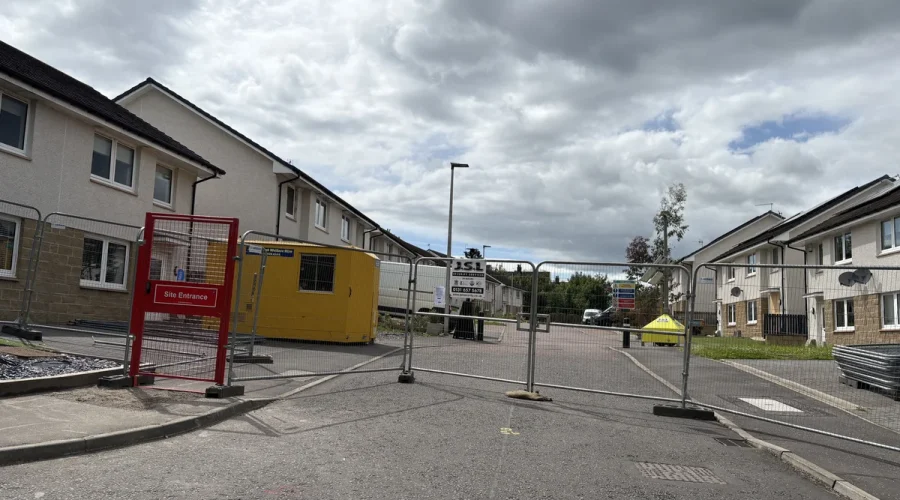
Traveloasisspot.com – For residents of Benbuck View and Dunmoss View in Coalsnaughton, a quiet settlement tucked into the hills of Clackmannanshire, the decision to tear down their homes arrived not as a surprise but as a confirmation of what the cracked earth beneath their gardens had been whispering for months. Ninety-seven properties across four streets in the former coal-mining community were evacuated in May after surveyors detected active ground movement, and now the Mining Remediation Authority has concluded that two of those streets can never be made safe again.
The Verdict: Beyond Repair
After a programme of structural engineering assessments, ground investigations, and a full appraisal of remediation options, the MRA determined that damage and risk severity on Benbuck View and Dunmoss View have passed the threshold of rehabilitation. In practical terms, this means the subsidence is so extensive that no combination of engineering interventions can restore the ground to a stable, habitable condition. The authority’s proposed course of action is to acquire the properties outright and demolish them.
The remaining affected streets face a different trajectory. At Langour, where movement has been more limited, residents are expected to receive repairs once ground stabilisation work is completed. The distinction underscores how unevenly historic mining damage manifests even within a single small village: one street may show hairline fractures in a garden wall while another, metres away, has suffered structural failure in its foundations.
A Community Upended
Keith Brown, the Scottish Parliament member for Clackmannanshire and Dunblane, was briefed by the MRA before residents gathered for a meeting on Thursday evening to hear the decision. He described the reaction as “absolutely devastating” and used the platform of BBC Radio Scotland’s Breakfast programme to explain what the authority was communicating to the community.
“The MRA is legally obliged to provide support and assistance to the homeowners. And what they’re saying is essentially, of the four streets which have been affected, the two in the middle are going to have to be completely torn down. Other work will be required at the top and the bottom, but the two streets in the middle will have to come down.”
Brown highlighted the deeply personal toll of the decision. One woman, he noted, had moved to the area within the preceding year, drawn by what he described as “stunning views across the valley towards the Ochil hills.” She had recently shaded her garden, renovated her kitchen, and settled in what she considered her forever home. Another resident keeps a memorial to his late wife in his garden — a garden that will soon be a demolition site.
“So this is a huge wrench for these individuals, and although it may not be unexpected, this will be devastating to them.”
Voices from the Affected Streets
Simon Woodward, 67, has lived in his Coalsnaughton home for seventeen years. He told the BBC that some neighbours were in tears at the Thursday meeting, though he himself had anticipated the outcome.
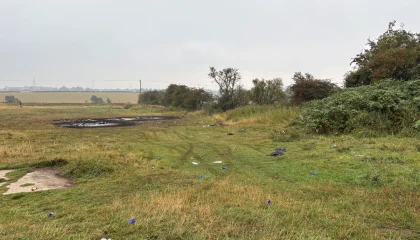
“I sort of knew it was coming. You can just tell. I mean, the place just looks like the dark side of the moon at the moment, it’s holes everywhere.”
Woodward and his wife had planned to spend their retirement in the house. They had invested heavily in its upkeep and improvement over the years.
“We’ve put our heart and we’ve spent £10, £20, £30,000 on it to make it as best as we can for our retirement. That’s gone.”
Who Pays, and Why
The UK Government has confirmed it will fund the full response to the Coalsnaughton incident, including acquisition, demolition, and support for displaced residents. This falls within the broader framework of post-mining liability in Scotland, where the state assumes responsibility for ground damage caused by historic extraction operations that predate modern regulatory regimes. Coalsnaughton, like many settlements in the Ochil Hills and surrounding coalfields, grew around pithead employment in the nineteenth and early twentieth centuries. Once the mines closed, the underground workings remained — and, in some cases, continued to shift.
Carl Banton, chief operations director at the Mining Remediation Authority, addressed the decision on Friday, emphasising that the conclusion was reached only after exhaustive technical work.
“We have completed a programme of assessment work, including structural engineering assessments, ground investigations and an appraisal of the options available to make the area safe. This has given us a clearer picture of the scale of damage and the likely next steps for each affected area and property.”
“The most serious impacts remain on Benbuck View and Dunmoss View, where the homes have been assessed with damage and risk severity beyond the point of rehabilitation. Subject to the necessary approvals, our proposed approach is to acquire and demolish the properties on those streets.”
“We know this is very difficult news for residents and their families. It is not a conclusion we have reached lightly, but it reflects the level of damage, the work that would be needed to make the ground safe, and the importance of giving people a clear, safe and practical route forward.”
What Comes Next
For the residents of Benbuck View and Dunmoss View, the immediate period ahead will involve formal acquisition proceedings, relocation support, and the practical task of finding new homes — often in a housing market already under pressure. The demolition itself will require planning approvals and coordination with local authorities in Clackmannanshire. Meanwhile, stabilisation and repair work on the less-affected streets, including Langour, will proceed on a separate timetable.
The visible scars of the subsidence — cracked roads, fractured paths, split garden walls — will remain in the landscape even after the buildings are gone, a reminder that the ground beneath a former mining village never truly stops moving. For a community of just under a hundred households, the loss of two entire streets is not merely an infrastructure problem; it is the erasure of a neighbourhood, a set of gardens, a memorial, and a retirement plan, all at once.
Related Reading
Frequently Asked Questions
What is Streets in former pit village to be?
Streets in former pit village to be is the main topic of this guide. The article explains the context, practical details, and next steps readers should understand.
Why does Streets in former pit village to be matter?
Streets in former pit village to be matters because readers are looking for a useful answer, not just a short summary. Good content should match search intent and help them decide what to do next.