Table of Contents
TogglePeople of Burkina Faso should abandon democratic aspirations, claims military leader
Ibrahim Traoré asserts governance under military rule is more suited to the nation
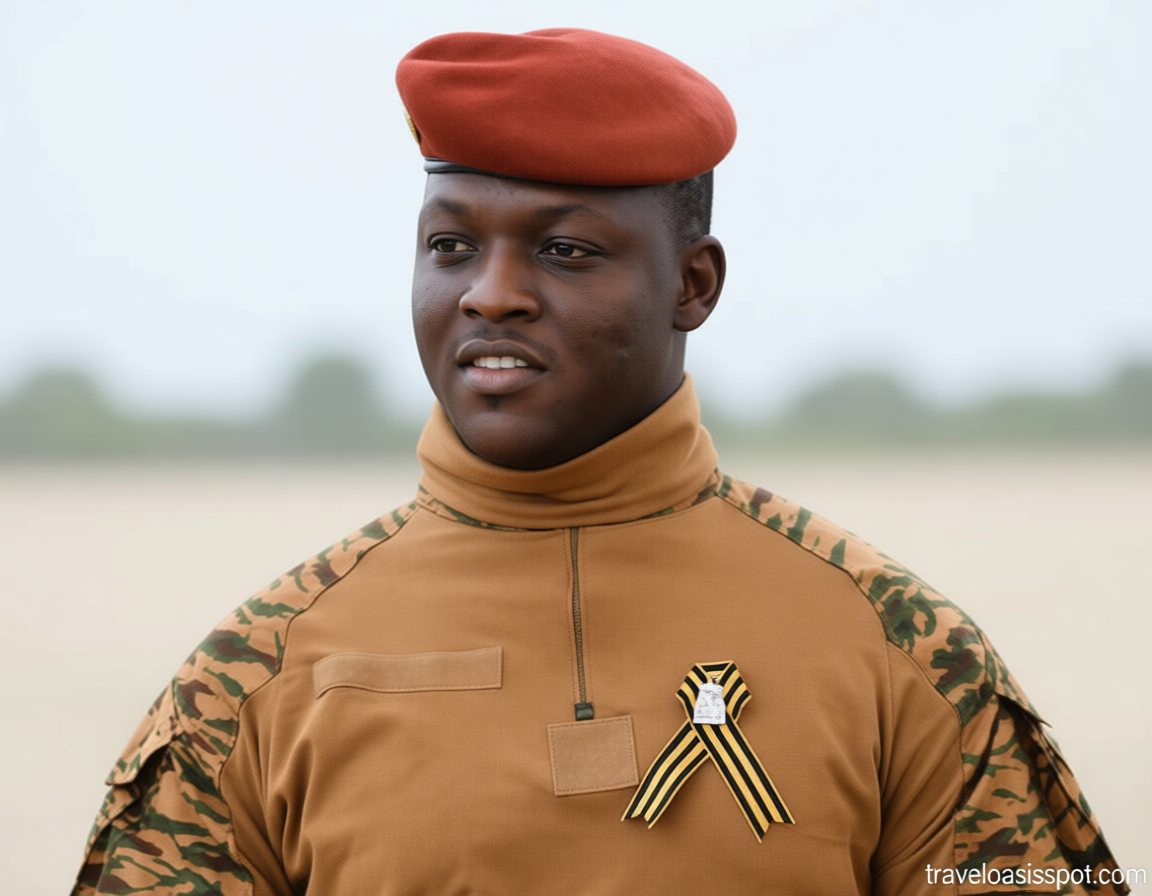
According to a recent statement by the nation’s military leader, Ibrahim Traoré, citizens of Burkina Faso are urged to cease their pursuit of democratic ideals. The 37-year-old leader, who seized control through a coup in September 2022, has since implemented measures to restrict political freedoms. His regime follows a previous junta that had ruled for nine months prior, and he has now extended his authority until 2029.
Speaking in an interview with the state-run Radiodiffusion Télévision du Burkina (RTB), Traoré emphasized that democracy is not aligned with the country’s needs. “We’re not even discussing elections,” he said, arguing that the populace must move past the idea of democratic governance. “Democracy isn’t for us,” he added, challenging the system that has governed Burkina Faso since its independence.
Despite his claims, Traoré’s rule has been marked by suppression of dissent. In January, he officially outlawed all political parties, a move that has silenced opposition voices. The original plan for a democratic transition, set for 2024, was abandoned when the junta prolonged his leadership until 2029. This decision has drawn criticism from both domestic and international observers.
“Democracy, we kill children. Democracy, we drop bombs, we kill women, we destroy hospitals, we kill civilian population. Is that democracy?”
Traoré’s leadership echoes the fiery rhetoric of Thomas Sankara, the revolutionary leader who once renamed the country from Upper Volta and championed Marxist principles. Sankara’s tenure, from 1983 to his assassination in 1987, was defined by radical reforms and anti-western sentiment. Traoré, however, has faced challenges in his own rule, including a jihadist insurgency that has claimed over 1,800 civilian lives since 2023.
The conflict has displaced 2.1 million people, nearly 9% of the population, as reported by official data from three years ago. Human Rights Watch (HRW) recently accused all parties involved in the violence of committing crimes against humanity and war crimes. The report highlighted allegations of ethnic cleansing targeting Fulani communities, along with targeted killings and forced displacement.
In April 2024, HRW revealed that the military had executed 223 civilians in a single day two months prior. The government refuted these claims and imposed a ban on the organization, alongside several international media outlets, including *The Guardian*. This action underscores the regime’s determination to control narratives surrounding its actions.