Many Pubs Set to Remain Closed for England-Mexico World Cup Game
Many pubs set to remain closed – Despite the government’s approval for pubs to stay open until 5 a.m., numerous establishments across England are likely to keep their doors shut for the upcoming World Cup clash against Mexico. The decision to allow late-night openings has been met with mixed reactions, as some pub owners argue the late hours may not be feasible for their local communities.
Government Extends Pub Hours for World Cup Match
Sir Keir Starmer, the UK’s leader, revealed on Thursday that pubs in England and Wales will be permitted to operate beyond their usual closing times for the round of 16 game. This match, set to begin at 1 a.m. on Monday, is a significant event for football fans, and the government’s move aims to support public venues in catering to the excitement surrounding the tournament.
Previously, MPs had lobbied for further flexibility, as the existing 2 a.m. extended hours were deemed insufficient for some. The new policy, however, simplifies the process by granting a blanket extension, eliminating the need for individual pubs to submit special applications for late service.
Pub Owners Express Concerns Over Late Hours
While the government has eased restrictions, several pub operators remain skeptical about the practicality of staying open until 5 a.m. Tommy Higgs, co-owner of The Three Horseshoes in Witney, Oxfordshire, highlighted the challenges faced by smaller establishments. “We’re in a built-up community, and I think it’s just a little bit disrespectful for our locals to have that sort of noise at 5 a.m.”
“No one’s going to want to work until five in the morning. We’re not a nightclub; we’re a local pub in a small town, and I am not allowed to annoy my neighbours because I’ll be into holy hell with that.”
Mr. Higgs emphasized that the late hours could strain staff, many of whom hold second jobs. “A lot of our staff have second jobs. We employ a couple of full-timers, but mainly part-time, and I would never expect that of them.” His concerns reflect a broader debate about balancing fan enthusiasm with the realities of running a pub in residential areas.
Industry Responses to the Policy Change
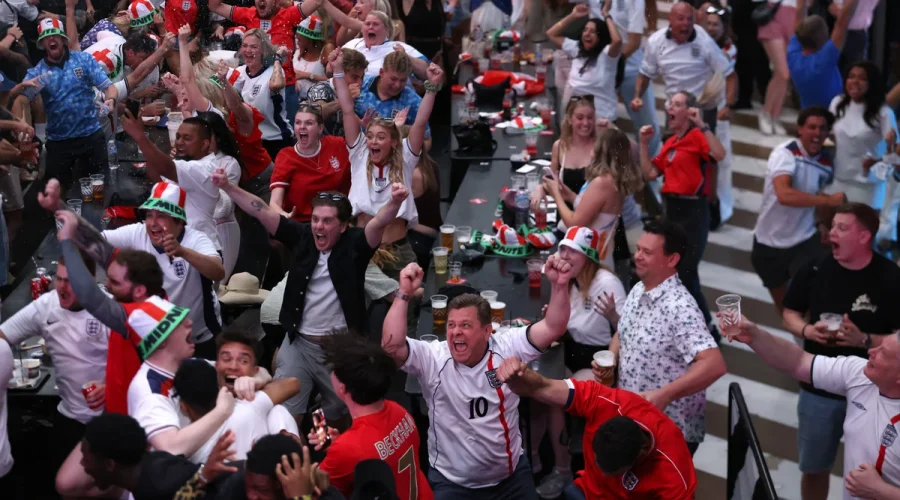
Wetherspoons, a major chain with 800 pubs nationwide, stated that only five of its locations will remain open for the match. Meanwhile, Greene King, which operates 2,600 pubs, restaurants, and hotels across the UK, pledged to keep over 600 pubs in England open late to accommodate fans. “We’re delighted to have been granted permission to stay open late as England progress through the tournament,” said Andrew Gallagher, brand and marketing director at Greene King.
“There’s nothing quite like the atmosphere in our pubs and it gives fans the chance to come together, soak up the occasion and hopefully celebrate!”
Despite the positive sentiment, the policy has sparked discussions about the impact on pub trade. The British Beer and Pub Association (BBPA) noted earlier this year that the number of pubs in the UK had decreased from 46,829 in 2020 to 44,656 in 2025. This decline underscores the challenges pubs face in maintaining profitability, especially when forced to extend hours for high-profile events.
Context and Implications of the Decision
The government’s decision to extend pub hours aligns with its broader strategy to foster community engagement during major sporting events. However, critics argue that the move may not address the deeper issues affecting the pub sector, such as rising operational costs and declining foot traffic. For some, the late hours offer a chance to celebrate, but for others, like Mr. Higgs, it represents an unnecessary disruption.
Tommy Higgs further explained that the policy’s effectiveness varies by location. “For some, I think it’s a huge benefit, especially in your bigger built-up cities, where there are places that open later. But for here and where we are, it’s just not something we will do.” His remarks highlight the disparity between urban and rural pub operations, as well as the differing needs of local communities.
England’s World Cup Journey Continues
England’s upcoming encounter with Mexico comes after a 2-1 victory over the Democratic Republic of the Congo in the previous round. The match is expected to draw significant attention, with fans eagerly anticipating the opportunity to gather in pubs for the event. Andrew Gallagher noted that the atmosphere in pubs is a key draw for supporters, and the extended hours will allow for a more immersive experience.
While the government’s decision may benefit some pubs, it also raises questions about the sustainability of such measures. Pub owners like Mr. Higgs are cautious, suggesting that the policy could inadvertently harm the very businesses it aims to support. “There’s other things they can be doing to help the pub trade out—staying open until five o’clock in the morning on a Monday,” he said. “For some, it’s a benefit, but for others, it’s completely pointless.”
Other News Headlines
Meanwhile, separate stories have emerged about the UK’s defense budget, with Andy Burnham admitting he lacked full details on a £4.7 billion shortfall. Other headlines include plans for winter escapes, transfer news involving Arsenal and Man Utd, and reports of a pop star collapsing after being bitten by a snake during a performance. Additionally, Nigel Farage’s Reform UK members have sparked controversy by leaving the London Assembly during a debate on local independence. Helen Skelton, a popular presenter, addressed rumors about her dating life with Gethin Jones, and a tech enthusiast shared their experience with Sony’s wearable air conditioner, calling it a unique innovation in portable cooling.
Broader Impacts on the Pub Sector
The debate over late-night openings reflects ongoing challenges within the pub industry. While the government’s policy is designed to support pubs during high-profile matches, it may also highlight the sector’s fragility. Pub owners in residential areas, like The Three Horseshoes, face additional hurdles, including noise complaints and staffing difficulties. The BBPA’s data on the industry’s decline further emphasizes the need for targeted support rather than one-size-fits-all measures.
With the World Cup match approaching, the question remains whether the extended hours will revitalize pub attendance or exacerbate existing issues. For now, the policy serves as a compromise, allowing some venues to stay open while acknowledging the practical constraints faced by others. As England faces Mexico in the last 16, the outcome of this match could influence future decisions on how pubs are supported during major sporting events.
Overall, the government’s move to extend pub hours for the England-Mexico clash represents a blend of tradition and modernization in the UK’s approach to public entertainment. While it offers opportunities for fans to gather and celebrate, it also challenges the pub sector to adapt to the demands of late-night operations. The debate is far from over, as stakeholders weigh the benefits of increased engagement against the logistical and economic hurdles of extended service.