Cold War in South London: A Man’s Berlin Wall Sparking Neighborhood Debate
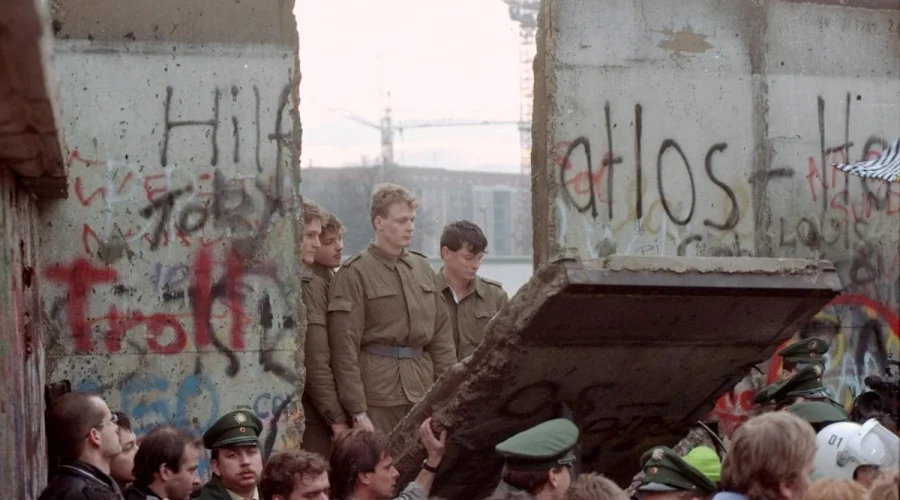
Cold War in south London over – Steven Thorpe, a 65-year-old retired rugby enthusiast from Herne Hill, has found himself at the center of a small but intense dispute with local residents. The source of contention? A towering 3.1-meter section of the Berlin Wall that he proudly displays in his backyard. Installed in February, the structure has drawn mixed reactions, with some neighbors praising its historical charm and others condemning its lack of official approval.
A Sculptural Monument Without Permission
Thorpe claims he was unaware of the need for planning permission when he erected the piece, which he describes as a “sculptural monument.” The 2.8-tonne wall, now a permanent feature in his garden, has become a talking point among locals. While he hopes Southwark Council will grant retroactive approval, the decision has already stirred controversy, with several complaints filed against him.
“Most of my neighbors seem to be very supportive of it,” Thorpe explained. “Just as we were finished installing it, it was pouring down with rain, and [a neighbor] came down and said, ‘what’s that?’ I said, ‘it’s a piece of the Berlin Wall,’ and he replied, ‘did you ask permission?’ I said, ‘I didn’t think I needed to, it’s a piece of artwork.’”
Despite the backlash, Thorpe remains passionate about the project. He noted that the wall is illuminated at night and has ambitious plans to restore it to its Cold War-era appearance. “It’s more than just a piece of history,” he added. “It’s a way to connect people to the past and spark curiosity.” To support his vision, he even created an informational pamphlet detailing its origins and significance.
Divided Opinions Among the Community
While Thorpe’s efforts have captured the imagination of some, others are less impressed. Young residents, in particular, have expressed their disapproval. A 19-year-old named Felix Lord, who lives with his grandmother, told The Sun that the wall “ruins the character and the view of the gardens.” He called it “ugly” and questioned its purpose in a residential area.
“From a historical point of view, I think it’s bloody sick – I really like it,” said another neighbor, Olly, 18. While acknowledging the wall’s cultural value, he admitted it looked more like “a slab” than a meaningful addition to the neighborhood.
Thorpe, however, has a personal connection to the wall. He recalled visiting Berlin frequently in the late 1980s and early 1990s as part of his rugby team, Clifton Rugby Club, which played against the British Army at their base in Germany. He arrived in the city just days after the Wall fell in 1989 and later purchased a section from an East German farmer. The journey to bring it back to the UK took two years, during which he faced challenges like bureaucratic delays and “a lot of paperwork.”
What’s Next for the Berlin Wall in Herne Hill?
Southwark Council has responded to the complaints by stating they will investigate the matter and take action in line with national planning guidelines. The spokesperson said: “We have received a planning complaint about a section of wall installed in Dulwich. We will evaluate its impact and determine whether it meets the required standards.”
Thorpe, undeterred by the controversy, insists the structure is a worthwhile investment. “It’s a piece of history that brings the community together,” he said. “People are fascinated by it, and the kids love coming to see it.” His optimism contrasts with the frustration of those who feel the council should have been consulted first.
Additional Local News Stories
Meanwhile, other developments in the borough are capturing attention. The government has submitted plans for the final deconstruction of Grenfell Tower, marking a critical step in the recovery process following the devastating 2017 fire. In a separate matter, plans for a new bakery near a Tube station have faced criticism from residents concerned about increased foot traffic and noise.
City planners are also reviewing an investor’s proposal to create a “gated community” near Canary Wharf, which has sparked debate over accessibility and urban development. As the winter approaches, local tourism initiatives are promoting “escapes and activities” to help residents unwind, including visits to historic sites and outdoor excursions.
Global Football Updates
On the international stage, football fans are keeping a close eye on the World Cup. France advanced past Paraguay in a tense last-16 clash, with Kylian Mbappé’s penalty kick proving decisive. The match, which ended 1-0, was described as “testy” by commentators, highlighting the competitive nature of the tournament. Meanwhile, Portugal and Spain are set to face off in the next round, with predictions and match details circulating among sports analysts.
Another key development in football news is the ongoing transfer saga involving Arsenal and Manchester United. Both clubs are reportedly vying for the services of Ayyoub Bouaddi, a player whose potential move has been linked to a £100m transfer from Tottenham. The situation remains fluid, with new fees and offers emerging as the season progresses.
Conclusion: A Symbol of Division or Unity?
As the debate over the Berlin Wall in Herne Hill continues, it serves as a microcosm of broader discussions about public space, historical preservation, and community involvement. Thorpe’s project, though controversial, has undeniably ignited interest in the area. Whether it will be approved or remain a contested piece of art depends on the council’s decision, which is expected to reflect the balance between individual creativity and collective interests.
For now, the wall stands as a testament to the enduring fascination with Cold War history. Its presence in a South London garden has transformed a quiet neighborhood into a focal point for conversation, proving that even the smallest installations can carry significant cultural weight.