
Endometriosis: NHS Approves Two New Diagnostic Tests to Speed Up Diagnosis
Endometriosis – Women in the UK who have long struggled with diagnosing endometriosis may soon benefit from a major advancement. The National Institute for Health and Care Excellence (Nice) has endorsed two novel tests, EndoSure and Endotest, which are set to be introduced in general practitioner (GP) clinics. This development could significantly shorten the average nine-year delay in receiving a diagnosis for a condition that causes severe pain and disrupts daily life.
A New Approach to Early Detection
Endometriosis, a chronic disorder characterized by the growth of womb-like tissue outside the uterus, has traditionally been diagnosed through methods like ultrasound scans, MRI, or laparoscopy. These procedures, while effective, often require multiple visits and can take considerable time. The new tests aim to streamline this process by offering non-invasive alternatives that can be conducted in primary care settings.
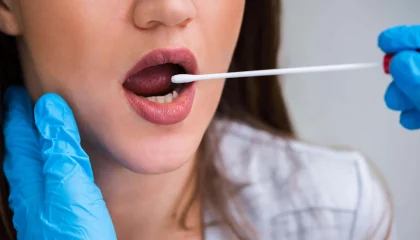
Endotest, one of the approved technologies, works by analyzing a saliva sample for specific biological markers known as microRNAs. These tiny RNA molecules are indicators of endometriosis, allowing healthcare professionals to detect the condition without the need for complex imaging or invasive procedures. Results from the test are delivered directly to GPs, enabling swift decision-making for further care.
EndoSure, the other test, employs a unique method involving electrical signals from the gut. Patients undergo a procedure where sensor pads are placed on their abdomen, and the results are available immediately after testing. To ensure accuracy, individuals must fast for six to eight hours before the test and drink water for 45 minutes as part of the process. This combination of simplicity and speed makes it a promising option for quicker diagnosis.
Challenges in Diagnosis and Patient Experiences
Endometriosis affects roughly one in 10 women of reproductive age in the UK. Many suffer for years without a clear diagnosis, often visiting their GP multiple times before being referred for specialized care. A recent survey of over 10,000 women by the All-Party Parliamentary Group on endometriosis revealed that more than half had seen their GP more than 10 times before receiving a confirmed diagnosis. Additionally, over half had sought emergency care due to persistent symptoms.
Delays in diagnosis are attributed to several factors, including the complexity of interpreting transvaginal ultrasounds and long waiting times for gynaecology appointments. These challenges are compounded by the fact that symptoms can vary widely, leading to misdiagnoses or prolonged uncertainty. For instance, Ami Robertson, a 23-year-old Pilates instructor from Glasgow, spent years believing she had irritable bowel syndrome instead of endometriosis. Her experience highlights the emotional toll of waiting for a correct diagnosis.
“I spent years being told my pain was something else entirely. I started to doubt myself, wondering if it was all in my head,” Robertson shared. “When I finally had the test, it took less than an hour and gave me something I’d never had before: concrete evidence I could take to my doctor. For the first time, I was believed, and I could finally get the help I needed.”
Similarly, Simran Chavda, a 15-year-old from Huddersfield, described the relief of receiving a diagnosis after enduring severe pelvic pain since age 13. “Getting my diagnosis honestly felt like the best thing in the world,” she said. “Everyone kept saying it might be something else, but finally having the answer changed everything.”
The new tests are not intended to replace existing diagnostic methods but to complement them. They are recommended for use when endometriosis is still suspected despite a normal clinical examination and either negative or inconclusive imaging results. This approach ensures that patients with ambiguous symptoms can benefit from additional tools without unnecessary delays.
Implications of the New Guidance
Dr. Anastasia Chalkidou, healthtech programme director at Nice, emphasized the importance of these innovations in reducing diagnostic delays. “A diagnosis of endometriosis can for some women take the best part of a decade, with the UK average standing at nine years and four months, and rising to 11 years for those from ethnically diverse communities,” she explained. “This delay means living with chronic pelvic pain that affects daily life, relationships, and work.”
“These technologies have the potential to change that by giving primary care professionals better non-invasive tools to identify endometriosis earlier,” Chalkidou added. “Earlier diagnosis allows for timely treatment, improving outcomes for patients. Our draft guidance reflects our commitment to getting promising innovations to patients quickly, while making sure the evidence to support their wider use is built in a rigorous way.”
While EndoSure and Endotest are now approved, a third technology, DotEndo, is still under evaluation. Nice stated that more research is needed before DotEndo can be widely adopted. The organization plans to collect additional evidence over the next three years to assess the effectiveness of the two approved tests. This period will allow for further validation before final approval is granted.
The introduction of these tests marks a significant shift in how endometriosis is managed. By enabling earlier detection, they could reduce the strain on hospital services and improve patient quality of life. For many women, the ability to receive a diagnosis quickly means accessing treatment sooner, which is critical in alleviating symptoms and preventing long-term complications.
Endometriosis is not just a physical condition; it also carries emotional and psychological weight. The prolonged uncertainty often leads to feelings of frustration and helplessness, with patients questioning their own health. The availability of faster diagnostic tools may help restore confidence in the medical system and empower women to take control of their care.
As the NHS rolls out these tests, healthcare professionals will need training to interpret results accurately. The success of the initiative will depend on integrating these technologies smoothly into routine practice and ensuring they are accessible to all demographics. With ongoing research and real-world application, the hope is that these innovations will become standard procedures, transforming the diagnosis and treatment landscape for endometriosis patients across the country.