Trump and Netanyahu diverge on Iran war’s future in tense phone call
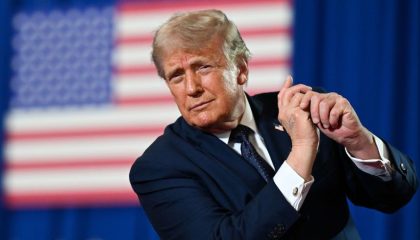
Trump and Netanyahu diverge on Iran – In a pivotal phone call on Tuesday, US President Donald Trump and Israeli Prime Minister Benjamin Netanyahu found themselves at odds over the trajectory of the Iran conflict, a US official revealed to CNN. This exchange highlighted the growing tension between the two leaders as they debated the next steps in the ongoing struggle against Iran. While the conversation wasn’t their first in recent days, it underscored a critical shift in their strategic approach. Days earlier, on Sunday, Trump had expressed confidence in launching new targeted strikes on Iran, according to the official. These strikes were anticipated to be named Operation Sledgehammer, a move previously reported by CNN as part of broader military planning.
However, just 24 hours after that initial discussion, Trump abruptly announced a pause in the planned attacks, citing pressure from allies in the Persian Gulf. Qatar, Saudi Arabia, and the United Arab Emirates had reportedly requested a delay, leading to the suspension of the operation. Since then, the Gulf nations have engaged in intense dialogue with White House and Pakistani representatives, aiming to draft a framework that might pave the way for renewed diplomatic efforts. The US official and an unnamed Israeli source described the negotiations as progressing rapidly, though the outcome remains unclear.
“We’re in the final stages of Iran. We’ll see what happens,” Trump told reporters on Wednesday, reflecting his cautious optimism about the diplomatic path. He added, “We’ll either have a deal or we’re going to do some things that are a little bit nasty. But hopefully that won’t happen.” The remarks came as part of a broader strategy to balance military and diplomatic options, a decision that has sparked frustration among Israeli officials. Netanyahu, who has consistently advocated for a more aggressive stance against Tehran, argued that the delay could benefit Iran by giving it time to consolidate its position.
During the Tuesday conversation, Netanyahu made his dissatisfaction evident, urging Trump to proceed with the planned strikes. “Delaying the attacks is a mistake,” he reportedly said, according to the US official. The Israeli prime minister believes that any pause allows Iran to strengthen its defenses and negotiate from a position of strength. This sentiment echoes a recurring theme in his interactions with US leaders, where he has emphasized the urgency of military action. Despite his advocacy, Netanyahu’s concerns are not entirely new, as previous discussions have already acknowledged the differing priorities between the US and Israel regarding the Iran conflict.
Iran’s Nuclear Stance and Diplomatic Position
Iran’s Foreign Ministry spokesperson, Esmaeil Baghaei, dismissed recent claims about the country’s nuclear activities, calling them “media speculation” on Thursday. “There is no basis in reality,” he stated, as quoted by Iran’s state-affiliated news agency, IRNA. Baghaei also cast doubt on the possibility of a breakthrough in talks with Washington, labeling all rumors as “not credible.” These comments come as Tehran continues to resist concessions on its enriched uranium stockpile, a key issue in the negotiations.
Reuters reported that Iranian Supreme Leader Mojtaba Khamenei had directed officials to ensure that near-weapons-grade uranium is not sent abroad. However, this directive had not yet been conveyed to the White House by Thursday morning, according to a US official. The delay in communication suggests a lack of alignment between Iran’s leadership and the American side, complicating the path to a resolution. Meanwhile, Trump reiterated his commitment to securing Iran’s enriched uranium, asserting, “No, no, we get the highly enriched. We will get it.” He added, “We don’t need it; we don’t want it. We’ll probably destroy it after we get it, but we’re not going to let them have it.”
Netanyahu’s frustration with the US approach has grown as the administration continues to prioritize diplomacy over immediate military action. An Israeli source described the prime minister’s disappointment as extending beyond the immediate conversation, affecting his inner circle. “There is a strong desire in the upper echelons of the Israeli government for renewed military action,” this source noted, highlighting the mounting pressure on Trump to act decisively. Yet, despite Netanyahu’s push, Trump has remained steadfast in his pursuit of a diplomatic agreement, framing the current situation as “right on the borderline” and emphasizing the potential to save lives through negotiation.
Iran’s resistance to giving up its enriched uranium has been a central point of contention. The country has maintained its stance, refusing to compromise on the issue. This position has raised doubts among Israeli officials about the likelihood of a swift deal. “Netanyahu is skeptical talks will produce an agreement,” another Israeli source said, adding that Iran’s refusal to relinquish its nuclear stockpile remains a sticking point. The divergence in perspectives between Trump and Netanyahu is evident: while the US leader seeks to explore diplomatic possibilities, the Israeli prime minister remains focused on the need for military escalation.
The ongoing negotiations have also drawn the involvement of Pakistan, which is acting as a mediator in the talks. This role underscores the complexity of the situation, as multiple parties attempt to bridge the gap between the US and Iran. However, the process has not been without challenges, with conflicting priorities and communication gaps hindering progress. Trump’s statement that he is “in the driver’s seat” during the talks highlights his belief in his ability to steer the outcome, even as Netanyahu exerts pressure to return to active combat.
As the situation unfolds, the stakes for both nations remain high. The US and Israel have different objectives in the conflict, with Trump seeking to balance military and diplomatic strategies, while Netanyahu insists on a more forceful approach. The tension in their conversation reflects a broader struggle between two visions of how to confront Iran: one focused on strategic patience and another on immediate retaliation. The outcome of these negotiations could shape the future of the Middle East, and the diverging paths of the two leaders add an element of uncertainty to the process.
With the White House and Israeli officials engaged in continuous dialogue, the hope is that a compromise can be reached before the situation escalates further. However, the conflicting priorities and the refusal of Iran to budge on its nuclear stance suggest that the road to a resolution may be long and arduous. As Trump continues to push for diplomacy, the question remains: can a deal be secured, or will the tension between the US and Israel lead to renewed military action?