Andy Burnham’s Chancellorial Choices: A Political Analysis
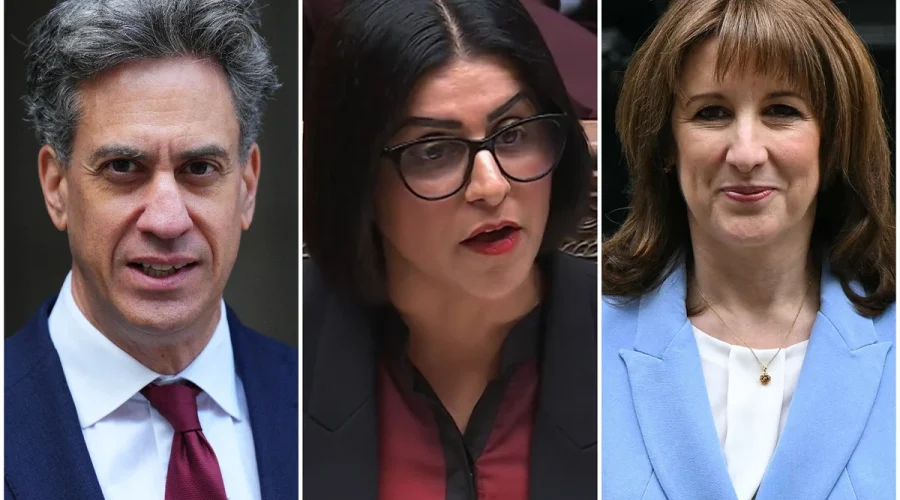
Who will be Andy Burnham s Chancellor – As Andy Burnham prepares to assume the role of Prime Minister this coming Monday, intense speculation surrounds his selection for the crucial position of Chancellor of the Exchequer. Among the contenders, Shabana Mahmood has emerged as the leading candidate to take charge of the nation’s finances. The current Home Secretary is widely regarded as the favourite to relocate from her Whitehall office to Number 11 Downing Street, where she would oversee Britain’s economic strategy.
Within the Labour movement, a notable division has emerged regarding this appointment. Supporters on the party’s left wing have actively campaigned for Ed Miliband to secure the Treasury role, creating friction among Burnham’s allies. Nevertheless, while Burnham’s inner circle maintains that no definitive choices have been locked in, there is growing consensus that the incumbent Energy Secretary might face scrutiny if selected for the top economic post.
Shabana Mahmood: The Leading Contender
Mahmood has held responsibility for the Home Office since September of last year, bringing with her prior experience as Justice Secretary. Her tenure has been marked by significant immigration policy changes that have generated considerable debate. Most notably, she introduced reforms abolishing permanent refugee status while simultaneously doubling the qualifying timeframe required for Indefinite Leave to Remain. These measures have drawn criticism from certain segments within Labour ranks.
Despite not possessing an extensive track record specifically on economic matters, Mahmood is perceived as occupying a more centrist position within the party, largely due to her firm approach to immigration. Additionally, she has cultivated a reputation for effectively managing complicated Whitehall departments and demonstrating resilience when confronting the civil service establishment.
Ed Miliband: The Left-Wing Alternative
Ed Miliband has served as Energy Secretary since Labour returned to power in July 2024. His popularity remains strong among party members, though his net-zero environmental policies have encountered public resistance. Those who champion Miliband argue he represents the ideal candidate to challenge established Treasury orthodoxy and bring fresh perspectives to economic management.
However, sceptics within Parliament point to historical precedent, noting that Miliband led the party to a devastating general election loss in 2015. This record has led some to view his potential appointment as a calculated risk with voters. Should he not receive the Chancellorship, it is understood that Miliband could potentially be offered the Foreign Secretary position instead.
The Foreign Secretary and Keir Starmer’s Successor
The current Foreign Secretary is viewed as an unexpected but viable option to lead the Treasury. Recognized as one of the government’s most seasoned ministers, she previously held the role of chief secretary to the Treasury under Gordon Brown’s administration. As the MP representing Pontefract, Castleford and Knottingley, she could serve as a political compromise between Mahmood, positioned on Labour’s right, and Miliband on the left.
Britain’s first female Chancellor has been actively lobbying to retain her position, though observers consider it highly improbable that she will remain in office under Burnham’s leadership. Burnham, closely associated with the Labour soft left, is entering Number 10 with a clear commitment to implementing meaningful change across government operations.
Meanwhile, Ms Reeves confronts historically low public approval ratings. According to a recent YouGov poll, fifty-four percent of respondents believe she is performing poorly, while only twelve percent express support for her policies. This challenging political landscape adds another layer of complexity to Burnham’s upcoming cabinet reshuffle as he seeks to balance internal party dynamics with public expectations.