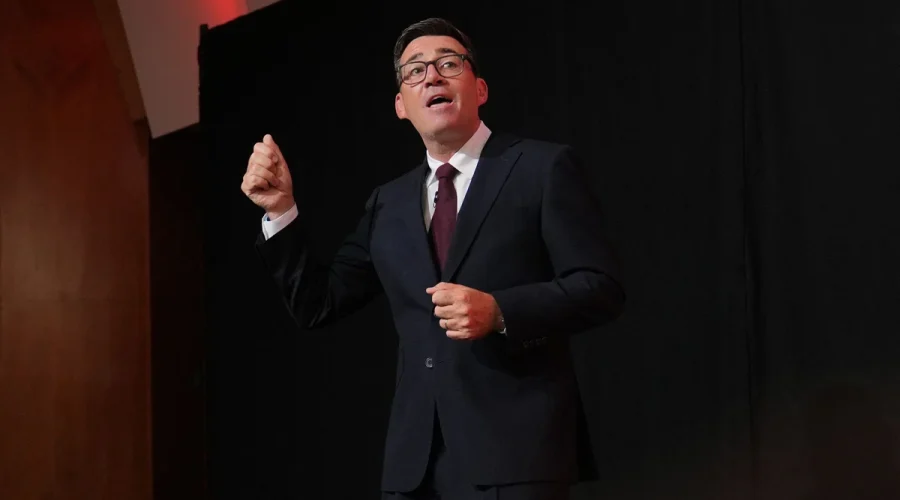
Burnham to Abandon Digital ID Scheme in Priority Shift
Burnham will scrap digital ID to focus – Andy Burnham is set to dismantle Sir Keir Starmer’s signature digital identification initiative as he prepares to assume the role of prime minister on Monday. The incoming leader’s transition team characterised this decision as a fundamental “reset of priorities,” noting that funds originally allocated for digital ID implementation will now be channelled toward more “tangible” enhancements to citizens’ wellbeing.
A representative for the incoming prime ministerial office explained that the administration would “put its focus where people need it right now.” The spokesperson elaborated that this approach means diverting all time and resources previously destined for a national identification scheme toward areas of greatest urgency, particularly assistance with rising living expenses.
Financial Implications and Uncertainty
The Office for Budget Responsibility provided an estimate last November suggesting the programme would require £1.8 billion across a three-year period. While Downing Street dismissed this valuation, the government failed to supply its own projection, a gap that a parliamentary committee highlighted earlier this year as potentially allowing for higher costs.
Sir Keir initially unveiled the digital ID proposal prior to last year’s Labour conference, positioning it as a mandatory requirement for right-to-work verification within a broader strategy to combat illegal immigration. Government officials anticipated the initiative would evolve beyond its initial scope, potentially becoming the “bedrock of the modern state” through what they termed a “government by app” framework.
However, public backing for the scheme deteriorated significantly following Sir Keir’s announcement. The government subsequently modified its position, declaring that digital ID would become voluntary for right-to-work assessments rather than compulsory.
Political Reactions and Criticism
Shadow technology secretary Julia Lopez offered a pointed assessment of the situation. She stated: “Labour have wasted millions of pounds on this project and now Andy Burnham is trying to pretend he’s riding to the rescue.” Lopez continued: “After pressure from the Conservatives, mandatory ID was already apparently off the table. Andy Burnham now needs to explain whether that was untrue, or whether he is simply claiming credit for a decision that had already been taken.”
Liberal Democrat Cabinet Office spokesperson Lisa Smart celebrated the development as “a huge win for the Liberal Democrats and all those who have fought tooth and nail to stop the Government from pushing through its doomed mandatory digital ID scheme.” She added: “People will be hugely relieved to know they are no longer set to be forced to hand over their data just to go about their daily lives.” Smart concluded: “We have long said the obscene sums earmarked for digital ID would be a huge waste of taxpayers’ money, and it’s a relief that Burnham has woken up to that.”
Jack Coulson, advocacy head at Big Brother Watch, expressed approval of the reversal, noting that the public had been “clear that they do not want mandatory ID.” He remarked: “The Government backing down shows what campaigns like Big Brother Watch’s can achieve.” Coulson cautioned, however, that “the dangers of a ‘papers please’ society have not gone away,” expressing concern that the government’s social media restrictions might create a de facto mandatory identification system for online interactions. He added: “If this is a signal, it is a positive one, but we must all keep a wary eye on Tony Blair’s former ID card minister.”
Looking Ahead
This decision represents the first significant departure from Sir Keir’s agenda that Mr Burnham has publicly confirmed before officially becoming prime minister. He is anticipated to unveil additional details regarding his plans on Monday following his visit to the Palace to “kiss hands” with the King and formally assume the premiership.
Supporters have indicated that Burnham intends to launch a “dynamic start” to his leadership, with the speech expected to outline strategies addressing the cost of living crisis while emphasising his central theme of transferring authority from Whitehall to regions throughout the United Kingdom.
Reports suggest the incoming prime minister may also prepare to diverge from another of Sir Keir’s commitments by authorising additional oil and gas extraction in the North Sea. Labour’s 2024 manifesto, which Mr Burnham has pledged to uphold, stated that the party would not grant new North Sea licences, contending they would “not take a penny off bills” or enhance energy security while simultaneously accelerating climate change. Nevertheless, the incoming prime minister is reportedly “open-minded” regarding this policy position.
He may argue that he is not violating the manifesto commitment by approving developments at the Jackdaw and Rosebank fields, where licences have already been issued, while maintaining a moratorium on new licences. Green MP Adrian Ramsay has been vocal about environmental considerations surrounding this potential policy shift.
“The Government backing down shows what campaigns like Big Brother Watch’s can achieve,” said Jack Coulson, head of advocacy at Big Brother Watch.
“We have long said the obscene sums earmarked for digital ID would be a huge waste of taxpayers’ money, and it’s a relief that Burnham has woken up to that,” stated Lisa Smart, Lib Dem Cabinet Office spokeswoman.