Traveloasisspot.com – “`html
Andy Burnham’s Vision for London: Economic Shifts and Policy Changes Ahead
Following Sir Keir Starmer’s departure from office, Andy Burnham is positioned to assume the role of Prime Minister when he enters Number 10 on Monday. During his campaign, he characterized this transition as potentially the most transformative period in British politics within four decades. His agenda centers on implementing what he describes as the greatest transfer of authority since modern governance began, reversing what he perceives as decades of neoliberal policies while simultaneously launching the most extensive council housing construction initiative since World War Two.
As Burnham prepares to receive his formal invitation from the monarch to establish a new administration, public expectations have reached unprecedented levels. The former Greater Manchester Mayor plans to address the nation from Downing Street upon returning from Buckingham Palace, outlining his comprehensive domestic strategy. Central to his message will be the necessity of political steadiness to produce measurable improvements in everyday life, concluding with confidence that Britain can move forward “with hope and unity.”
Financial Reforms and Tax Adjustments
One of Burnham’s key economic proposals involves restructuring taxation to benefit lower-income families while increasing contributions from affluent households. While maintaining Labour’s 2024 election commitment to keep income tax, VAT, and employee National Insurance rates unchanged, he has acknowledged that additional revenue may be necessary. The government aims to channel billions toward regional development, which could require supplementary funding sources.
London faces particular financial implications under these proposals. Burnham has supported transitioning from council tax and stamp duty to an alternative property levy that might generate an additional £7.5 billion for the capital. This restructuring would necessitate comprehensive property revaluation. Alternative approaches include reducing the mansion tax threshold from £2 million to £1.5 million, lowering the income level subject to the 45p top rate, increasing banking levies, or implementing wealth taxation.
Business rate reforms represent another significant area, with proposals to increase charges on out-of-town warehouses operated by major online retailers like Amazon. These increases would help fund reductions for hospitality venues and traditional high street enterprises.
Housing Market Implications
Analysts suggest that implementing a new property tax or land value tax could reduce London house prices by approximately 20 percent. This projection comes as prices have already been declining across the capital for several months, creating anxiety among homeowners carrying substantial mortgages. Nevertheless, many observers view London’s property market as excessively inflated, and Burnham contends that his regional leveling strategy will ultimately benefit the capital by preventing economic overheating.
The underlying logic suggests that reduced migration from northern and midland regions—where economic conditions are improving—will decrease demand pressure on London housing, reduce transport congestion, and alleviate other urban strains. This perspective resonates with older London residents who watched their property values surge but now worry about their children’s ability to purchase homes in the city.
Employment and Government Restructuring
Burnham’s ambitious devolution plans may result in tens of thousands of positions being eliminated from Whitehall. Miatta Fahnbulleh, the Peckham MP and former director of the New Economics Foundation, has indicated that central government will become considerably smaller while adopting a more strategic function. London currently maintains one of the lowest ratios of public sector employees relative to population, largely due to its substantial private sector presence.
The impact on private sector employment remains uncertain. Several business leaders express concern following Chancellor Rachel Reeves’ £20 billion increase in employer National Insurance contributions, which has already created challenges for companies. Despite these uncertainties, Burnham has committed to governing for all UK citizens while prioritizing support for underserved communities.
“The biggest devolution of power in modern times” — Andy Burnham’s pledge to transform British governance
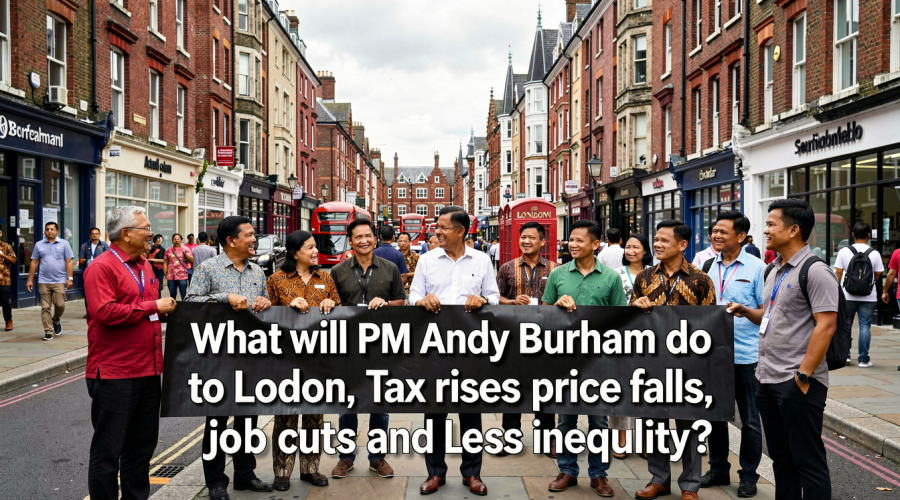
As Burnham begins his tenure, Londoners will watch closely to see how these ambitious proposals materialize into concrete policy changes that affect their daily lives, property values, and economic opportunities.
“`