Dimbleby Condemns BBC’s “Very Bad Call” as Thousands Face Job Losses
A Veteran Broadcaster Speaks Out Against Deep Cuts
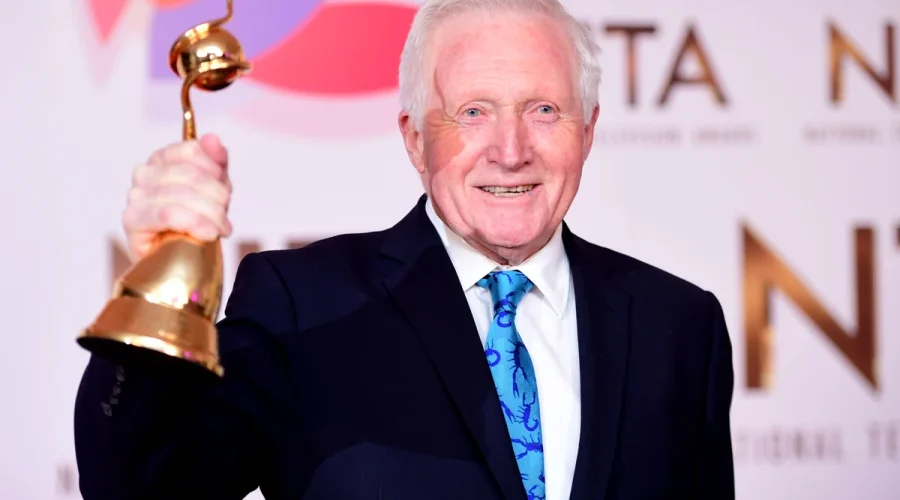
Traveloasisspot.com – David Dimbleby has voiced his profound disappointment regarding the BBC’s restructuring plans, which threaten the employment of as many as 2,000 staff members across the organization. The 87-year-old television personality, renowned for his decades of service to British broadcasting, described the situation with characteristic candor and concern for the institution he helped shape.
The national broadcaster has committed to achieving £500 million in financial savings within a two-year timeframe. While the initial wave of redundancies was announced in April, the implementation of these job cuts will unfold gradually over the following three years, affecting various departments throughout the corporation.
In an interview with Radio Times, the former Question Time presenter shared his frustration with leadership’s approach. His reaction was immediate and passionate, reflecting both his personal investment in the BBC and his belief in the value of quality journalism.
“Why on earth have they done that? The best analysis of politics, both national and international… I’m appalled. Very bad, bad, bad, bad, bad call,” he declared.
The Impact on BBC Events and National Coverage
Beyond the headline numbers, Dimbleby specifically highlighted concerns about cuts to BBC Studios Events. This specialized division handles coverage of significant national occasions, including Remembrance Day ceremonies and state funerals. The restructuring means that every member of this team will be dismissed except for a single individual, dramatically reducing the broadcaster’s capacity for event coverage.
“And my God, BBC Events being closed,” Dimbleby remarked, drawing on his extensive experience with these ceremonies.
His connection to these events runs deep. For more than a quarter of a century, he provided commentary on Cenotaph services in Whitehall. He also returned from retirement specifically to guide the BBC’s coverage of Queen Elizabeth II’s funeral, demonstrating his commitment to maintaining the corporation’s tradition of dignified national event presentation.
“It takes months of connections to make friends with the people at the Palace, with Westminster Abbey, with the police, to know what’s going on with Downing Street so that when the day comes, everybody helps you.”
“It’s a BBC gold standard to cover big national events. It’s at the heart of the BBC, and I cannot understand what they’re up to.”
Programme Changes and Strategic Shifts
The restructuring extends beyond personnel to affect flagship programmes. BBC Radio 4’s The World Tonight, which has aired for over five decades, will be discontinued as one of the earliest casualties of the savings initiative. In response to audience concerns, the BBC issued a statement explaining their mitigation strategy.
“The BBC has to make at least £500 million of savings and BBC News, like all of the BBC, needs to play its part. We have tried to mitigate the impact on audiences as much as possible, so The World Tonight will be replaced by BBC World Service’s Newshour, another high-quality news analysis programme made by the same production team, preceded by a domestic news bulletin.”
Additional changes include the reduction of the Sunday morning BBC Breakfast edition beginning in September. Furthermore, production teams behind Newsnight and Sunday With Laura Kuenssberg will be consolidated into a single unit, streamlining operations while reducing overhead costs.
Leadership Perspective and Future Direction
BBC director-general Matt Brittin communicated his vision for the corporation’s evolution in a message to staff. He emphasized that the organization must examine its broadcast television channels and radio network portfolio as viewing habits continue shifting toward digital platforms. Brittin also confirmed that approximately 10% of senior leadership positions will be eliminated as part of the restructuring.
Dimbleby’s career trajectory mirrors much of modern British broadcasting history. He began as a news reporter in Bristol during the 1960s, eventually becoming one of the nation’s most recognizable faces. His tenure hosting Question Time spanned from 1994 to 2018, cementing his reputation as a thoughtful and authoritative voice in political discussion.
The current wave of cuts represents not merely financial necessity but a fundamental transformation of how the BBC operates. As audiences increasingly consume content online, the corporation must balance maintaining its traditional strengths while adapting to new realities. Dimbleby’s criticism reflects a broader anxiety among long-serving staff that institutional knowledge and relationships—particularly those built over decades—are being undervalued in the pursuit of efficiency.
Whether these changes will ultimately strengthen or weaken the BBC’s position remains to be seen. What is clear is that the coming years will test the organization’s ability to preserve its core mission while navigating an increasingly competitive media landscape.