Trump Vows Iran Will Face Severe Repercussions for American Casualties
Presidential Warning Issued Following Recent Military Deaths
Traveloasisspot.com – Donald Trump has declared that Iran must face consequences “many times over” for the deaths of American military personnel in recent days. The presidential warning came in the wake of three service members losing their lives, prompting the American military to launch additional strikes against Iranian targets. These escalating hostilities have reignited concerns about a comprehensive military confrontation in the region.
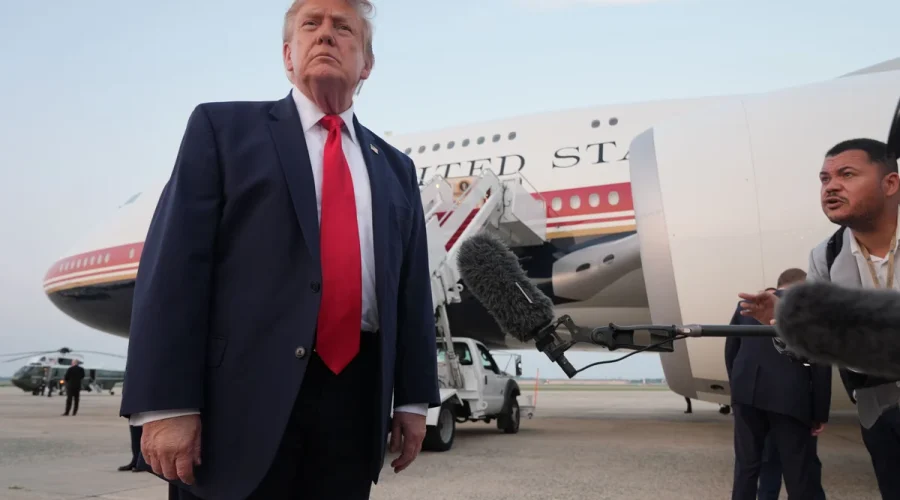
The president communicated his stance through his Truth Social platform, stating emphatically: “Every time Iran kills an American Soldier they will pay for that killing many times over!” This firm position was not merely rhetorical, as Trump confirmed that the directive had been formally transmitted to defense secretary Pete Hegseth, top US general Dan Caine, and various other military leadership figures.
White House press secretary Karoline Leavitt announced that President Trump plans to attend a ceremony at Dover Air Force Base in Delaware on Tuesday evening. The event will honor the return of the fallen service personnel to American soil, marking a somber moment for the nation as it responds to the escalating conflict.
Military Operations and Casualty Figures
US Central Command reported that two soldiers perished in Jordan on Friday while actively defending against coordinated Iranian ballistic missile and drone assaults. In a separate incident, a service member was killed in Iraq during what officials described as a “controlled detonation” of a downed Iranian drone. These casualties bring the total number of US troops killed since the beginning of the war to seventeen.
Iranian authorities have reported significant losses on their side as well, with at least fifty people killed and more than five hundred wounded in the most recent rounds of American strikes. Shortly after Trump’s warning, the US defense department shared a symbolic image on X, depicting a soldier in revolutionary-era battledress carrying a musket. The accompanying message read: “We untie the hands of our warfighters to intimidate, demoralise, hunt and kill the enemies of our country. No mercy.”
Strait of Hormuz: A Critical Waterway Under Pressure
The conflict has severely impacted maritime traffic through the Strait of Hormuz, one of the world’s most vital energy corridors. Tehran has continued its strategy of targeting commercial shipping in the contested waterway, while the United States has reinstated a naval blockade of Iranian ports. Both nations are actively competing for dominance over this crucial passage that supplies global energy markets.
The fighting has caused a dramatic decline in maritime traffic through the channel, prompting renewed anxiety about economic consequences worldwide, including for the United Kingdom. The situation in the Middle East and the movement of shipping through the strait featured prominently in a phone conversation between newly installed Prime Minister Andy Burnham and the US president, which occurred shortly after Burnham’s arrival in Downing Street.
Before the war was initiated by the US and Israel on February 28, the strait remained open to commercial vessels. In response to the offensive, Tehran effectively closed the waterway to maritime traffic, which disrupted global oil and gas supplies and contributed to rising fuel and food prices internationally. Even after the initial ceasefire agreement, known as the memorandum of understanding, Iran maintained pressure on the sea route by requiring ships to obtain permission for transit, thereby increasing the threat of future charges and attacks on vessels.
Diplomatic Efforts and International Perspectives
Tehran maintains that it controls the channel, a position disputed by the United States and other nations that reference international law regarding freedom of navigation. US secretary of state Marco Rubio has indicated that Washington remains receptive to negotiations with Iran, though he emphasized that “it has to be real.” Rubio explained: “We’re going to continue to respond. If the door opens to diplomacy — if the guys that want to do something productive for Iran win and take control of that system, or take control of the negotiations — that’ll be a very positive development.”
However, Rubio acknowledged that “that’s not where we are” at present. Meanwhile, President Trump has sought to reassure Israeli leader Benjamin Netanyahu that he will not encounter arrest while in the United States. This assurance followed comments from New York City mayor Zohran Mamdani, who stated in an interview that Netanyahu “belongs in The Hague” concerning the war in Gaza. Mamdani revealed that the city is in “active conversation” with its legal department about potentially detaining the Israeli leader if he attends a United Nations meeting scheduled for September.
Trump reinforced this commitment through his Truth Social platform, writing: “Benjamin Netanyahu will not be arrested, in any way, shape, or form, while in the United States of America.” These diplomatic maneuvers underscore the complex web of international relationships being tested as the conflict continues to evolve and its implications extend far beyond the immediate region.