Burnham Commits Full Effort to Resolving Social Care Crisis
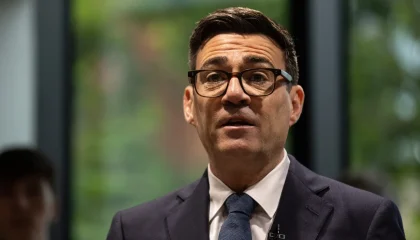
Traveloasisspot.com – Andy Burnham has made a solemn commitment to dedicate all his resources toward addressing the adult social care sector, extending a collaborative hand to fellow party leaders in what he describes as a direct confrontation with the longstanding problem. The Prime Minister emphasized that this challenge requires collective action rather than isolated efforts.
Before visiting a residential care facility accompanied by the head of an independent review examining the sector, Burnham articulated his view that successive administrations have consistently avoided meaningful social care reform in England. He characterized the issue as something politicians have deemed excessively risky, overly difficult, and unnecessarily complicated to address properly.
Invitations Extended to Opposition Leaders
Burnham has formally requested that Conservative leader Kemi Badenoch and Liberal Democrat leader Sir Ed Davey join him for discussions on Wednesday regarding the future of social care provision. The invitation represents his desire to establish collaborative relationships early in his premiership.
Badenoch had previously corresponded with Burnham, challenging him to explicitly rule out both tax increases and additional borrowing as mechanisms for funding social care improvements. While she cannot attend the scheduled meeting, Conservative shadow health secretary Stuart Andrew will represent her interests.
Some Conservative insiders expressed skepticism about the timing of the invitation, with one source suggesting the gesture appeared somewhat performative rather than substantive.
Liberal Democrats Welcome the Initiative
Sir Ed Davey enthusiastically accepted Burnham’s invitation, emphasizing that the current approach requires fundamental change. The Liberal Democrat leader outlined three core priorities for any social care reform: placing family carers at the center of proposals, ensuring universal access to care regardless of financial circumstances, and protecting individuals from losing their homes or life savings due to catastrophic care expenses.
Stuart Andrew echoed this sentiment, stating his party remains willing to collaborate with Labour on social care measures, provided these initiatives do not depend heavily on additional taxation or increased borrowing.
Reform UK Criticized for Exclusion
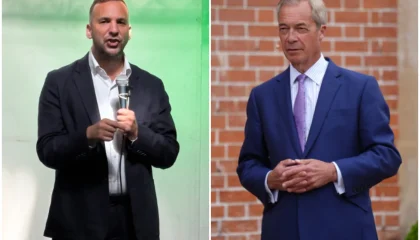
Nigel Farage voiced disappointment that Burnham failed to extend an invitation to Reform UK, despite his party’s leadership position in over 300 national opinion polls and representation of thousands of councillors and millions of citizens nationwide. Farage characterized the situation as evidence of a “uniparty” conspiracy, alleging that Burnham is working behind closed doors with the traditional political establishment to impose further tax increases on the British public.
A History of Social Care Proposals
Burnham has consistently promised to expend whatever political capital remains available to him in resolving the social care system, warning that without intervention, the NHS faces potential collapse. Speaking in London ahead of Wednesday’s meeting, he declared that the era of political maneuvering on this issue must end, particularly when the human consequences include struggling carers, financially strained families, and an overstretched health service.
He recalled his previous statement about needing a different political approach focused on problem-solving rather than point-scoring, noting that nowhere is this urgency more apparent than in social care. For decades, he observed, governments have deferred action on this issue, viewing it as too risky, too difficult, and too complicated to tackle effectively.
“Politicians might have different views but I’m serious about fixing this issue and to do that, we have to find common ground and listen to others to find a way forward.”
Burnham framed the reform decision as a fundamental choice between continuing to pass problems to future generations or confronting them directly through collaborative effort. He expressed hope that this approach could restore public confidence in the ability to resolve long-ignored challenges.
Recent government statements indicated no plans for a so-called “death tax,” responding to reports that Burnham might revive proposals he originally introduced during his tenure as health secretary in 2010. Under the previous Labour government led by Gordon Brown, Burnham had suggested a levy that would reduce estates by ten percent following death to fund a national care service. These proposals were ultimately rejected by Conservative opponents, who characterized them as a new form of death tax. The compulsory levy represented one of several options Burnham presented more than a decade ago, alongside alternatives such as increased state funding drawn from general taxation and voluntary contribution models.
“We can carry on passing the problem to the next generation, or we can face it head-on and work together to build a care system that gives people dignity, security and the support they deserve.”
Burnham concluded by reaffirming his willingness to place everything he possesses behind this endeavor, emphasizing that restoring hope in Britain’s ability to address difficult issues requires both determination and cooperation across political divides.
Related Reading
Frequently Asked Questions
What is Andy Burnham?
Andy Burnham is the main topic of this guide. The article explains the context, practical details, and next steps readers should understand.
Why does Andy Burnham matter?
Andy Burnham matters because readers are looking for a useful answer, not just a short summary. Good content should match search intent and help them decide what to do next.