How Keir Starmer Allowed Andy Burnham to Return to the Political Stage
A Resignation Marked by Contradictions
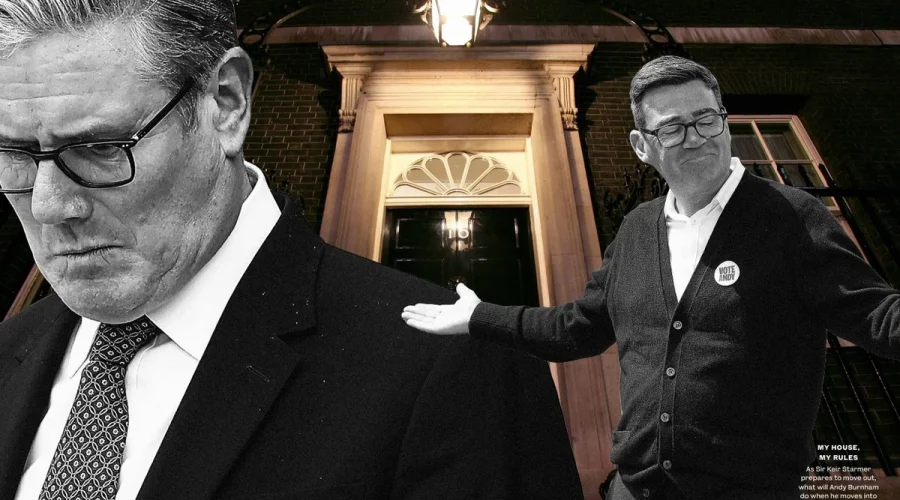
How Keir Starmer let Andy Burnham – Sir Keir Starmer’s farewell address on Monday was a catalog of accomplishments, delivered with the haste of someone grappling with a sour disposition. The speech, punctuated by abrupt phrasing and a series of confident assertions about the nation’s progress, contrasted sharply with the reality of his tenure. Just days earlier, a protester had held up a mocking sign near No 10 Downing Street, reading “Welcome to the Job Centre, Keir,” as the prime minister exited office after less than two years in power. A former colleague from his legal days, speaking late into the night, remarked to me, “He’s just completely blown it. A sharp mind and a man of integrity, yet I still can’t fathom why he couldn’t grasp the reins of this role.”
The Legacy of a Leader in Transition
Starmer’s narrative of his time in office centered on key initiatives: backing Ukraine, increasing defense funding, safeguarding renters’ and workers’ rights, controlling migration flows, and lifting half a million children from poverty by abolishing the two-child benefit cap. He insisted these efforts had transformed a Labour Party he inherited in 2020, which he described as “politically, financially, and morally bankrupt,” into a formidable force that secured a commanding majority. Yet, the evidence suggested otherwise. His allies had positioned him as the architect of a revival, but the signs of dissent within his own ranks grew louder with each passing week.
As the resignation unfolded, Starmer’s Cabinet hesitated to fully endorse his departure. While the optics of the event appeared polished on television, the ceremony lacked the broad support it required. Only a handful of senior figures, including deputy prime minister David Lammy and housing secretary Steve Reed, had been invited to attend. Starmer’s closest confidant, Darren Jones, was among them, though many of his peers watched their careers teeter on the edge. Whitehall’s special advisers, meanwhile, were preoccupied with securing their financial futures, their eyes scanning mortgage statements with a mix of dread and resignation.
The Breaking Point and a Shift in Power
A week prior, the political landscape had seemed more stable. Starmer had attended the G7 summit on the French-Swiss border, forging a tentative agreement with his French and German counterparts in the E3 group to secure a reluctant commitment from Donald Trump to sustain Ukraine’s aid. Just before the summit, he had met his Tokyo counterpart in London to finalize an £18 billion investment pact for offshore wind and nuclear energy cooperation. These victories were framed as milestones in his leadership, yet they could not mask the growing cracks in his administration.
The Makerfield by-election had become the catalyst for his downfall. The result, which returned Andy Burnham to Parliament, was hailed as a political triumph for the former leader. Burnham’s victory not only dismantled Nigel Farage’s influence but also positioned him as the figure who had seized control of Downing Street through a decisive maneuver. Starmer, however, had seen the by-election as a strategic tool to reinvigorate his party’s fortunes. The abruptness of Burnham’s return, though, revealed the fragile foundation of Starmer’s leadership.
Behind the Scenes: A Cabinet in Disarray
While Starmer stood before the cameras, his team was already plotting his exit. Cabinet ministers and senior MPs, weary of his missteps, had quietly signaled their lack of enthusiasm for his continued rule. Even Morgan McSweeney, Starmer’s former chief of staff, who had stayed in touch to offer guidance on how to resist, found himself unable to sway the tide. The resignation was not just a personal decision but a collective acknowledgment that Starmer’s vision had not fully aligned with the party’s expectations.
Internally, the government had been in a state of flux. Figures like John Healey, the defense secretary, had openly criticized Starmer’s inability to deliver on long-promised reforms. Healey, known for his sharp demeanor, had thrown a challenge at the PM’s departure, accusing him of prioritizing high-profile gestures over concrete policy outcomes. The Defense Investment Plan, for instance, had been criticized for its lack of detail and credibility, despite Starmer’s insistence on its importance during events like the Munich Security Conference.
Starmer’s own leadership had been further strained by a series of internal blunders. He had abruptly dismissed Olly Robbins, the chief mandarin at the Foreign Office, for failing to alert him about the vetting of Peter Mandelson’s ties to Jeffrey Epstein. Though the details were known, Starmer’s response was seen as a missed opportunity to address the issue with greater transparency. The blame-shifting and a pervasive attitude of avoidance, as one Cabinet minister described to me, had become the norm rather than the exception.
Family and the Final Curtain
As the ceremony concluded, Starmer’s family was present in the press area, their expressions a mix of pride and concern. His son, a tall, lean figure, stood somberly beside him, his features eerily reminiscent of the young Starmer seen in old photographs. Victoria, his wife, had previously encouraged him to defy critics, but on this day, she was there to witness his emotional farewell. Starmer’s voice trembled as he thanked his loved ones, a moment that underscored the personal cost of his political gamble.
The by-election had not only revived Burnham’s career but also exposed the rifts within Labour. A North-East MP, speaking candidly, remarked that Starmer’s focus on London-centric policies had left them feeling overlooked. “He doesn’t even know my name,” the MP said, highlighting the perception that Burnham’s return was a more relatable symbol for the party’s working-class base. The image of Starmer, isolated in his No 10 study late at night, reviewing documents alone, had contrasted with the lively debates that Burnham now led in the Commons. This disconnect, critics argued, had been the silent killer of his leadership.
With his resignation, the stage was set for a new era. Burnham, once sidelined, had now claimed the spotlight. The political drama that had unfolded over months had reached its climax, leaving Starmer to exit with a legacy that was as much about potential as it was about performance. As the sun set on his tenure, the question remained: had he failed to connect with the nation, or had the system simply been too rigid to support his vision?