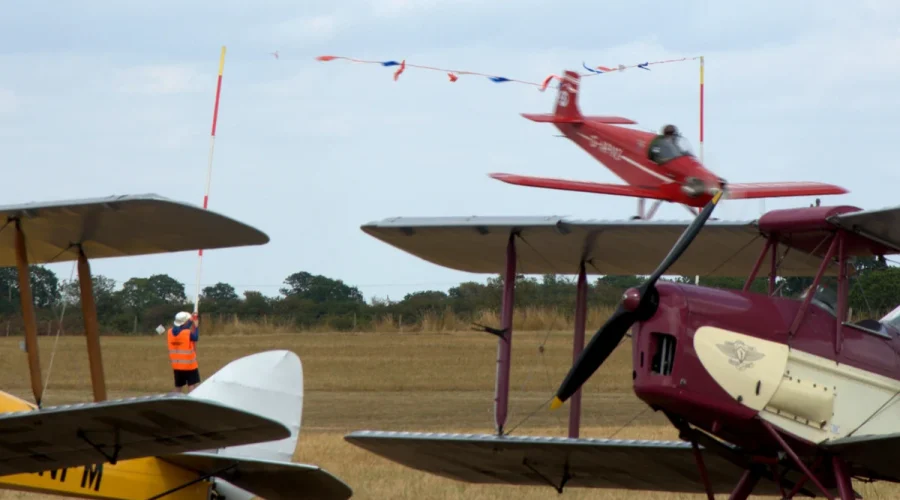
Pilot Hospitalised After Single-Seat Aircraft Crashes During Heritage Air Display in Essex
Traveloasisspot.com – A pilot sustained serious injuries when his small single-seat aircraft went down during a live aviation display at Stow Maries Great War Aerodrome in Maldon, Essex, on Sunday afternoon. The crash occurred shortly before 2:25 p.m., prompting an immediate halt to the event and triggering a multi-agency emergency response.
Essex Police confirmed that one person was injured in the incident. The aerodrome’s own statement acknowledged that one of the aircraft taking part in a display by its Turbulent Team was damaged, the pilot was hurt, and the remainder of the air show was called off. Staff said they were working alongside the Air Accidents Investigation Branch (AAIB) and local emergency services to establish what went wrong.
In a follow-up social media update, the aerodrome announced that the injured pilot had been transported to a hospital in London for treatment. No further details about the severity of his condition were released at the time of reporting.
A Heritage Site with Deep Military Roots
The crash took place at a location of considerable historical significance. Stow Maries Great War Aerodrome preserves what is described as the largest intact collection of Royal Flying Corps (RFC) buildings surviving from the First World War. During the conflict, the site played what its own materials call a “pivotal role” in Britain’s air defence, particularly during the earliest German bombing raids on British soil.
The aerodrome today operates as both a living heritage attraction and an active aviation venue. Its on-site museum is dedicated to First World War military aviation, and regular events are organised to keep the collection accessible to the public while generating revenue for its upkeep.
The Event: A “Festival of Aviation”
The Sunday gathering had been promoted under the banner of a “festival of aviation,” explicitly framed as a fundraising exercise for the museum. According to the aerodrome’s website, tickets were sold out ahead of the day, indicating strong public interest in the programme.
Among the headline acts was a display by the Turbulent Team, whose routine involved pilots pursuing balloons while releasing flour bombs from their compact single-seat aircraft — a spectacle designed to evoke the informal, almost playful character of early light-aviation demonstrations. The crash interrupted precisely this kind of performance.
The Aircraft: A French “Flying Motorbike”
The Turbulent Team flies the Druine Turbulent, a French-designed single-seat light aircraft believed to have made its first flight in 1953. Its own website characterises the machine as “little more than a flying motorbike,” with an empty weight of roughly 350 pounds. The design places the pilot in an exposed position behind a small propeller, giving the craft a distinctive look and handling profile that sets it apart from conventional light aircraft.
The type has a notable place in British royal aviation history. Prince Philip, the late Duke of Edinburgh, flew a Druine Turbulent in 1959, becoming the first member of the British royal family to pilot a single-seat aircraft. That flight underscored the machine’s role as an accessible entry point into light-aviation flying during the post-war era.
Investigation and Safety Context
The AAIB, the UK’s independent body responsible for investigating civil aviation accidents, was engaged immediately following the crash. Its mandate is to determine causes and contributing factors so that recommendations can be made to reduce the likelihood of recurrence. The branch typically examines wreckage, interviews witnesses and crew, reviews meteorological data, and may request maintenance records before publishing a formal report.
Light-aircraft displays at heritage airfields carry inherent risks: low-altitude manoeuvres, proximity to spectators, and the limited structural margin of small single-seat machines all combine to make even minor handling errors potentially serious. The fact that the event was sold out means a large audience was present when the aircraft came down, heightening both the urgency of the emergency response and the public scrutiny that will follow.
The aerodrome’s decision to halt the show immediately after the crash reflects standard operating procedure at UK airfields: once an accident occurs on or near the flight path, remaining displays are suspended until the scene is secured and initial safety checks confirm no further hazard. Emergency services attended the site alongside AAIB investigators, and the pilot was evacuated by ambulance to a London hospital for specialist care.
No information had been released about whether spectators were affected or whether any secondary damage occurred beyond the crashed aircraft itself. The aerodrome indicated it would continue cooperating fully with investigators and would update the public as further details became available.
Related Reading
Frequently Asked Questions
What is Pilot injured in light aircraft crash?
Pilot injured in light aircraft crash is the main topic of this guide. The article explains the context, practical details, and next steps readers should understand.
Why does Pilot injured in light aircraft crash matter?
Pilot injured in light aircraft crash matters because readers are looking for a useful answer, not just a short summary. Good content should match search intent and help them decide what to do next.