What Changes on the Pitch: The Full Breakdown of Premier League’s 2026-27 Rule Overhaul
Traveloasisspot.com – The English top flight is about to undergo its most significant regulatory shake-up in years. Ahead of the 2026-27 campaign, a sweeping package of new laws — many of which were trialled during this summer’s World Cup and proved effective — will reshape how matches are officiated, how time is managed, and how video technology intervenes. For managers, players, and fans alike, the changes touch nearly every phase of play, from the moment a substitution is signalled to the final whistle of a controversial VAR review.
The driving philosophy behind the overhaul is straightforward: eliminate the small delays and tactical pauses that have long inflated match duration, while giving referees clearer, more consistent tools to police them. Below is a structured look at what will actually change, why it matters, and where the exceptions sit.
Substitutions: The Ten-Second Clock
Perhaps the most immediately visible change concerns the substitution process itself. Once a player is replaced, he now has exactly ten seconds to walk off the field, and he must take the nearest available exit. There is no lingering at the touchline, no slow shuffle toward the bench.
The penalty for exceeding that window is severe: the offending player is held back for a full minute, and his side must continue with ten men during that interval. The only carve-outs are genuine injury to the departing player or a credible security threat. In practical terms, this closes a loophole that has allowed teams to stall restarts by simply having a substituted player dawdle across the halfway line.
Countdowns at Throw-Ins and Goal Kicks
Time-wasting at restarts has long been a sore point for fans watching from the stands. The new protocol introduces a five-second countdown, triggered not the instant the ball crosses the line but only when the referee spots an intentional delay tactic — for example, a player deliberately walking toward a different ball, or a thrower feigning to pass the ball to a teammate before finally delivering it.
The referee sounds the whistle to initiate the count and uses his arm to signal each second. Should the player fail to restart within the window, the throw-in is awarded to the opposition. Goalkeepers face an analogous constraint at goal kicks: take too long, and the result is a conceded corner.
Importantly, elaborate throw-in routines — the choreographed sequences some teams have adopted as quasi-set-pieces — are excluded from the countdown rule. They are treated as set pieces in their own right and remain permissible.
Treatment on the Pitch: Sixty Seconds, Not Thirty
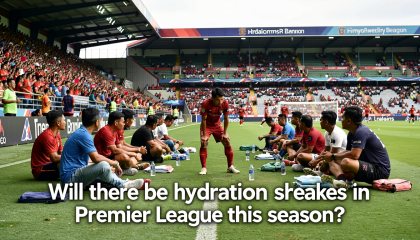
The duration a player must remain off the field after receiving physiotherapy has been doubled from thirty seconds to a full sixty. The same sixty-second exit now applies when a player goes down and the ball subsequently leaves play, meaning the injured player cannot simply jog back onto the pitch the moment the restart is taken.
One narrow exception persists: if the player who committed the foul is shown a booking card or sent off, the injured player is released from the mandatory sixty-second absence. The logic is that the disciplinary action itself provides sufficient pause, making the additional time-wasting unnecessary.
Closing the Goalkeeper “Timeout” Loophole
A practice that drew widespread criticism before the World Cup — a goalkeeper feigning injury to buy his manager a tactical regrouping window — now faces a direct countermeasure. If a keeper requests physio treatment, one outfield teammate must simultaneously leave the pitch for sixty seconds. The goalkeeper also has a ten-second limit to communicate with the fourth official, who temporarily vacates his position. Breach that window, and the team captain is forfeited for the duration of the minute.
The effect is to ensure that no single player can manufacture a de facto timeout without his side paying a tangible numerical cost.
VAR: Expanded Scope, Tighter Boundaries
The video assistant system gains new authority while simultaneously losing some of the latitude it enjoyed at the World Cup.
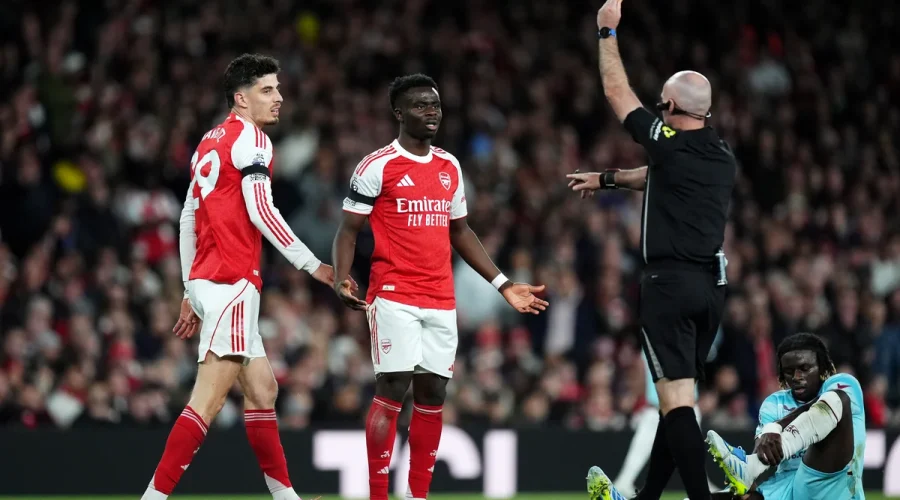
On the expansion side, VAR may now review second bookable offences that result in a sending-off. However, a review cannot be triggered merely because a player already cautioned receives what looks like a second yellow; there must be a clear and obvious error in awarding the foul itself, not simply a difference of opinion about the card colour.
At set pieces, VAR is empowered to check whether a foul occurred before the delivery was taken. If the routine culminates in a goal, a penalty, or a card, the review applies. The remedy in such cases is a retaken corner rather than a free kick, because a free kick cannot logically be awarded when the ball was not yet in play. Conversely, fouls committed by the defending side before the ball enters play remain outside VAR’s remit, since no penalty could be awarded in that state.
Mistaken-identity reviews continue to be available. What will not carry over from the World Cup is the ability to overturn incorrect corner decisions, and there will be no VAR intervention for red cards issued to players who cover their mouths during confrontations.
Why It Matters
Taken together, these changes compress match duration, reduce the number of tactical pauses a manager can engineer, and give the fourth official and VAR room a more consistent decision framework. For fans watching on television, the countdowns and the sixty-second treatment exits should make the difference between a flowing ninety minutes and a stop-start spectacle more visible than ever. For referees, the added protocols demand sharper timing and clearer communication — the whistle-and-arm countdown, in particular, turns an implicit judgment into an explicit, observable procedure.
The Premier League’s governing bodies have signalled that these measures will be enforced across the English pyramid, not merely the top flight, meaning lower-division clubs will need to adapt their training routines and substitution protocols accordingly. The question for the coming season is not whether the rules will be applied — they will be — but whether the pace of the game ultimately improves, or whether players and managers simply find new ways to test the boundaries of each new limit.
Related Reading
Frequently Asked Questions
What is VAR set pieces and substitutions?
VAR set pieces and substitutions is the main topic of this guide. The article explains the context, practical details, and next steps readers should understand.
Why does VAR set pieces and substitutions matter?
VAR set pieces and substitutions matters because readers are looking for a useful answer, not just a short summary. Good content should match search intent and help them decide what to do next.