UK Government Commits to Consulting Survivors on Permanent Terrorism Memorial
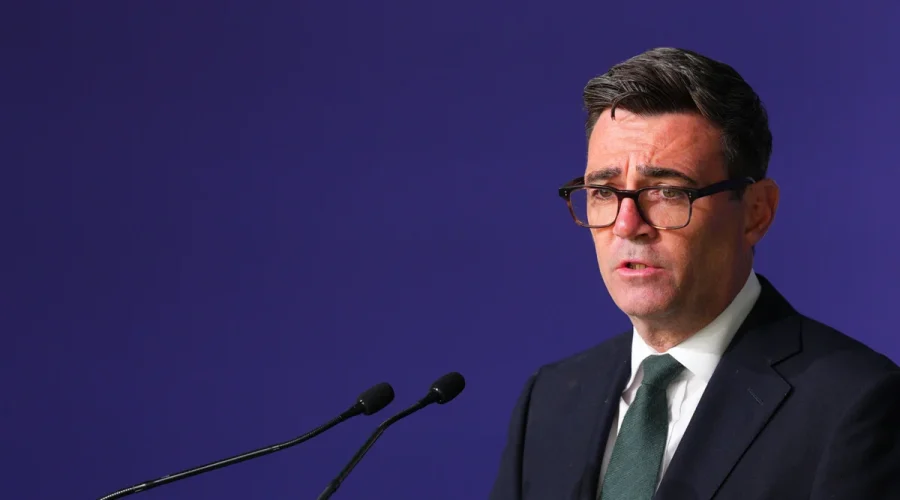
Traveloasisspot.com – The British government has formally committed to seeking input from terrorism victims and their families on whether a permanent national memorial should be established. Prime Minister Andy Burnham made the pledge during the first-ever National Day for Victims and Survivors of Terrorism, held in central London, marking a significant shift in how the state intends to acknowledge those affected by acts of terror across the country.
The ceremony, which gathered bereaved families, survivors, emergency responders, and government officials, opened with a two-minute silence. It represented the culmination of years of campaigning by survivors’ groups who had long pressed for a dedicated day of remembrance and recognition. Burnham acknowledged those campaigners directly, thanking them for making the occasion possible.
A Day of Acknowledgment and Policy Commitment
Beyond the symbolic weight of the event, Burnham used the platform to announce concrete policy intentions. He stated that the government would examine reforms to the Criminal Injuries Compensation Authority (CICA) and improve access to legal assistance for those seeking redress after terrorist incidents. Victims minister Alex Davies-Jones was named as the lead figure for that work, with instructions to study how countries such as Spain and France structure their victim-support frameworks.
The announcement carries practical implications for survivors who have, in many cases, struggled to navigate compensation processes after traumatic events. Burnham acknowledged this gap explicitly, drawing on his own experience as mayor of Manchester following the 2017 Arena bombing.
“I know from the many hours I’ve spent with survivors in Manchester that too often people have not had the support that they deserved, and they’ve had to fight for it in the aftermath.”
Survivor Voices at the Ceremony
Among those who addressed the gathering was Paul Price, who spent months in hospital following the Manchester Arena attack of 22 May 2017, in which his partner Elaine McIver was killed. Price framed the purpose of national recognition not as nostalgia but as present-tense accountability.
“Recognition is not about dwelling on the past” but rather “acknowledging the ongoing reality of that past in the present.”
He warned that institutional silence deepens the original wound inflicted by terror.
“Silence and invisibility compound the original injury.”
Price urged the nation to answer terrorism’s attempt to fracture communities with collective hope and sustained support, arguing that resilience is something that can be built and that survivors’ experiences constitute part of the country’s strength.
Cheryl Stollery, whose husband was killed in the 2015 Sousse beach attack in Tunisia, also spoke at the event, adding a personal dimension to the international scope of terrorism’s reach into British lives.
The Memorial Question
The pledge to consult on a permanent memorial places the government in a position of active engagement with survivors’ wishes regarding how the nation physically and symbolically remembers its victims. Burnham framed the consultation as a matter of principle: survivors’ voices must sit at the centre of every decision about remembrance and recognition.
“Your voices must be at the heart of every decision about how we remember and recognise those affected by terrorism.”
He extended the commitment beyond those present, noting that future generations of survivors would also benefit from a culture of recognition that the country builds now.
“With your help, we will change the way this country recognises and supports you, but most importantly, from here, obviously, those in some ways coming after you because that’s what this country should do.”
Broader Context and Implications
The inaugural National Day sits within a wider pattern of state response to terrorism in Britain, spanning more than twenty major incidents over recent decades. From the London bombings of 2005 to the Manchester Arena attack and the Westminster bridge strike of 2017, survivors have often described feeling overlooked in the years following their trauma. The establishment of a fixed annual observance, combined with the announced review of compensation structures, signals an attempt to institutionalise support rather than leaving it to ad hoc political goodwill.
Security minister Dan Jarvis also addressed the gathering, reinforcing the government’s message that the state’s obligation to victims extends well beyond the immediate aftermath of an attack. The two-minute silence observed at the ceremony served as a collective pause, a moment in which the full scale of loss was acknowledged before the day moved into its policy and commemorative dimensions.
For survivors navigating the CICA process or seeking legal representation after a terrorist incident, the announced review could alter timelines, eligibility criteria, and the availability of state-funded legal aid. The comparison with Spanish and French models suggests the government is considering whether dedicated victim-support bodies, separate from general compensation schemes, might better serve those affected by terrorism specifically.
The memorial consultation, meanwhile, raises questions about location, design, scope, and governance that will require sustained dialogue between survivors’ organisations and government departments. Burnham’s framing — that the decision belongs to those who lived through the events — positions the consultation not as a formality but as a transfer of authority over how the nation chooses to remember.
“We see you, we hear you, we stand with you.”
Those words, offered at the close of the ceremony, were intended to close a gap that survivors have described as years long: the distance between being a victim of state-acknowledged terror and being a person the state actively supports, remembers, and consults.
Related Reading
Frequently Asked Questions
What is Burnham pledges to consult on national?
Burnham pledges to consult on national is the main topic of this guide. The article explains the context, practical details, and next steps readers should understand.
Why does Burnham pledges to consult on national matter?
Burnham pledges to consult on national matters because readers are looking for a useful answer, not just a short summary. Good content should match search intent and help them decide what to do next.