
Channel Crossings Resume After Ten-Day Pause as Nearly 500 Migrants Reach Kent Coast
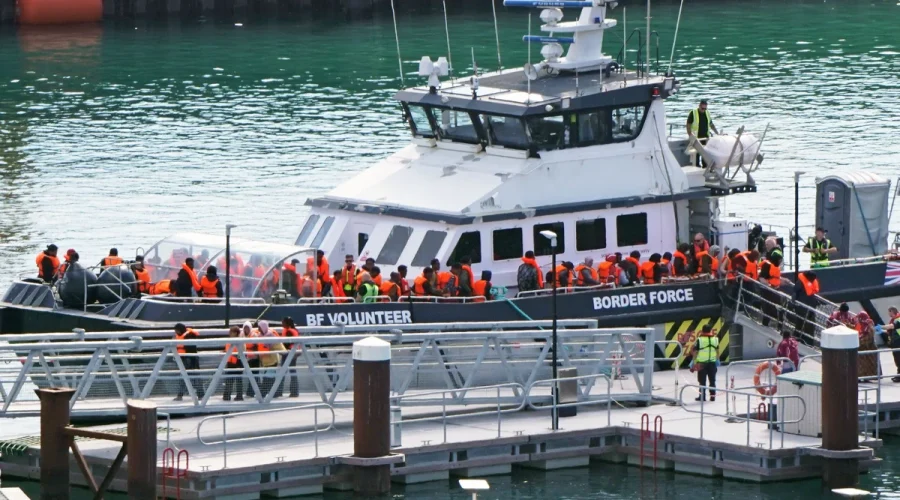
Traveloasisspot.com – After a ten-day silence on the English Channel, small boats once again carried migrants into British waters on Thursday, delivering approximately 494 people to the shores of Kent. The arrival marked the end of an unusual lull in crossings that had left the Dover coastline quiet since mid-August, when a batch of 250 individuals made landfall. Seven dinghies in total completed the journey, their occupants photographed still wearing lifejackets as they were escorted into the Border Security Command compound in Dover for processing.
The Hiatus and What It Signalled
The ten-day gap between crossings was notable in a season that has otherwise seen near-continuous movement across the narrowest stretch of the Channel. Weather patterns, enforcement pressure on the French coast, and seasonal shifts in migration routes can all contribute to such pauses, but a full week without a single boat reaching British waters is uncommon in recent years. The resumption on Thursday, arriving late into the night, underscored that the flow of small-boat crossings remains structurally intact despite short-term interruptions.
Dover, the principal landing point for Channel crossings, has become the operational nerve centre for managing arrivals. The Border Security Command compound, where migrants are first processed upon reaching British soil, handles everything from initial welfare checks to onward transport arrangements. The sight of lifejacketed arrivals being led through its gates has become a recurring image in Kent, a reminder that the Channel’s 33-kilometre width at its narrowest offers little protection against determined small-boat travel.
Year-to-Date Numbers Show a Sharp Decline
While the Thursday arrivals ended a brief pause, the broader picture for the year points to a significant reduction in overall volumes. Government data, analysed by the Press Association, indicates that roughly 16,391 migrants have crossed the Channel so far this year. That figure represents a 43 per cent decrease compared with the same period last year and a 17 per cent drop relative to the equivalent point in 2024. The downward trajectory has been attributed to a combination of factors: intensified search-and-rescue operations on the French side, improved weather windows that reduce the urgency of risky crossings, and shifts in the seasonal patterns of migration flows from West Africa and beyond.
The statistical decline, however, has not been interpreted by the government as a reason to relax vigilance. Dover’s port infrastructure, Kent’s local services, and the wider asylum-processing system continue to operate on the assumption that crossings will resume at scale, particularly as autumn weather makes the Channel more hazardous and potentially drives more people to attempt the journey before winter conditions worsen.
Government Response: Enforcement and Legislation
Home Secretary Shabana Mahmood addressed the falling numbers directly, insisting that the reduction should not breed a sense of false security. In a statement outlining the government’s ongoing strategy, she framed the issue not as a problem being solved but as one requiring sustained pressure.
“That is why I have boosted enforcement on the French beaches and overseas and introduced new legislation to tackle the pull factors that draw people here through unsafe and illegal routes.”
Mahmood’s remarks pointed to two parallel tracks of policy. The first is operational: increased joint patrols with French authorities along the Calais-to-Dover stretch, expanded search-and-rescue capacity, and closer coordination with countries of origin to intercept journeys before they reach the Channel. The second is legislative: new measures aimed at what the government describes as “pull factors” — the economic, social, and informational incentives that encourage migrants to choose the Channel route over other pathways to Britain. These include proposals to tighten visa rules, strengthen employer sanctions for hiring undocumented workers, and adjust the asylum system to reduce perceived incentives for irregular arrival.
Context: Why the Channel Remains a Focal Point
The English Channel crossing has become one of the most visible and politically charged migration routes in Europe. Since the early 2010s, the number of small-boat arrivals at Dover and nearby Kent ports has grown from a few hundred per year to tens of thousands at peak. The route’s popularity stems from its relative proximity to France, the absence of a fixed land border to patrol, and the perception among migrants that reaching British soil triggers a different legal pathway than arriving in continental Europe.
For Kent’s communities, the crossings carry practical consequences: pressure on local housing, transport networks, and public services, as well as the human cost of those who do not survive the journey. The Dover area has seen repeated calls for better infrastructure to manage arrivals, while national debates continue over the balance between border control, humanitarian obligation, and long-term integration planning.
The Thursday arrivals of nearly 500 people, spread across seven boats, will add to the year’s total and test the processing capacity at Dover once again. Whether the ten-day pause was a genuine structural shift or merely a temporary weather- or enforcement-driven interruption remains to be seen in the weeks ahead. What is clear is that the Channel, for all its narrowness, continues to function as one of Britain’s most consequential and contested frontiers.
Related Reading
Frequently Asked Questions
What is Hundreds of migrants cross Channel after?
Hundreds of migrants cross Channel after is the main topic of this guide. The article explains the context, practical details, and next steps readers should understand.
Why does Hundreds of migrants cross Channel after matter?
Hundreds of migrants cross Channel after matters because readers are looking for a useful answer, not just a short summary. Good content should match search intent and help them decide what to do next.