Scotland’s First Minister Warns the Union Faces an Existential Crossroads
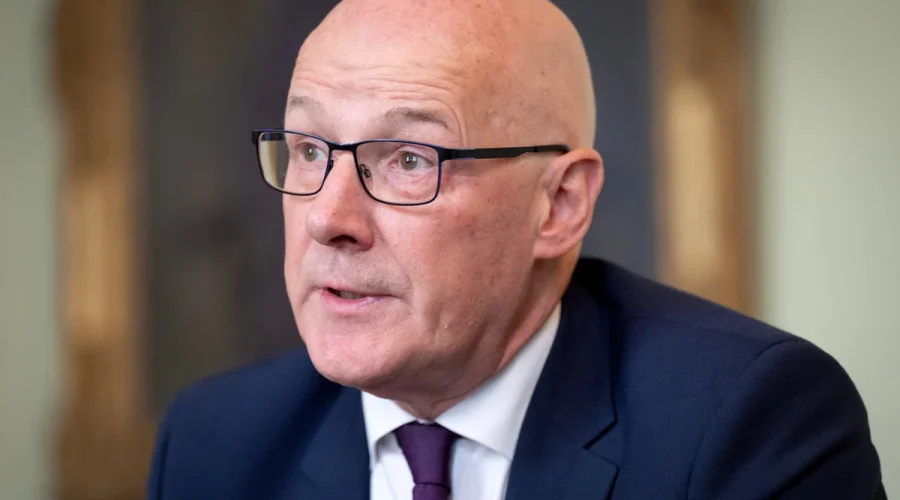
Traveloasisspot.com – John Swinney has delivered what amounts to a constitutional ultimatum to Westminster, declaring that the United Kingdom now occupies a “perilous state of affairs” and is visibly “falling apart” along its internal borders. The Scottish First Minister’s remarks, delivered in an interview with the Press Association, land at a moment when three of the four constituent nations have elected governments whose platforms diverge sharply from London’s centralising instincts.
The timing is deliberate. The Scottish Government had just published a draft Bill setting out the legal architecture for a second independence referendum, and the May elections had returned the SNP to Holyrood for a fifth straight term while simultaneously handing Plaid Cymru the Welsh government for the first time. In Northern Ireland, Sinn Féin’s Michelle O’Neill now occupies the office of First Minister. Swinney framed this convergence of electoral outcomes as evidence that the old compact holding the four nations together is fraying beyond repair.
A “Lecturing Tour” Rather Than a “Listening Tour”
At the centre of Swinney’s critique is Prime Minister Andy Burnham’s first visit to Northern Ireland, undertaken last week as part of what the government has branded a “listening tour.” Swinney rejected that framing outright, arguing that Burnham’s public dismissal of a border poll on Irish unification turned the trip into something else entirely.
“I don’t think that’s much evidence of a listening Prime Minister, I think that is evidence of a lecturing Prime Minister.”
The Prime Minister had been unequivocal during his Belfast stop: a referendum on a united Ireland is, in his words, “off the table.” For Swinney, that pronouncement ignored a treaty obligation embedded in the Good Friday Agreement, which commits the signatories to a process by which a border poll could be triggered if a majority in Northern Ireland wishes to join the Republic of Ireland. The Scottish First Minister argued that Burnham effectively told the people of Northern Ireland that a mechanism written into their founding peace settlement no longer applied.
“He went to Northern Ireland and told the people of Ireland that, despite there being a treaty commitment in the Good Friday Agreement for there to be a process by which a united Ireland could be created through a border poll, that was off the table to the people of Northern Ireland.”
The Scottish Parallel
Swinney drew an explicit line from Belfast to Edinburgh. He noted that Scotland’s parliament now contains a larger number of MSPs committed to independence and to a referendum than at any previous point in Holyrood’s history. Yet, he argued, the Prime Minister simply decides he has the authority to ignore that democratic signal.
“The same issues apply here in Scotland, where Scotland has a Parliament today that has a larger number of members than ever before who are committed to the concept of Scotland deciding her own future and supporting independence, yet the Prime Minister decides he has the right to ignore that.”
Burnham is the most recent in a long succession of UK leaders—across party lines—to reject a fresh Scottish independence vote. The 2014 referendum, in which 45 per cent of Scottish voters chose to leave the union, remains the last time the question was put directly to the electorate. Opinion polling since then, Swinney pointed out, shows support for independence “pretty consistently in the lead,” a shift he attributed to the post-2016 political realignment that followed Brexit.
The October Showdown
The next institutional flashpoint is already on the calendar. Burnham has scheduled a National Economic Council meeting in October at which he will sit down with the Scottish and Welsh first ministers alongside the First Minister and deputy First Minister of Northern Ireland. Swinney characterised that gathering as the moment the union’s fragility will become impossible to paper over.
“That is where I think the United Kingdom is in a perilous position. There is going to be such a dynamic in that dialogue which is so very different to everything that has happened in the past.”
The SNP leader suggested the October session could prove “such a significant moment for Scottish independence,” insisting that Burnham would be unable to sustain his opposition to a second referendum “in the face of the strength of view across Scotland, Wales and Northern Ireland.”
Swinney’s Strategic Calculus
Asked how he intended to break the Prime Minister’s position, Swinney outlined a two-track approach. The first track is domestic: demonstrating, through sustained electoral and legislative pressure in Scotland, that independence enjoys majority support. The second is intergovernmental: coordinating with counterparts in Cardiff and Belfast who, he said, share the conviction that their peoples must retain the right to decide their own constitutional future.
“My whole approach is about ensuring that the Prime Minister cannot sustain an undemocratic position. Part of the answer to that lies in Scotland, in the way in which we demonstrate our support for independence. Part of it lies in how I interact with other parts of the United Kingdom, who like me want their people to have a right to decide their own future.”
The draft Bill now sitting in the Scottish parliament’s legislative pipeline would, if enacted, provide the statutory basis for a second vote. Its publication marks the first time since 2014 that a Scottish government has moved to codify the referendum question in primary legislation, signalling that Holyrood regards the constitutional question as no longer merely aspirational but procedurally imminent.
For Westminster, the calculus is uncomfortable. Rejecting the vote risks deepening the very centrifugal forces Swinney describes; conceding it risks opening a door that successive governments have spent decades keeping shut. The October National Economic Council, set against the backdrop of a Sinn Féin-led Northern Ireland executive, a Plaid Cymru Welsh government, and an SNP Holyrood with a record independence bloc, may prove the point at which the old formula of Westminster supremacy meets its most sustained constitutional challenge since the union was formed.
Related Reading
Frequently Asked Questions
What is UK is in perilous state and falling?
UK is in perilous state and falling is the main topic of this guide. The article explains the context, practical details, and next steps readers should understand.
Why does UK is in perilous state and falling matter?
UK is in perilous state and falling matters because readers are looking for a useful answer, not just a short summary. Good content should match search intent and help them decide what to do next.