Dragons’ Den Investor Sara Davies Backs Not On The High Street Pivot Away from Fast-Fashion Rivals
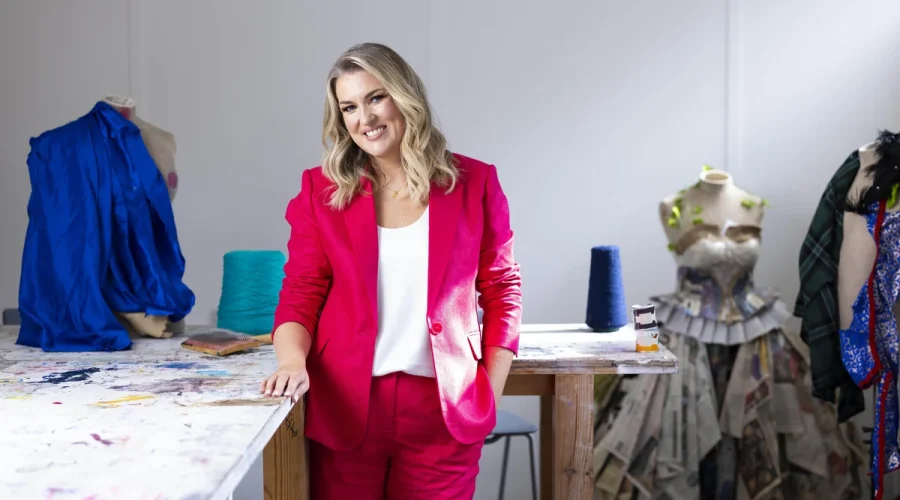
Traveloasisspot.com – Sara Davies, the television entrepreneur best known for her appearances on BBC’s Dragons’ Den between 2019 and 2025, has taken a non-executive director role and equity position in Bristol-based online marketplace Not On The High Street. The move signals a decisive strategic repositioning: the platform will shed mass-produced, low-cost inventory and instead position itself as a curated destination for British-made, artisan-crafted, and personalised goods.
The company has not revealed the monetary value of Davies’ personal investment, though she characterised it publicly as a “meaningful stake.” Her involvement goes beyond passive capital provision. Davies stated she intended to “go right to the top” of the organisation, meeting its new ownership group to help shape the forward strategy.
A Marketplace Under Pressure
Not On The High Street, now two decades old and headquartered in Bristol, hosts roughly 4,000 independent sellers offering an estimated 350,000 products spanning jewellery, apparel, food items, and home-and-garden furnishings. For years the platform operated as a broad digital bazaar, competing on variety and price. That approach has faltered sharply.
The financial trajectory tells the story plainly. Total transaction value across the platform stood at £230.2 million in the year ending March 2021, a figure inflated by the pandemic-era surge in online retail. By the year ending March 2025, that number had contracted to £84.2 million — a decline of roughly 63 percent over four years. The company has been undertaking a restructuring aimed at trimming operating costs and charting a path back toward sales growth and profitability.
The Shein and Temu Problem
The competitive environment has shifted dramatically since the early 2020s. Chinese-origin marketplaces such as Shein and Temu have flooded global consumer channels with enormous, rapidly rotating inventories of inexpensive goods, shipping directly to households worldwide. For a UK platform selling at higher price points, head-to-head competition on cost has become untenable.
Davies was explicit that Not On The High Street would no longer attempt to match those operators on price or volume. Speaking to the Press Association, she framed the choice in terms of customer segments:
“We’re in the middle of a cost-of-living crisis and there are customers who are shopping on Temu and Shein, and that’s what’s appropriate for them and their spending at the moment.”
She continued:
“But there’s a whole different wave of customers who want to buy quality, artisan, handmade, personalised products and it’s those customers that we want to reach.”
Davies added that British consumers were mounting what she described as a cultural pushback against disposable fast-fashion consumption:
“People in the UK are really rebelling against this fast-fashion culture. They are being more thoughtful and considered in what they’re buying, so they’re not wanting to buy the cheap tat.”
New Ownership, New Leadership
The strategic reset follows a change of control at the top. At the start of this year, German private equity firm Executive Equity Partners (EEP) acquired the company. Alongside the ownership change came the appointment of Pascal Schuster as chief executive, tasked with steering the turnaround.
Schuster identified a core operational error from the platform’s earlier years: the assumption that listing more products would automatically benefit both customers and revenue. Under his leadership, the company is now deploying artificial-intelligence tools to scan its catalogue and flag any item that also appears on Temu, Shein, or comparable global marketplaces.
“What we’re now doing is whenever we see a product that is on our site but also on Temu, Shein or wherever – and we use AI to filter that out – then our partner gets a warning. If they can’t explain where their product is coming from, then we de-list them.”
The vetting process targets two particular abuses. The first is “drop-shipping,” in which sellers import mass-produced goods into the UK and resell them without adding genuine craft value. The second involves inauthentic sellers who use generative AI to fabricate designs, presenting them as original artisan work.
Schuster outlined the new sourcing standard:
“We only want things that are either manufactured and crafted in the UK or at least altered and personalised in the UK. You have to have a UK address. We try to filter out what is real craftsmanship and what is a bit of a scam.”
What the Pivot Means for Independent Makers
The repositioning carries implications well beyond a single e-commerce platform. By tightening its seller criteria and leaning into British provenance, Not On The High Street is effectively carving out a niche that global fast-fashion marketplaces cannot easily replicate: a trusted channel for small-scale UK makers, jewellers, textile artisans, and food producers who need digital reach without surrendering margin to price competition.
For the roughly 4,000 sellers currently on the platform, the message is unambiguous. Those whose inventory overlaps with commodity imports or whose supply chains cannot be verified will face delisting. Those who can demonstrate genuine UK-based making, alteration, or personalisation will find a marketplace actively marketing their work to consumers seeking alternatives to disposable consumption.
Davies summed up the editorial line of the revamped site in blunt terms:
“This is not where you will find all that mass-produced, cheap rubbish.”
Whether the narrowed catalogue can rebuild transaction volumes from the £84.2 million trough remains an open question. What is clear is that the platform’s identity, its seller base, and its competitive framing have been fundamentally rewritten — and that a Dragons’ Den veteran now sits on its board, betting that British craftsmanship, properly curated and marketed, can still command a premium in a market saturated with two-pound imports.
Related Reading
Frequently Asked Questions
What is No place for cheap tat on Not?
No place for cheap tat on Not is the main topic of this guide. The article explains the context, practical details, and next steps readers should understand.
Why does No place for cheap tat on Not matter?
No place for cheap tat on Not matters because readers are looking for a useful answer, not just a short summary. Good content should match search intent and help them decide what to do next.