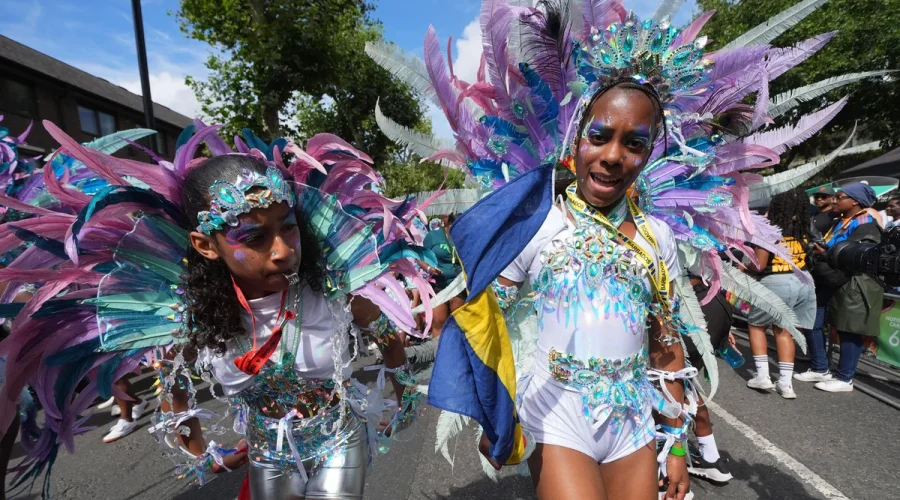
Notting Hill Carnival Enters Its Second Day After a Heavy Policing Weekend
Traveloasisspot.com – West London’s most iconic annual celebration moved into its second full day on bank holiday Monday following a Sunday that saw police record 169 arrests across the carnival footprint. Despite the volume of interventions, the Metropolitan Police characterised the overall atmosphere as one of joy and communal celebration, signalling that the event’s spirit had not been derailed by the incidents.
A Massive Operation for a Massive Event
The carnival, now marking its 60th anniversary, is widely regarded as the largest street festival in Europe. Organisers describe it as the greatest community-led event on the planet, a claim backed by the sheer scale of participation: hundreds of thousands of attendees fill the streets of Notting Hill and surrounding west London neighbourhoods over two main days of parades, live music, sound stages, and street food.
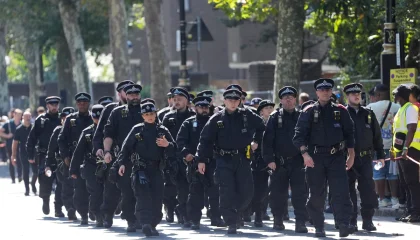
To manage that scale, the Met deployed more than 7,000 officers across the west London area over the bank holiday weekend. The deployment was coordinated in advance with carnival organisers, with particular emphasis placed on crowd-flow management and rapid-response protocols. Commander Claire Smart, who leads the policing operation, confirmed that preparatory work had progressed significantly compared with earlier years.
What the Arrests Involved
As of 7.45 pm on Sunday, the force confirmed that the 169 detentions covered a range of offences, including drug possession, possession of weapons, various forms of assault, and sexual offences. Most arrests occurred within the defined event perimeter. Officers also responded to two knife assaults — one a slashing to the leg, the other to the hand — neither of which produced life-threatening or permanently disabling injuries, according to the force’s account.
For context, the previous year’s two-day carnival saw 528 arrests in total: 167 for drug offences, 50 for possession of an offensive weapon, 21 for sexual offences, four for violence with injury, and 49 for other forms of violence. The 2024 edition recorded eight stabbings, including the killing of 32-year-old mother Cher Maximen; the same number of stabbings occurred in 2023, and seven were logged in 2022, one of which proved fatal.
Commander Smart’s Assessment
Speaking on Sunday, Commander Smart struck a measured tone, acknowledging the volume of interventions while framing them as evidence of a proactive strategy rather than a failure of control.
“While we have seen a significant number of arrests and interventions by officers, the result of that proactive approach is a welcome reduction in the levels of serious violence seen at the event in previous years.”
She added that no one involved in running the event was taking the situation lightly.
“Nobody involved in the delivery of the event is complacent, however. There are still many officers deployed across the footprint to ensure crowds disperse safely.”
In a separate statement issued on Sunday, the Met Police noted that while officers responded to a number of incidents consistent with an event of this magnitude, the prevailing mood remained overwhelmingly positive and celebratory.
What Awaits on Day Two
The carnival’s second principal day unfolds on bank holiday Monday, bringing further parades, musical performances, and the densest concentrations of attendees the event typically produces. Police will maintain their elevated deployment through the day and into the evening dispersal period, when the risk of crowd-related incidents historically peaks.
The 60th-anniversary edition carries added symbolic weight. For six decades, the carnival has served as a cornerstone of Caribbean-British cultural life in London, evolving from a small community gathering into a multi-day spectacle that draws visitors from across the country and abroad. Its continued operation without major disruption is treated by organisers, local councillors, and residents alike as both a public-order achievement and a cultural necessity.
Broader Implications
The policing figures from Sunday sit within a longer trend of increasing officer presence at large-scale public events across the capital. The Met’s stated aim — reducing serious violence while preserving the celebratory character of the carnival — reflects a balancing act that has become standard at major London festivals and sporting events. The reduction in serious-injury incidents relative to prior years, as noted by Commander Smart, suggests that the combination of advance planning, visible deterrence, and rapid-response units is producing measurable results, even as the raw arrest numbers remain high.
For residents of Notting Hill and neighbouring areas, the weekend also means extended road closures, noise, and the logistical strain that accompanies tens of thousands of people converging on a small geographic area. The carnival’s organisers and the police force have worked to stagger parade routes and manage egress points, but the sheer density of the event means that minor disruptions to local traffic and commerce are an unavoidable feature of the bank holiday weekend.
As Monday’s programming begins, attention will turn to whether the second day mirrors Sunday’s pattern of high arrest counts alongside a broadly peaceful atmosphere, or whether the anniversary edition’s elevated profile draws additional incidents. The force has indicated it will issue updated figures once the day concludes.
Related Reading
Frequently Asked Questions
What is Police prepare for day two of Notting?
Police prepare for day two of Notting is the main topic of this guide. The article explains the context, practical details, and next steps readers should understand.
Why does Police prepare for day two of Notting matter?
Police prepare for day two of Notting matters because readers are looking for a useful answer, not just a short summary. Good content should match search intent and help them decide what to do next.