Cost of Living Takes Centre Stage as Swinney Prepares Landmark Holyrood Address
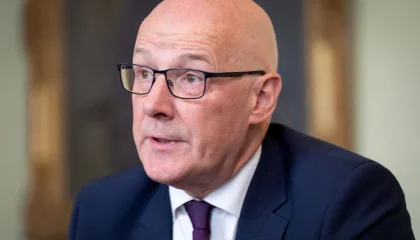
Traveloasisspot.com – When Scottish Parliament resumes from its summer recess on Tuesday, First Minister John Swinney will deliver a statement that carries the weight of an entire legislative term. The Programme for Government, a document that maps out both the immediate year and the full five-year horizon at Holyrood, will place household affordability at its very core. Swinney has framed the issue not as one policy among many but as the defining challenge of his administration’s second consecutive term.
The SNP secured a record fifth straight majority in May’s Scottish Parliament election, handing Swinney a mandate he describes as a trust to be honoured through delivery. Yet the political landscape since that vote has shifted sharply. Inflation continues to squeeze Scottish households, and the First Minister has signalled that his government will respond with targeted intervention rather than waiting for market forces to correct the imbalance.
“The principle issue in that will be tackling the cost of living challenges members of the public face.”
A Price Cap That Divides
One element of that intervention has already drawn sharp criticism. Swinney’s proposal to cap prices on certain staple food items would empower the Scottish Government to set upper limits on what retailers can charge for designated products. The business community has pushed back, arguing that statutory price controls distort supply chains and risk reducing shelf availability. For a government that simultaneously courts private investment, the tension between consumer protection and market freedom is unlikely to resolve neatly.
The cap sits alongside other reported moves aimed at trimming public-sector expenditure. Ministers are reportedly close to reducing the number of health boards operating across Scotland, a consolidation designed to cut duplicated administrative costs. Such structural changes, if enacted, would reshape the landscape of NHS governance in a country where 15 boards currently oversee hospital and community services.
The £5 Billion Question
Underpinning every reform proposal is a fiscal reality that few in Westminster or Holyrood can ignore: Scotland’s budget faces a projected shortfall approaching £5 billion by the close of the decade. Swinney has acknowledged the scale of the gap and framed his public-service agenda as a programme of restructuring within fixed resources rather than a promise of expanded spending.
“It is vital that we have public services that have people right at the centre of those public services and they are able to deliver for the people of our country. That has to be done within the resources that we have available, and in a way that strengthens the delivery of public services.”
On Monday, ahead of the formal statement, Swinney pledged to outline “the practical steps” his government is taking toward public-service reform. The language suggests a move from rhetoric to implementation schedules, though the precise timetable and scope of changes remain to be confirmed in Tuesday’s address.
Economic Growth as the Funding Engine
Swinney has been careful to pair his welfare and service commitments with an explicit growth strategy. In his view, expanding Scotland’s productive base is not a separate policy track but the prerequisite that finances everything else: child-poverty eradication, net-zero transition, and service modernisation all depend on a larger tax base.
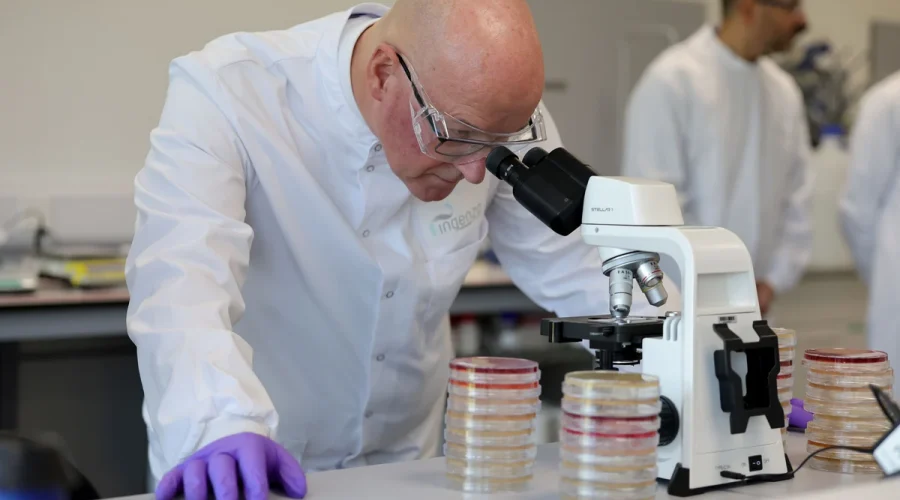
That logic was on display during a visit to Ingenza, a research organisation based in Edinburgh. Swinney described the firm as “a highly sophisticated research organisation” capable of partnering with Scottish universities to translate academic findings into commercial products.
“That is how we generate economic opportunity and economic growth within Scotland and that whole issue and ambition will be central to the government’s programme, because the more we grow our economy the more we can eradicate child poverty, the more we can strengthen our public services.”
The Ingenza example illustrates a broader SNP strategy of positioning Scotland as a knowledge-economy hub, leveraging its university density to attract R&D investment. Whether that pipeline can scale quickly enough to offset the projected budget hole remains the central question for the coming term.
Opposition Demands a Pivot
Scottish Conservative leader Russell Findlay has urged Swinney to use the Programme for Government as an opportunity to abandon what he calls a “high-tax, high welfare spend approach that is harming Scotland.” Findlay accused the First Minister of spending the post-election period “chasing quick headlines and promoting gimmicks” rather than confronting structural fiscal problems.
“This SNP Programme for Government should focus on bringing down people’s bills which are continuing to soar everywhere they look. He should start by reining in the nationalists’ ballooning benefits bill which is completely unsustainable and will have to be paid for by higher taxes and more cuts to public services.”
The Conservative critique mirrors a broader scepticism across the UK about whether devolved governments can deliver meaningful cost-of-living relief without triggering inflationary spirals or alienating investors. For Swinney, Tuesday’s statement must thread that needle: demonstrating concrete consumer protection while reassuring the business community that Scotland remains an open, competitive jurisdiction.
How Holyrood reacts to the specifics of the programme — particularly the food-price mechanism and any health-board consolidation — will set the tone for the next five years of Scottish governance. The stakes, as Swinney himself has framed them, are not merely political but existential for households already feeling the squeeze at the checkout.
Related Reading
Frequently Asked Questions
What is Tackling cost of living pressures a principle?
Tackling cost of living pressures a principle is the main topic of this guide. The article explains the context, practical details, and next steps readers should understand.
Why does Tackling cost of living pressures a principle matter?
Tackling cost of living pressures a principle matters because readers are looking for a useful answer, not just a short summary. Good content should match search intent and help them decide what to do next.