British Shoppers Face Steepest Price Jump in Two Years as Food and Tech Costs Converge
Traveloasisspot.com – Households across Britain are feeling a renewed squeeze at the checkout. Retail price inflation climbed to its most acute level since early 2024 last month, driven by a simultaneous acceleration in grocery bills and a sharp uptick in the cost of electronics. The convergence of these two pressures marks a notable shift from the modest gains consumers had enjoyed through the spring and early summer.
The British Retail Consortium and market-research firm NIQ jointly track what shoppers actually pay on the shelf, and their latest reading places year-on-year retail inflation at 1.5 percent. That figure represents a substantial jump from the 0.9 percent recorded in July and eclipses every monthly print since February 2024, when the rate briefly touched 2.5 percent before easing.
Food Bills Reverse Course
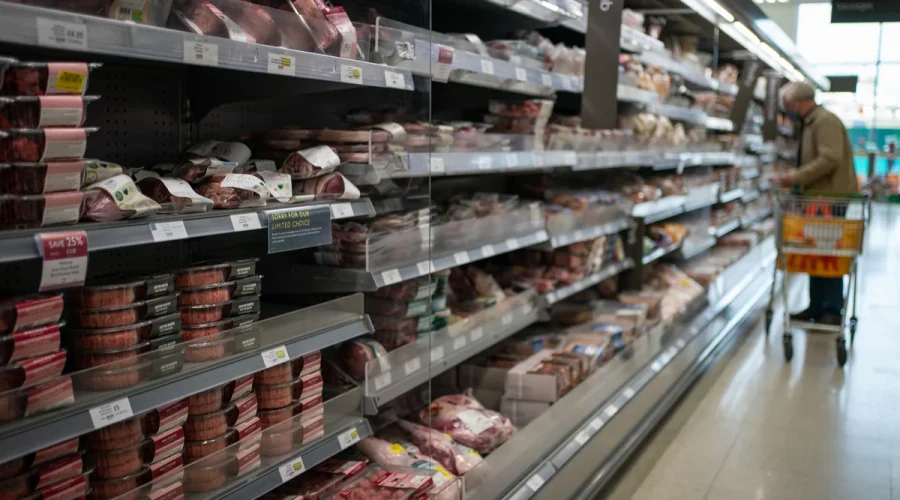
The grocery aisle is where the acceleration is most visible. Food price inflation, which had been trending downward over several months, reversed direction and surged to 2.8 percent year-on-year in August, up from 2.2 percent in July. Within that headline, fresh produce and meat saw their rate ease marginally to 3 percent, while ambient foods — packaged, shelf-stable items that are typically imported and processed — climbed to 2.5 percent.
Analysts attribute the reversal to two overlapping factors. First, energy costs embedded in supply chains have risen as the ongoing conflict in the Middle East has pushed crude oil and natural gas prices higher, feeding through to transport, packaging, and processing expenses. Second, the seasonal discounting that retailers deploy during summer months has wound down, removing a temporary cushion that had kept shelf prices artificially suppressed.
AI Boom Ripples Into Laptop and Phone Prices
Beyond the kitchen, a second inflationary vector has emerged from an unlikely quarter: the artificial-intelligence buildout. Demand for high-bandwidth memory chips and storage components has exploded as data centres race to equip themselves with GPU clusters. Manufacturers of consumer electronics — laptops, tablets, smartphones — are absorbing higher input costs, and those costs are now appearing in retail price tags.
Non-food retail inflation, which had been subdued, jumped to 0.9 percent for the month, a two-year high. The technology category was the principal contributor, with analysts noting that memory-component shortages tied to the AI capital-expenditure cycle are tightening supply and lifting unit costs across the electricals segment.
Industry Voices
Helen Dickinson, chief executive of the British Retail Consortium, framed the data as a warning that cost pressures are migrating from wholesale into the consumer-facing layer of the economy.
“Shop price inflation rose to its highest level in over two years, albeit well below the headline Consumer Price Index. The impact of higher energy, input and commodity costs is beginning to filter through into prices, particularly for ambient foods which are typically imported and processed. In non-food, electrical prices rose amid the ongoing AI boom, which is forcing up the price of memory chips and storage.”
Mike Watkins, head of retailer and business insight at NIQ, offered a more measured reading, emphasising that retailers are still absorbing a meaningful share of upstream cost increases rather than passing them on in full.
“While the increase in both food and non-food inflation is not unexpected, particularly as some of the summer promotional activity seen in recent months comes to an end, retailers continue to keep prices low, helping consumers manage rising household costs such as energy and fuel. However, pressures are continuing to build across supply chains, and we can expect price competition to intensify as we move into the autumn months.”
What Comes Next
The timing of the data matters. August figures capture the final weeks of summer discounting, meaning part of the monthly jump reflects the mechanical removal of promotional pricing rather than a structural repricing. Yet the underlying cost signals — energy, freight, memory components — show no sign of abating. If Middle East tensions persist and AI-driven semiconductor demand continues to outstrip near-term supply, retailers will face a narrower margin between what they can charge and what consumers can absorb.
For the average British household already contending with elevated energy bills, mortgage payments, and fuel costs, even a modest further drift in grocery and electronics prices compounds financial stress. The gap between retail inflation and the headline Consumer Price Index remains wide, offering some insulation, but the direction of travel is what policymakers and shoppers alike will be watching through the autumn. Price competition among retailers, Watkins noted, is likely to intensify as the season turns — a dynamic that could blunt, but not eliminate, the pass-through of upstream cost shocks into the prices at the till.
Related Reading
Frequently Asked Questions
What is UK shop prices rise at fastest?
UK shop prices rise at fastest is the main topic of this guide. The article explains the context, practical details, and next steps readers should understand.
Why does UK shop prices rise at fastest matter?
UK shop prices rise at fastest matters because readers are looking for a useful answer, not just a short summary. Good content should match search intent and help them decide what to do next.