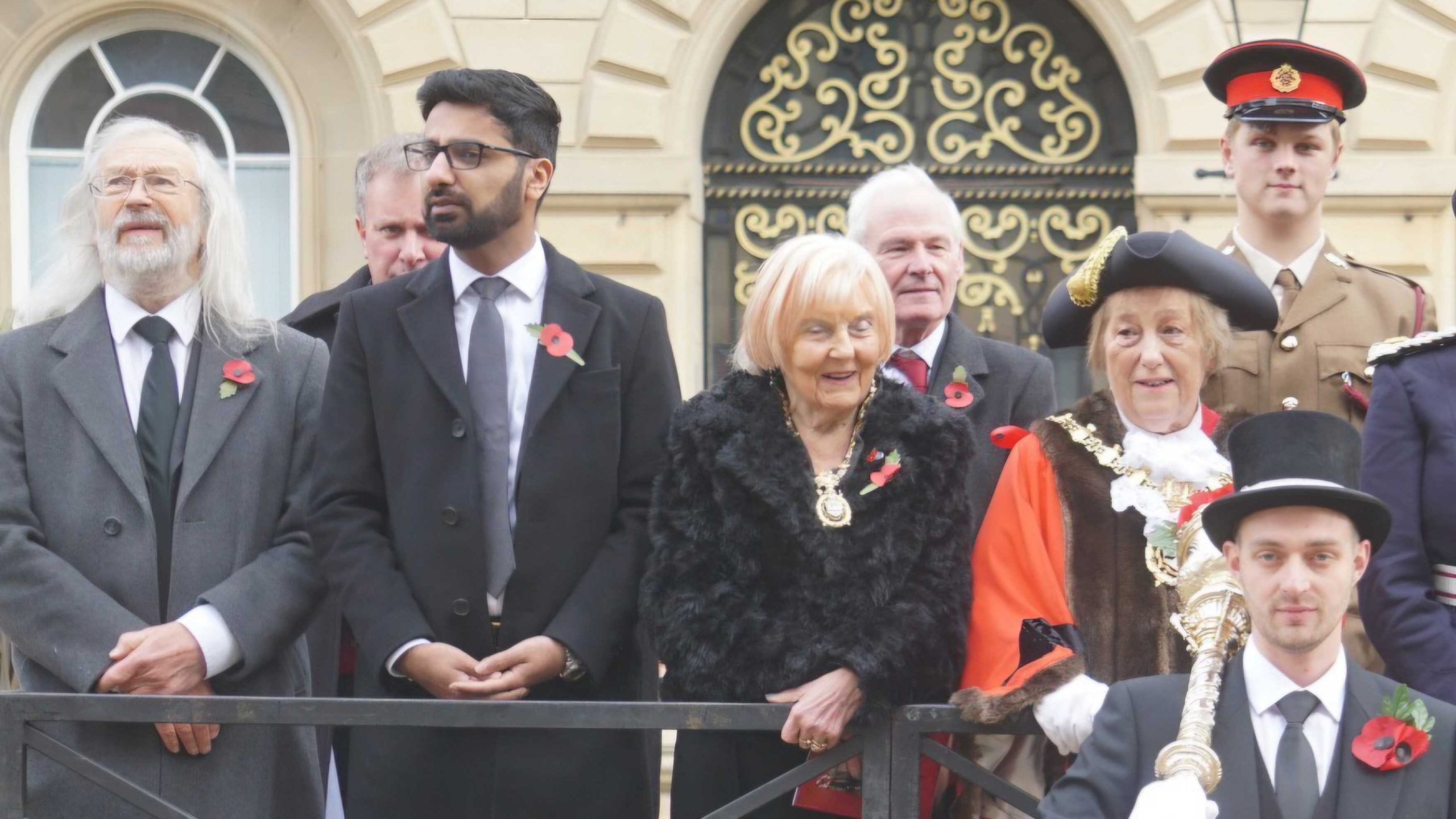
Exposed: The dirty campaign to paint Muslim MPs as anti-British
In politics, certain words or phrases can swiftly gain traction, shaping narratives with surprising ease. A notable case in recent memory involves the term “weapons of mass destruction,” which became a central talking point during the 2003 Iraq invasion. While initially presented as a technical argument, its repeated use by leaders like George W. Bush and Tony Blair lent an air of authority to their claims, even as the reality proved otherwise.
The media embraced this terminology, bolstering its credibility and normalizing the false assertion. By the time the invasion concluded, it was clear that the WMD narrative had been strategically weaponized to justify an unjustified war. This illustrates how political language can evolve to serve ideological purposes, often with little regard for factual consistency.
Today, a similar pattern is emerging with the word “sectarian.” Though not new, its application has shifted from describing divisions in Northern Ireland to targeting British Muslim politicians. The Oxford English Dictionary defines sectarianism as a “narrow-minded adherence to a particular sect,” emphasizing conflicts between different groups. Synonyms such as bigot, separatist, or extremist now serve as tools to marginalize Muslim MPs in the public eye.
Since the 2024 general election, the term has been central to a growing campaign portraying Muslim representatives as outsiders. This strategy was first seen in a parliamentary debate when Tory peer Lord Godson warned of “rising extremism” and “explicitly communalist appeals.” He argued that candidates had “ridden this sectarian tiger,” suggesting a threat to the UK’s political fabric.
“Too many candidates in this month’s general election have sought to ride this sectarian tiger.”
Following Godson’s lead, Tory politicians rapidly adopted the term. Robert Jenrick, a contender in the party’s leadership race, soon accused “sectarian gangs” of inciting disruption and violence. His rival, Kemi Badenoch, condemned MPs elected on “sectarian Islamist politics,” calling them “alien ideas with no place here.”
“Sectarian MPs have polluted our politics.”
Meanwhile, Nigel Farage of Reform UK warned against “sectarian politics,” framing Islamic influence as a cultural overtake. Journalists like Douglas Murray echoed these sentiments, suggesting that Enoch Powell, a famously racist Tory, would have been “deemed certifiable” if he had predicted the rise of Muslim voters in Birmingham.
“If Powell had predicted… he would most likely have been deemed certifiable.”
Murray further claimed that MPs such as Ayoub Khan were elected “solely because of their appeal to the sectarian Muslim vote,” highlighting their focus on Israel and Gaza. This coordinated effort aims to cast Muslim politicians as inherently divisive, reducing their role in democratic life to that of extremists or separatists.
The campaign’s goal is clear: to position Muslim MPs as threats to British unity. By redefining “sectarian,” critics seek to label them as anti-British, echoing Margaret Thatcher’s phrase “enemy within” to stoke public fear. The result is a narrative that frames Muslim participation in politics as a destabilizing force, rather than a reflection of diverse voices in society.