
Millions Hit the Roads as Temperatures Begin to Ease
Cooler weather forecast as millions of drivers – Summer travel is underway across Britain, with forecasts indicating a slight cooling trend as motorists prepare for their seasonal excursions. The RAC has calculated that approximately 14.1 million drivers will take to the roads over the weekend period spanning Friday through Sunday. This figure represents the second-largest travel volume recorded since the organization started monitoring such patterns in 2016.
Seasonal breaks are currently in progress for most educational institutions throughout England and Wales, with some establishments concluding their terms early next week. Meanwhile, the academic calendar has already shifted in Scotland and Northern Ireland, where schools have finished for the summer.
Peak Travel Days and Regional Traffic Patterns
Saturday is anticipated to emerge as the most congested day for holiday departures, with projections showing 3.8 million journeys planned. Both Friday and Sunday are expected to handle roughly 3.4 million travelers each. The Port of Dover is preparing for significant vehicle movement, expecting approximately 7,500 outbound cars on Friday, climbing to nearly 10,000 by Saturday. The RAC has identified south-west and north-west England as regions likely to experience the highest concentration of leisure traffic.
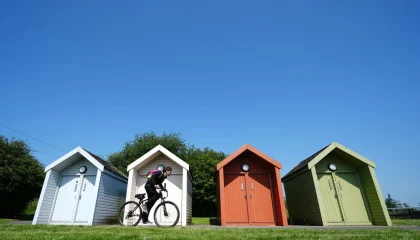
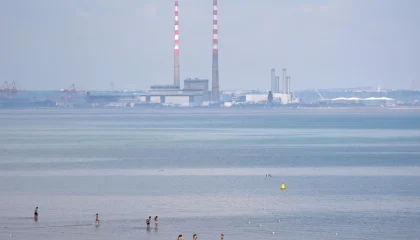
Weather conditions have been notably warm, with the Met Office reporting that Friday marked the thirteenth consecutive day where temperatures surpassed 30 degrees Celsius across the United Kingdom. A high of 31C was documented at Ross-on-Wye in Herefordshire during this period.
Weekend Temperature Predictions
The weather service indicates that temperatures will experience a modest decline throughout the weekend. Saturday forecasts predict maximum readings of approximately 24C in both London and Cardiff, alongside 21C in Manchester and 23C in Glasgow. Similar conditions are anticipated for Sunday as well.
This cooling follows an extended warm period, with 2026 already recording 28 days—both consecutive and separate—where temperatures exceeded 30C somewhere within the UK. The breakdown shows seven occurrences in May, eight in June, and thirteen in July so far. The historical benchmark for the most 30C-plus days in a single calendar year stands at 34, established during 1995.
Wildfire Concerns and Rainfall Records
Hot and dry conditions have prompted officials to encourage public participation in wildfire prevention. National Resilience statistics reveal that nearly 499 fires have been documented across England and Wales between January 1 and July 16. Although this total remains considerably lower than the 748 recorded at the same point last year, the National Fire Chiefs Council notes that activity levels are substantially elevated compared to recent years. Historical comparisons show 81 wildfires by this date in 2024, 242 in 2023, and 400 in 2022.
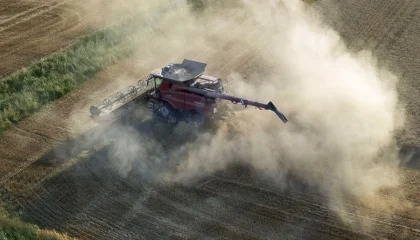
Met Office data indicates that central and south-east England are experiencing the longest uninterrupted period without measurable rainfall this century. Weather stations in both regions have recorded an average of zero precipitation for fourteen consecutive days, running from Thursday July 2 through Wednesday July 15. This represents the longest dry spell for south-east England since a fifteen-day period in April 1997, while central England has not seen such extended dryness since a fourteen-day run in June 1996. Additional data for July 16 remains pending and may extend these records further.
Scientists emphasize that climate change driven by human activity is altering global rainfall patterns, resulting in increasingly variable weather conditions. Following consecutive heatwaves and a record-warm spring for England and Wales, vegetation has grown progressively drier. The NFCC warns that even a single spark can rapidly ignite a fast-moving wildfire, with the risk of major incidents persisting through the coming weeks.
The council recommends avoiding disposable barbecues when feasible, disposing of cigarettes properly, and utilizing provided bins or taking litter home. A spokesperson noted: “Parents and carers can also help by talking to children and young people about fire safety and the importance of respecting the outdoors.” They added that most wildfires are preventable through simple, responsible decisions that protect communities, wildlife, and natural areas while supporting firefighters who have worked continuously this summer.
Water supply pressures have led to several hosepipe bans across large portions of southern England. The Environment Agency reported that reservoir storage levels in England currently stand at 79 percent, approximately five percentage points beneath the long-term average for this time of year, according to their weekly dry weather and drought assessment.