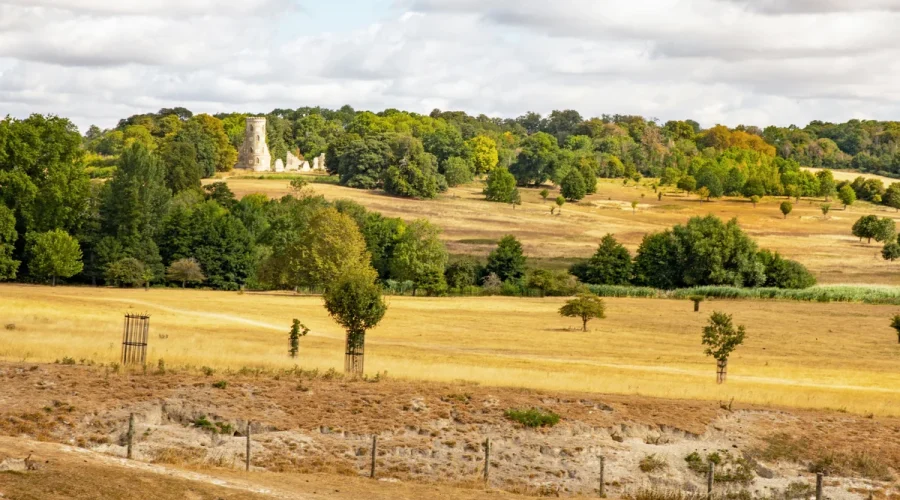
Drought Strangles a Historic Cambridgeshire Farm, Forcing Early Switch to Winter Feed
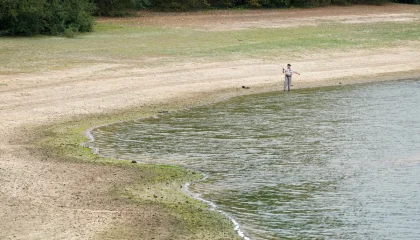
Traveloasisspot.com – For the third time in just five years, one of England’s most storied agricultural landscapes has been brought to a standstill by prolonged dry weather. At Wimpole Estate in Cambridgeshire, a National Trust property spanning 1,200 hectares (roughly 3,000 acres) of farmland, the summer growing season has effectively collapsed. Grass that should have been cut and baled for animal feed simply never grew, leaving livestock with no summer forage and compelling managers to pull out winter rations months ahead of schedule.
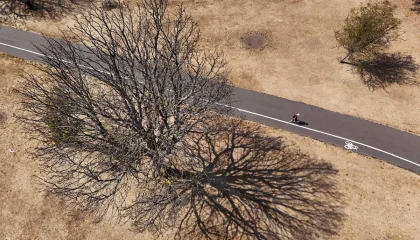
The consequences ripple well beyond a single paddock. Grain harvests on the estate are running approximately 25 percent below normal, while straw output has plummeted from a typical 200 bales to a mere 60. The hay meadows, which in a healthy year would yield around 150 tonnes of dried fodder, produced essentially nothing. Soil surfaces have cracked under the sustained heat, and veteran trees scattered across the landscape are displaying visible signs of physiological stress.
Wildlife and Pollination Under Siege
The drought’s reach extends into the ecological fabric of the estate. Invasive plants such as ragwort and thistles are colonising open ground at an accelerated rate, squeezing out native species that would normally dominate the dry season. Meanwhile, shifting weather patterns are creating temporal mismatches between flowering plants and the pollinating insects that depend on them — a disruption with knock-on effects for both biodiversity and the productivity of any remaining crops.
These pressures, as the National Trust notes, are not confined to Wimpole. They are being felt across farming systems throughout the country, underscoring how climate volatility is reshaping the operational realities of rural land management.
A 2,000-Year Adaptation Story Continues
Wimpole Estate is the National Trust’s largest organic in-hand farm, and its agricultural history stretches back millennia. Dave Hassall, the trust’s farm and countryside manager, framed the current crisis within that long arc of adaptation:
“Drought affects every part of the system – crops, grassland, livestock, wildlife and costs. We’re already using winter feed because summer growth simply hasn’t happened. These pressures are being felt across all farming systems, and they show why adapting to a changing climate is essential for food production, nature and rural communities.”
Hassall emphasised that the estate “has adapted for 2,000 years” and that “that spirit continues.” In practical terms, that spirit is now expressed through a suite of climate-adaptation measures being accelerated in response to the latest drought episode.
Scaling Up Climate Adaptation
Since 2021, 125,000 trees have been planted across the estate to improve shade cover, bolster soil structure, enhance moisture retention, and strengthen habitat resilience. Additional work is underway to expand rainwater storage capacity, reducing dependence on seasonal rainfall for irrigation and livestock water. Conservation grazing regimes are being adjusted to lower wildfire risk while simultaneously supporting habitat restoration goals.
On the livestock side, selective breeding programmes are helping animals cope more effectively with recurring dry spells. The estate is also trialling alternative forage species — including willow and aspen — and evaluating crop varieties with greater drought tolerance, seeking to diversify the biological toolkit available to farm managers.
A Call for National-Level Action
While acknowledging recent Government support for farmers, the National Trust argues that piecemeal assistance is insufficient. The organisation is urging ministers to elevate climate resilience to the status of a national mission, coordinated at Cabinet level. It calls for sustained investment in nature as essential infrastructure and for strengthened support of fire and rescue services, whose workloads are expected to climb as wildfire seasons lengthen.
“We welcome recent Government support for farmers, but long-term resilience requires sustained investment in nature and climate adaptation.”
The trust has opened a public petition inviting citizens to back this agenda. Those wishing to add their name can do so at nationaltrust.org.uk/wildfire-petition.
Why This Matters Beyond One Estate
Wimpole’s experience is a microcosm of a broader transformation underway across British agriculture. As summer temperatures climb and rainfall patterns become less predictable, the assumption that a reliable growing season will arrive on schedule is eroding. Farms that once relied on centuries of stable climatic norms now face recurring disruptions that demand faster, more coordinated responses — from individual land managers to national policy makers. The question is no longer whether adaptation is needed, but whether the pace of institutional response will match the pace of environmental change.
Related Reading
Frequently Asked Questions
What is National Trust estate faces shortage of hay?
National Trust estate faces shortage of hay is the main topic of this guide. The article explains the context, practical details, and next steps readers should understand.
Why does National Trust estate faces shortage of hay matter?
National Trust estate faces shortage of hay matters because readers are looking for a useful answer, not just a short summary. Good content should match search intent and help them decide what to do next.