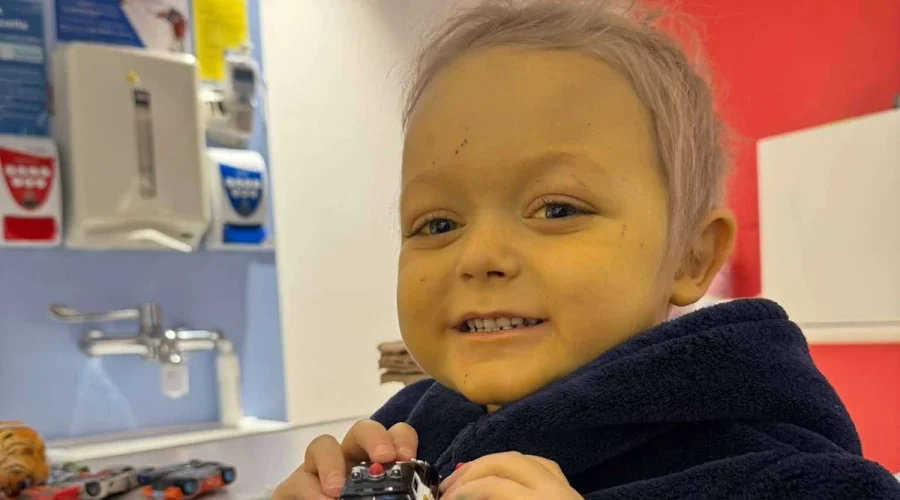
Father’s 17-Hour Operation to Save Son’s Life: Inside One of the World’s Rarest Paediatric Transplants
Traveloasisspot.com – In a procedure so uncommon that fewer than ten children globally have ever undergone it, a Cambridge father handed over roughly a fifth of his own liver and a metre-and-a-half of his small intestine to give his six-year-old son a fighting chance at survival. Gary Jackson called the experience the single greatest privilege of his existence, and said he would repeat it without hesitation.
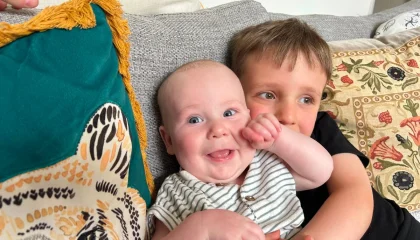
The surgery took place at King’s College Hospital in London in January of last year and lasted seventeen hours. Harry Jackson, now recovering, was born with a congenital condition called malrotation — a developmental anomaly in which the bowel fails to twist into its correct anatomical position during fetal growth. Left unmanaged, malrotation can trigger volvulus, a catastrophic twisting of the intestinal tract that severs its blood supply and can kill within hours. Over the years, Harry also developed intestinal failure-associated liver disease (IFALD), a progressive hepatic condition brought on by prolonged dependence on total parenteral nutrition (TPN), the intravenous feeding regimen used to sustain him when his gut could no longer absorb nutrients adequately.
A Desperate Search for a Match
With conventional treatment options exhausted, Harry’s parents — Annie and Gary, both based in Cambridge — sat down with the transplant team at King’s to explore whether a combined liver-and-bowel graft from a living parent was feasible. The couple, already exhausted by years of managing their son’s complex medical needs, agreed immediately to undergo the battery of compatibility tests required before any donation could be considered.
“When Harry was diagnosed with malrotation, we always knew that a bowel transplant would likely be part of his journey one day. We just hoped that day would be many years away. When his liver began to fail because of the total parenteral nutrition keeping him alive, everything changed. Suddenly we were faced with the reality that he needed both a liver and bowel transplant much sooner than we had ever imagined.”
Weeks of assessments followed. The results confirmed that Gary was a 98 per cent human leukocyte antigen (HLA) match with Harry — meaning their immune systems were nearly identical, dramatically reducing the risk of graft rejection. That match opened the door to the combined procedure.
Preparing the Body: Six Stone, No Alcohol, Months of Discipline
Before the operating theatre, Gary undertook a rigorous physical preparation. He lost six stone, adhered to a strict dietary protocol, eliminated alcohol entirely, and maintained focused medical supervision over several months to ensure his organs were healthy enough to withstand partial resection. He described the period as physically and mentally gruelling but insisted every hardship was justified by the prospect of helping his son.
“When you’re a parent, you’d give your child anything in a heartbeat. So when I was told I could donate part of my liver and bowel to Harry, there was never a decision to make. I was just incredibly grateful that I had the opportunity to do something that could help save his life and give our little boy a second chance.”
The operation itself was carried out through a vertical incision in the upper abdomen. Surgeons removed approximately 20 per cent of Gary’s liver and roughly 1.5 metres (four to five feet) of his small bowel — a substantial segment given that the average adult small intestine measures around 20 feet in total length. Gary’s post-operative recovery spanned about six weeks.
“The operation itself lasted 17 hours and my recovery took around six weeks. It was tough, but nothing compares to seeing Harry looking healthier and stronger afterwards. Watching him recover and knowing that I had been able to play such a significant part in giving him that chance is something I’ll never be able to put fully into words. It remains the greatest privilege of my life, and I would do it all again without a second thought.”
Why Living-Donor Transplants Matter for Children
Combined liver-and-bowel transplantation from a living parent remains an extraordinary rarity in paediatric surgery. Across the United Kingdom, roughly three in every hundred liver transplants now come from living donors, and the majority of those cases involve children, whose smaller organ size and acute clinical timelines make deceased-donor matching particularly difficult. A parent’s tissue, when HLA-compatible, offers both a size-appropriate graft and the ability to schedule surgery electively rather than waiting for a donor organ to become available.
Professor Nigel Heaton, consultant transplant surgeon at King’s College Hospital and a member of the team that operated on Harry, noted that Gary approached the donation with unwavering seriousness from the very first consultation. He emphasised that the father reduced his weight through healthy eating and structured exercise, maintained a consistently positive attitude throughout the process, and recovered remarkably quickly given the scale of the resection.
“From the first meeting, it was very clear that Gary was set on doing all he could to help Harry recover. He took the idea of living donation very seriously and reduced his weight through healthy eating and exercise. Gary was always positive and uncomplaining, and recovered very quickly.”
King’s College Hospital and the Institute of Liver Studies
King’s College Hospital, located in Denmark Hill, south London, operates the Institute of Liver Studies and has long sat at the forefront of hepatic and intestinal transplant research. The hospital’s multidisciplinary transplant programme brings together hepatologists, paediatric surgeons, anaesthetists, and intensive-care specialists to manage cases of this complexity. Harry’s case, combining two organ systems in a single operation for a child, represents the upper echelon of what the programme routinely delivers.
For families of children with progressive intestinal failure and secondary liver disease, the existence of such programmes — and the willingness of parents to become living donors — represents a narrow but vital lifeline. As Annie put it, hundreds of children across the country are still waiting for a compatible donor to become available.
“There are hundreds of children like Harry waiting for the phone call that could save their lives. As parents, you feel completely helpless watching your child wait for something so uncertain. The thought that one of us might be able to donate and give Harry that chance was something we wanted to explore immediately. If there was any possibility we could help him ourselves, we had to try.”
Harry, now past the immediate post-operative period, continues his recovery at home in Cambridge. His parents say his appetite, energy, and general wellbeing have improved markedly since the graft took hold — a quiet, daily reminder that the seventeen-hour operation bought him something no medication alone could have provided: time.
Related Reading
Frequently Asked Questions
What is Man donates part of liver and bowel?
Man donates part of liver and bowel is the main topic of this guide. The article explains the context, practical details, and next steps readers should understand.
Why does Man donates part of liver and bowel matter?
Man donates part of liver and bowel matters because readers are looking for a useful answer, not just a short summary. Good content should match search intent and help them decide what to do next.