
Should You Worry About the Ebola Outbreak? Here’s What the Numbers Tell Us
Should you worry about the Ebola – The World Health Organization (WHO) has raised alarms about a rapidly expanding Ebola outbreak in the Democratic Republic of Congo (DRC) and Uganda, warning of its potential to escalate into a regional crisis. The strain responsible for the outbreak, known as Bundibugyo, has yet to have a specific treatment or vaccine developed. Despite this, WHO has classified the situation as a “public health emergency of international concern,” though it maintains that the global risk remains relatively low. The organization’s assessment underscores the urgency of the situation, particularly in light of recent developments that have intensified concerns.
International Response and Human Cases
At least one American working in the DRC has tested positive for Ebola, according to Serge, an international charity. The infected individual was transferred to Germany for medical care, as confirmed by German authorities. This move follows efforts by the U.S. Centers for Disease Control and Prevention (CDC) to relocate six high-risk contacts of the American patient to Europe for observation. The CDC has detailed that five of these contacts will be sent to Germany, while one will be monitored in the Czech Republic. The symptomatic American, Dr. Peter Stafford, a general surgeon specializing in burn care, arrived in Berlin on Wednesday, where he is receiving treatment at Charité University Hospital.
“We have significant uncertainty about the number of infections and how far the virus has spread,” said Dr. Anne Ancia, WHO’s representative in the DRC. This uncertainty stems from the challenges of tracking the outbreak, particularly in regions with limited healthcare infrastructure.
While the confirmed cases in the DRC are currently limited to 51, health officials estimate that at least 139 deaths are likely linked to the outbreak, with nearly 600 additional cases suspected. The discrepancy between confirmed and suspected cases highlights the difficulties in diagnosing and reporting the disease, especially in areas with sparse medical resources. WHO Director-General Dr. Tedros Adhanom Ghebreyesus has expressed deep concern over the outbreak’s scale and speed, emphasizing the need for swift action to contain its spread.
Factors Contributing to the Outbreak’s Severity
Dr. Tedros outlined several critical factors that make this outbreak particularly worrying. One key issue is the delayed identification of the disease, which allowed it to propagate unchecked for weeks. The WHO noted a “critical four-week detection gap” between the first known patient’s illness in April and the official confirmation of the outbreak in May. This delay is attributed to the initial lack of awareness and diagnostic capabilities in the region. Another concern is the role of healthcare workers in transmitting the virus, as several have succumbed to the disease during its spread.
“The outbreak was slow to be identified, and health care workers are among those who died,” Dr. Tedros stated. “This strain, Bundibugyo, has no specific treatment or vaccine, which complicates our response.”
Additionally, the outbreak area experiences high population movement, increasing the risk of cross-border transmission. The WHO also cited the rarity of the Bundibugyo strain as a factor, noting that its unique characteristics make it more challenging to manage compared to other Ebola variants. These elements combine to create a scenario where the outbreak could have broader implications than initially anticipated.
Global Measures and Regional Impact
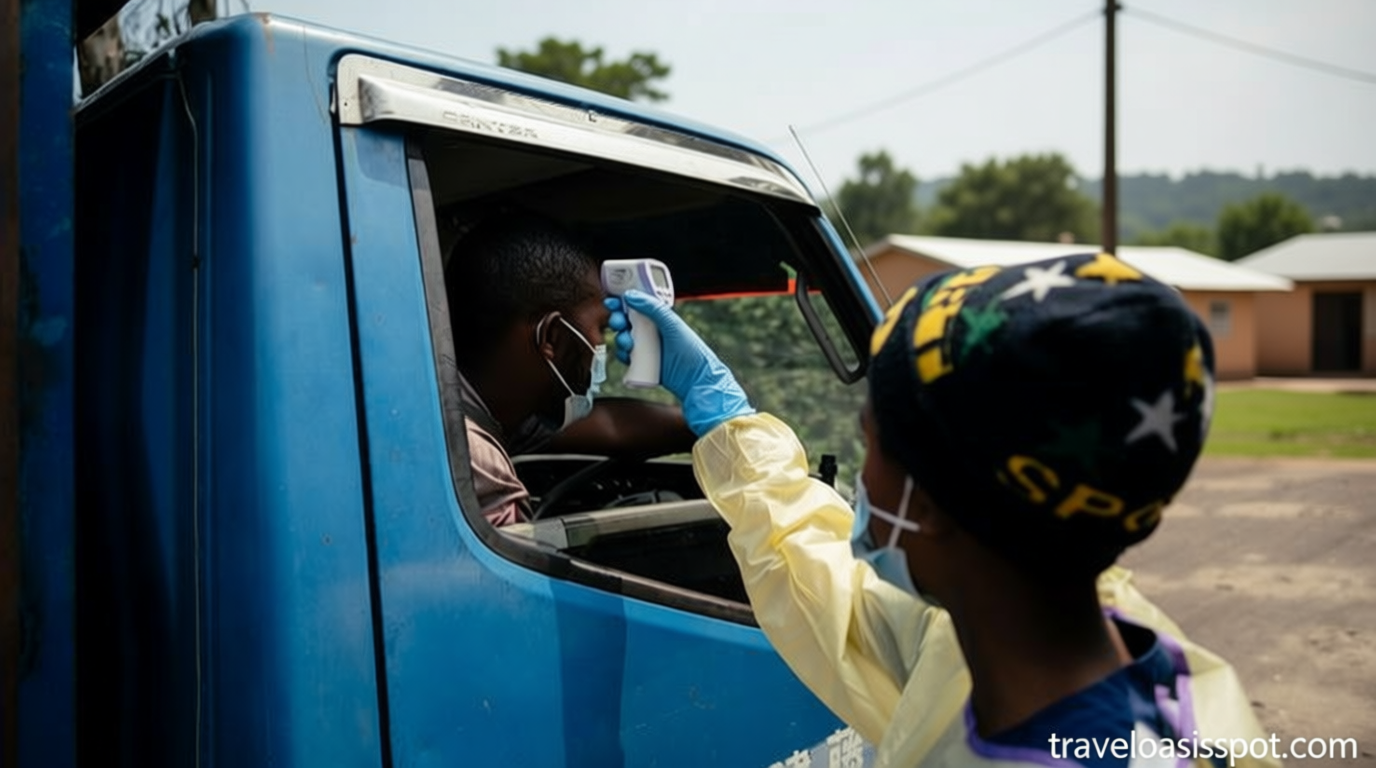
In response to the crisis, numerous countries have implemented measures to prevent the virus from spreading further. These include restricting travel from the affected region, conducting health screenings at airports and border crossings, and deploying medical resources to support containment efforts. Uganda, for instance, reported two confirmed cases as of Tuesday, both of which are considered imported from the DRC. The first patient, who had been treated in a Ugandan facility, later died, while the second case is under investigation.
Ugandan health authorities have activated outbreak control protocols, such as enhanced disease surveillance and readiness for rapid response. The WHO has praised these steps, though it stresses that the global risk remains low. “WHO assessed the risk of the epidemic as high at the national and regional levels and low at the global level,” Dr. Tedros reiterated, emphasizing that international travel restrictions are unlikely to be overly restrictive but remain a critical precaution.
How Ebola Spreads and Its Symptoms
Understanding how the virus spreads is essential to gauging its threat. Ebola is transmitted through direct contact with bodily fluids from an infected person, such as blood, saliva, sweat, vomit, and feces. The virus can also survive on contaminated surfaces or objects, which means it poses a risk in healthcare settings where proper protective equipment may be lacking. The incubation period, the time between exposure and the appearance of symptoms, ranges from two to 21 days. However, individuals are not contagious until they begin displaying symptoms, which typically include fever, headache, muscle pain, and gastrointestinal issues.
Despite the virus’s deadly reputation, its transmission requires close contact, which can be mitigated with adequate precautions. Dr. Tedros highlighted that the lack of a specific treatment or vaccine for Bundibugyo makes the situation more precarious, as infected individuals must rely on supportive care to survive. The WHO is working closely with local governments and international partners to implement these measures effectively.
Tracking the Outbreak and Future Steps
As of May 5, WHO received an alert about an unknown illness with high mortality in Mongbwalu, a town in the DRC’s Ituri province. This alert included reports of four health workers dying within four days of each other, which signaled the outbreak’s severity. A WHO investigation team was dispatched to the area on May 12 to collect samples for testing. The delay in identifying the outbreak has raised questions about how quickly the virus could have spread across borders, particularly in regions with frequent cross-border interactions.
Experts are now working to determine the exact origin of the outbreak and the timeline of its spread. The WHO has stated that the outbreak likely began “a couple months ago,” but precise details are still being uncovered. This ongoing investigation is crucial for understanding the virus’s behavior and developing targeted strategies to combat it. The international community is closely monitoring the situation, with the hope that swift action will prevent the outbreak from escalating into a larger crisis.
The Bundibugyo strain’s resurgence in the DRC and Uganda has brought the world’s attention to the region’s healthcare challenges. While the situation is alarming, the WHO and other organizations are actively working to mitigate its impact. The combination of delayed detection, high population movement, and the absence of a specific treatment has created a complex scenario requiring coordinated global efforts. As the outbreak continues to unfold, the focus remains on identifying new cases, protecting healthcare workers, and preventing further spread to neighboring countries and beyond.





