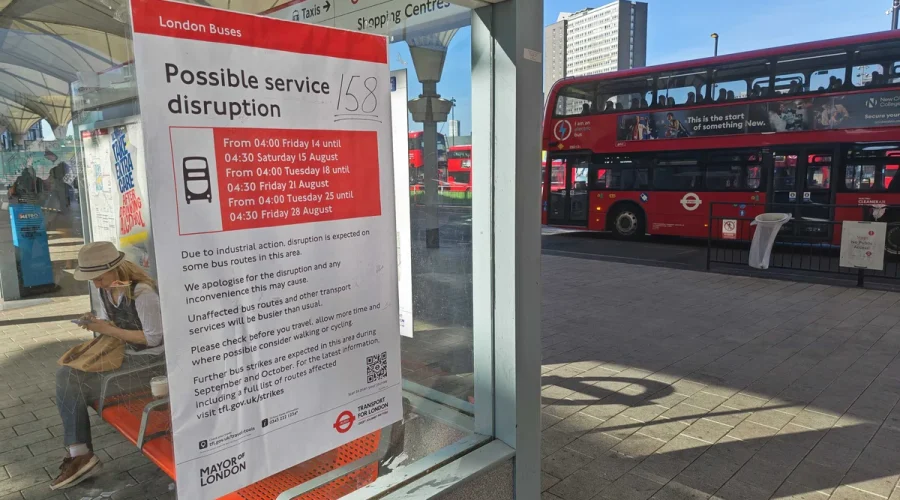
London Commuters Face Another Round of Bus Disruptions as Drivers Return to Strike Action
Traveloasisspot.com – North London’s public transport network came to a standstill at 4 a.m. on Tuesday when more than 1,500 bus drivers resumed walkout action, plunging dozens of routes into delays and cancellations for a third consecutive day of disruption. The latest industrial action, which will run until 4:30 a.m. on Friday, marks the most recent escalation in a dispute centred on dangerously high temperatures inside driver cabs during the summer heatwaves that have battered the capital.
The Core Grievance: Cab Temperatures Near 40°C
Drivers have long argued that the interior of their cabs can climb to approximately 40 degrees Celsius during sustained hot spells, creating conditions that expose them to fatigue, heat exhaustion, heat stroke, and dehydration. For a profession that demands sustained concentration over long shifts, the union contends these are not merely uncomfortable conditions but genuine occupational hazards.
The union Unite, which represents the affected drivers, points out that the majority of buses in the Arriva North London fleet are fitted with air cooling systems rather than full air conditioning. During the recent series of heatwaves, that distinction proved critical: the cooling units managed to lower cab temperatures by only around two or three degrees, a margin the union considers wholly inadequate for protecting workers on multi-hour shifts.
Deal Rejected, Walkouts Resume
The current round of strikes follows a brief pause last week during which both sides sat down to negotiate. Arriva tabled an offer, but Unite members voted to reject it, concluding that the proposal did “not go far enough to solve the problems of hot weather working.” With the deal dead, drivers returned to the picket line within days.
The garages now involved in the latest walkout include Barking, Edmonton, Enfield, Grays, Palmers Green, Stamford Hill, Tottenham, and Wood Green. These same sites had already seen drivers walk out on Friday, August 14, and Saturday, August 15, meaning the current action is the third consecutive day of disruption for affected routes.
Scale of Disruption and What Comes Next
The previous round of industrial action forced delays and cancellations across more than 40 bus routes in the capital. The same network of routes is expected to bear the brunt of this latest strike, meaning commuters relying on north London bus corridors face another full day of reduced service before Friday’s early-morning end time.
The disruption is unlikely to be a one-off event. Unite has signalled that further strikes are planned over the coming months, and some of those actions are expected to coincide with the planned closures on the Piccadilly Line scheduled for August and September. For residents in areas already dependent on bus services during Tube engineering works, the overlap could compound travel difficulties considerably.
Union Leadership Speaks
Sharon Graham, general secretary of Unite, framed the dispute as a matter of worker safety rather than a wage negotiation.
“London bus drivers do a vital job, but are putting themselves at risk due to these appalling conditions. Arriva can fully afford to make meaningful changes our members can accept. Until that happens, strike action will continue and our members at Arriva North London will continue to have the full backing of Unite.”
Steven Stockwell, the union’s regional officer, added that the door to resolution remained open but demanded a substantive shift from the operator.
“There is still time for Arriva to stop this disruptive action, but it relies on it coming back to the table with a deal our members believe will solve the serious problems with conditions once and for all.”
Arriva’s Response and the Air-Conditioning Question
Arriva has stated that the wellbeing of its staff and customers remains its “top priority.” The operator says it has introduced extra welfare checks and scheduled cooling breaks for drivers during hot-weather periods. It also confirmed it is collaborating with Transport for London to roll out upgraded air conditioning units on newer buses entering the fleet.
However, the union’s position is that incremental welfare measures do not address the structural problem: the existing fleet, which constitutes the bulk of daily service, lacks the full air-conditioning capability needed to keep cab temperatures within safe limits during prolonged heat events. Until that gap is closed, Unite maintains that drivers face unacceptable occupational risk every time a heatwave hits.
Broader Context
The dispute sits within a wider pattern of transport-sector industrial action across the UK, where workers in rail, bus, and airport operations have increasingly cited working conditions, staffing levels, and pay as grounds for walkouts. For London specifically, the timing of bus strikes against the backdrop of planned Tube closures means that alternative-route planning for commuters has become an annual necessity rather than an occasional inconvenience. TfL’s own guidance during strike periods typically advises passengers to check route status before travelling and to allow extra journey time, particularly on routes that serve as the primary link for suburban residents without car access.
As the latest walkout grinds toward its Friday morning end time, the question for both Arriva and Unite is whether the next negotiation window will produce a package that drivers consider genuinely protective, or whether the cycle of strike, pause, rejection, and renewed action will continue through the autumn.
Related Reading
Frequently Asked Questions
What is London bus strike begins again as 1?
London bus strike begins again as 1 is the main topic of this guide. The article explains the context, practical details, and next steps readers should understand.
Why does London bus strike begins again as 1 matter?
London bus strike begins again as 1 matters because readers are looking for a useful answer, not just a short summary. Good content should match search intent and help them decide what to do next.