Donald Trump’s Assessment of Andy Burnham and UK Energy Policy
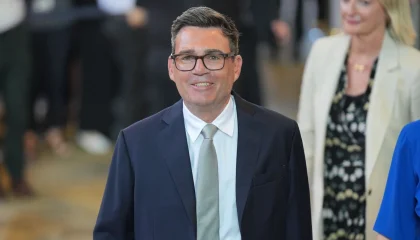
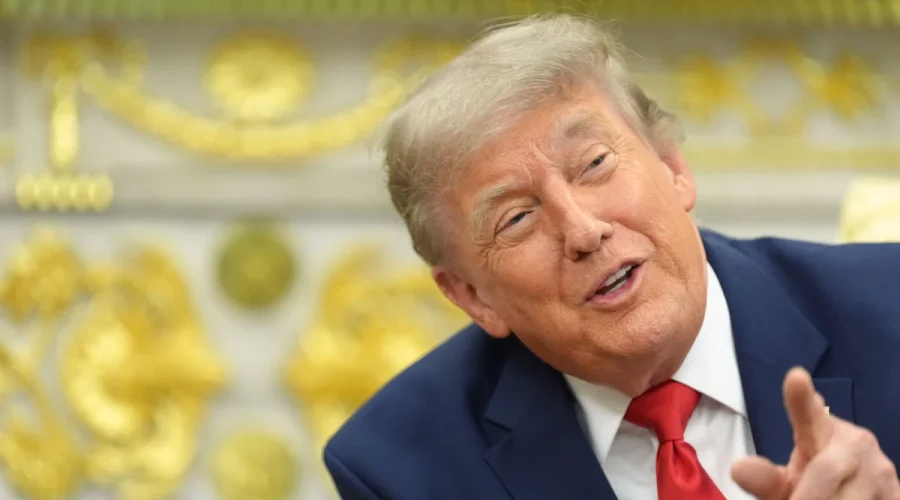
Andy Burnham is extremely liberal says – During a recent meeting with NATO Secretary-General Mark Rutte, former U.S. President Donald Trump offered his first public evaluation of Andy Burnham, the emerging British political figure. Trump’s remarks highlighted his views on Burnham’s energy policies and his role in the UK’s political landscape. This exchange took place ahead of a pivotal NATO summit in Turkey, where strategic alliances and geopolitical tensions were under discussion.
Liberal Stance and Energy Outlook
Trump characterized Burnham as “extremely liberal,” suggesting that this ideological position would hinder his ability to promote oil exploration in the North Sea. The president’s comment was made while reflecting on the UK’s energy strategy, which he believed was overly reliant on renewable sources like wind power. “He probably won’t open up the North Sea,” Trump added, implying that Burnham’s leadership would lead to further restrictions on fossil fuel development.
“I don’t know, I think I see that he was, I guess, the mayor of a town. I hear he’s extremely liberal, extremely, so that means he probably won’t open up the North Sea.”
Burnham, who recently became a Member of Parliament and previously served as mayor of Greater Manchester, is now seen as the leading candidate for the UK’s next prime minister. Trump’s criticism of his energy approach comes amid ongoing debates about the nation’s reliance on wind energy and the potential for oil drilling in the North Sea to revitalize the economy.
Disappointment with UK’s Iran Response
Trump also expressed dissatisfaction with the UK’s involvement in the Iran conflict, particularly its response to the U.S.-Israeli attack on Tehran. He claimed that the UK had failed to support efforts to reopen the Strait of Hormuz, a vital oil supply route, after the assault. “The amazing thing is they buy their oil from Norway, which gets the oil from the North Sea,” Trump noted, emphasizing the UK’s dependence on Norwegian imports despite its own oil resources.
“The North Sea is loaded. I have had every oil company come to see me, ‘Sir, could you give us access to the UK? We would do anything to drill in the North Sea.’”
Trump argued that this reluctance to exploit domestic oil reserves had left the UK in a vulnerable position. “Norway’s got now two trillion dollars in the bank, and the UK is dying,” he remarked, drawing a stark contrast between the financial strength of Norway and the economic struggles of the UK. He suggested that opening the North Sea to drilling would be a simple solution to revitalize the country’s energy sector and boost its economy.
NATO Tensions and Strategic Alliances
The meeting with Rutte came amid growing tensions between Trump and his European allies. While the U.S. president praised Rutte for his efforts to align NATO members with increased defense spending, he also criticized other nations for not fully supporting the alliance’s goals. “I think if anybody else were in that position, we wouldn’t even be meeting today,” Trump said, pointing to the UK’s delayed support for the Iran campaign.
“We didn’t need help on this at all. We demolished them in literally the first week, but it would have been nice if they would have said ‘We’d like to help.’”
Rutte, in turn, sought to ease these tensions by acknowledging the UK’s contributions to NATO. He noted that the alliance’s member nations had increased their spending, which he credited to Trump’s influence. “I know there have been isolated cases about which you are really disappointed, but generally speaking your European allies have been there with you,” Rutte emphasized.
Leadership Controversies and Military Spending
Trump’s critique of the UK’s energy policies was part of a broader discussion about the nation’s leadership and military commitments. He mentioned that the current prime minister would remain in office until a successor was chosen, with Burnham as the sole prominent contender. However, Trump’s focus shifted to the UK’s military spending, which he claimed had been a point of contention within NATO.
Trump highlighted the conflict over UK military expenditures, which led to the resignation of Defence Secretary John Healey. He argued that the UK’s financial contributions to NATO’s defense efforts were insufficient, despite the alliance’s reliance on American funding. “We were let down,” Trump said, suggesting that European allies like the UK and Germany had not met their financial obligations as expected.
“We were disappointed with the UK, we were disappointed with Germany and France. We were disappointed with most of them.”
Trump’s remarks also touched on his disappointment with Spain, which he described as “a horror show” for its reluctance to pay for defense. “Spain is terrible… I mean, they don’t want to pay anything. They think they’re in for a free ride,” he said, reinforcing his belief that many European nations were not fully committed to the alliance’s goals.
Energy Policy and Economic Implications
Trump’s focus on the North Sea oil reserves underscores his long-standing advocacy for fossil fuels. He criticized the current government for its energy strategy, which he believed favored wind power over oil and gas. “I gave Keir Starmer some pretty good advice,” Trump recalled, suggesting that he had previously encouraged the UK to prioritize oil drilling. “I said open up the North Sea, go to Aberdeen, which was the hottest city of the whole continent.”
Trump argued that this approach would have been beneficial for the UK economy, noting that Aberdeen was once a major hub for oil production in Europe. He claimed that the UK’s closure of oil operations had been detrimental, with the nation’s energy sector suffering as a result. “It was terrible. I couldn’t believe it,” he added, expressing frustration over the UK’s decision to prioritize renewable energy over traditional sources.
During the meeting, Trump reiterated his belief that opening the North Sea to drilling would be a “great deal” for the UK. “It’s among the greatest deals in the world,” he said, suggesting that the country could reap significant economic rewards from its oil reserves. This statement reflects Trump’s broader perspective on energy policy, emphasizing the importance of tapping into domestic resources to reduce dependence on foreign imports and strengthen economic independence.
Broader Implications for NATO and Global Politics
While Trump’s comments on Burnham and UK energy policy were central to the discussion, the meeting also addressed the role of NATO in global affairs. Rutte sought to downplay the disagreements, highlighting the alliance’s progress in defense spending and its collective strength. However, Trump’s criticism of certain allies revealed the ongoing challenges in maintaining unity within the organization.
The conflict over the Iran attack served to amplify existing tensions within NATO. Trump argued that the U.S. had been the primary financier of the alliance’s military operations, while European members had not provided adequate support. “America had been bankrolling the defense of other countries,” he stated, suggesting that this financial imbalance had created friction between the U.S. and its European partners.
“I think if I would have called him, he probably would have found a way to help if we needed it.”
Despite his criticisms, Trump acknowledged Rutte’s efforts to align with the U.S. on strategic issues. He praised the NATO secretary-general for his ability to manage the alliance’s challenges, even as he continued to voice his concerns about the UK’s and other nations’ contributions to global defense. The meeting highlighted the complex dynamics within NATO, as well as the ongoing influence of U.S. leadership on European policies.