
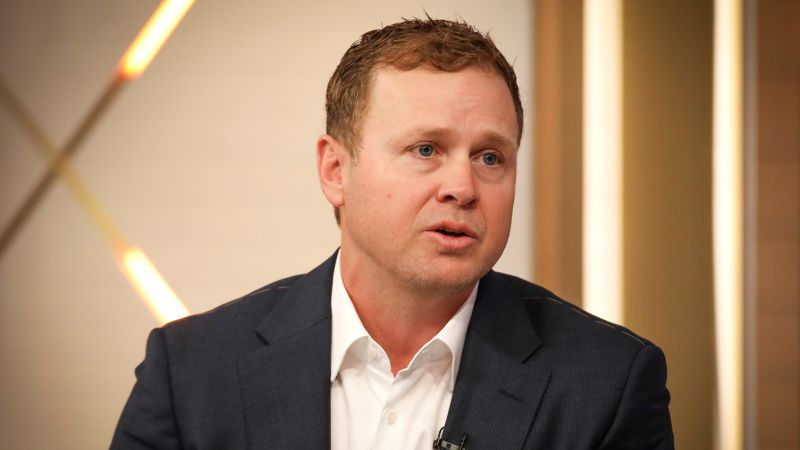
Can Spencer Pratt ride viral videos to victory in the race for LA mayor?
Can Spencer Pratt ride viral videos – In the heart of Los Angeles, a candidate with a distinct profile is emerging as a potential disruptor in the upcoming mayoral race. Spencer Pratt, a 42-year-old former reality television star, is leveraging his knack for social media engagement to challenge the city’s current leadership. His campaign highlights Los Angeles’ pressing issues—homelessness, crime, and bureaucratic mismanagement—and directly targets the Democratic establishment that has long dominated local politics. The June 2 primary, originally seen as a nonpartisan contest, now feels like a battleground where Pratt’s unconventional approach could shift the balance of power.
Pratt’s strategy hinges on raw authenticity, a tactic he believes resonates with voters disillusioned by traditional political messaging. His blunt critiques of the city’s problems have garnered significant attention, particularly among Republicans who see parallels between his candidness and Donald Trump’s populist style. The viral appeal of his campaign is evident, with his social media presence fueling speculation about his viability as a candidate. Yet, his path to victory remains uncertain, especially as he faces a formidable opponent in 72-year-old Mayor Karen Bass, whose administration has maintained strong support from the city’s Democratic majority.
The Rise of a Controversial Challenger
Pratt’s unexpected entry into the race has altered the dynamics of a contest that once seemed poised to feature Bass against a left-leaning rival. City councilwoman Nithya Raman, a progressive candidate, had been the most likely challenger to Bass’s leadership, but the latter has moved swiftly to ensure a direct showdown with Pratt in the November general election. This move underscores Bass’s confidence in her ability to weather the opposition, even as the public’s frustrations with local governance grow.
Michael Trujillo, a Democratic strategist, notes that Pratt’s campaign, though energetic, may not translate into widespread support. “Being louder doesn’t necessarily mean that there’s actual support for him in the city of L.A.,” he says. “The city is deeply blue, and while his style might attract attention, it could also alienate voters who prioritize policy over personality.” Trujillo’s warning highlights the tension between Pratt’s viral appeal and the reality of Los Angeles’ political landscape. While his presence has injected excitement into the race, it remains to be seen whether this momentum can sustain itself beyond the primary.
A Trump-Like Comparison
Analysts have drawn comparisons between Pratt and former President Donald Trump, citing their shared traits as reality television personalities with limited political experience. Both candidates are known for their unfiltered rhetoric and ability to capture headlines with provocative statements. This similarity has drawn praise from some Republicans, who view Pratt as a modern-day disruptor capable of challenging the status quo. However, the comparison also raises questions about whether Pratt can replicate Trump’s success in a different context.
Trump’s dominance in 2016 and 2020 was built on a coalition that included working-class voters and suburban independents, but his performance in the 2024 election showed a decline in support. In Los Angeles County, Trump lost by 33 percentage points, and the city itself is even bluer than the county. Registered Democrats outnumber Republicans in the city by roughly four to one, making a general election victory for Pratt a daunting task. “The fact that Spencer is still a registered Republican will be reasons one, two, and three for Democrats to reject him,” Trujillo adds. This suggests that even if Pratt wins the primary, his base of support may shrink in the November runoff.
Despite these challenges, Pratt’s campaign has managed to create a unique narrative. His AI-generated video, crafted by filmmaker Charles Curran, has become a defining moment in his bid for office. In the clip, Pratt is depicted as Batman, battling the Joker—symbolizing Mayor Karen Bass—alongside other prominent Democrats like Gavin Newsom, Kamala Harris, and members of the Democratic Socialists of America. The video features the three Democrats being pelted with tomatoes, a metaphor for the public’s frustration with their policies. This creative ad has sparked national conversations, with former Florida Governor Jeb Bush calling it “maybe the best political ad of the year” on X and Texas Senator Ted Cruz questioning how anyone could “not vote for this guy.”
The Catch-22 of Viral Popularity
Pratt’s viral strategy has both advantages and risks. While the national buzz generated by the Batman video could boost his fundraising efforts and attract attention from voters outside Los Angeles, it may also work against him. The city’s Democratic voters, who are expected to be the decisive force in the November election, are unlikely to be swayed by a candidate who embodies the same polarizing image as Trump. “The strain of dissatisfaction he’s tapping into is real, but it’s not enough to overcome the city’s deep-blue leanings,” Trujillo says. “The electorate is more aligned with progressive figures like Newsom and Harris, who have long been seen as defenders of the city’s interests.”
Pratt’s challenge lies in balancing his entertainment-driven style with the substance required to win over voters who care deeply about the city’s future. His campaign has emphasized simplicity, positioning him as a solution-focused leader who can fix Los Angeles’ problems with bold, straightforward action. This approach has resonated with younger voters and those who feel disconnected from traditional politics, but it may not be enough to secure the majority of votes needed to defeat Bass. The city’s political landscape is complex, with a diverse electorate that includes both progressive activists and moderate voters. Pratt’s ability to bridge these groups will determine his success in November.
The political climate in Los Angeles has also been shaped by recent events. In the 2022 mayoral election, billionaire real estate developer Rick Caruso—a self-described independent-turned-Democrat—sought to challenge Bass but lost by 10 percentage points. This outcome demonstrates the difficulty of mounting a credible challenge to Bass’s administration, even with a well-funded campaign. Pratt, however, is betting that his distinct brand of politics can break through this pattern. His rise has not only disrupted the expected narrative but also forced Democrats to reconsider their strategies for the upcoming race.
As the June 2 primary approaches, the question remains whether Pratt’s viral appeal can convert into actual votes. His campaign has already captured the imagination of many, but the city’s deeply rooted Democratic support means that his path to victory will require more than just a catchy slogan or a memorable video. The challenge for Pratt is to prove that his message—simple, direct, and unapologetic—can resonate with a broader audience, including those who may have previously dismissed him as a novelty candidate. If he succeeds, he could become a symbol of a new era in Los Angeles politics, one defined by social media influence and outsider appeal. If not, his run may serve as a reminder of the hurdles facing any candidate who seeks to upend the city’s political traditions.





