
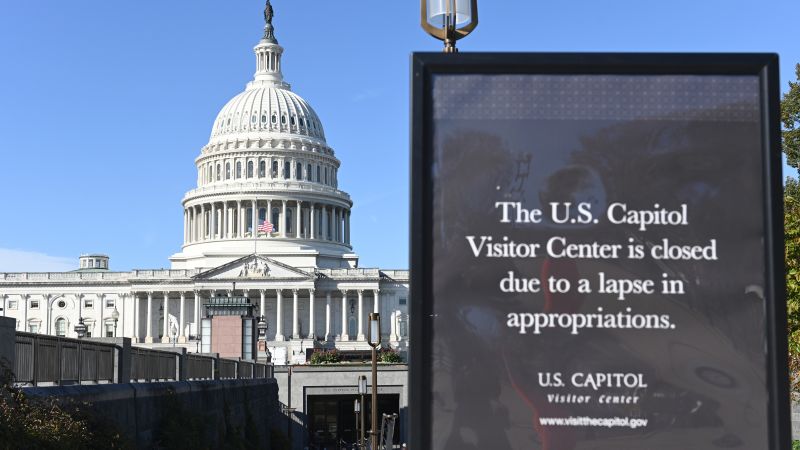
Senators Vote to Block Their Pay During Future Government Shutdowns
Senators vote to block their pay during – On Thursday, the Senate took action to prevent its members from receiving compensation during government shutdowns. This legislative move, spearheaded by Louisiana Republican Senator John Kennedy, has sparked debate over the financial implications of shutdowns and the autonomy of lawmakers to control their own salaries. The resolution, which will take effect in November following the midterm elections, aims to ensure that senators’ paychecks are suspended during any federal shutdown, regardless of the duration or cause. The measure’s immediate impact will be felt if another shutdown occurs, potentially saving millions in congressional pay while testing the resolve of lawmakers to forgo compensation.
Historical Context of Shutdowns
The push for the resolution gained momentum after two landmark government shutdowns in the past few months. The first, a 43-day federal government shutdown in 2025, marked the longest such event in over a decade. The second, a record 76-day shutdown of the Department of Homeland Security earlier this year, highlighted the potential for partial closures to become prolonged. These events, which disrupted essential services and sparked concerns about fiscal responsibility, have led to renewed calls for reforms to limit lawmakers’ pay during periods of government inaction.
Senator Kennedy, who has long advocated for measures to curb spending, argued that the resolution would provide a clear framework for ensuring that senators share the financial burden of shutdowns. “This is about accountability,” he stated in a press conference ahead of the vote. “When the government stops functioning, our salaries should stop too. It’s a simple principle, but it’s one that hasn’t been fully implemented before.” The resolution does not require approval from the House or the executive branch, making it a swift and binding action for the Senate.
Despite its procedural simplicity, the measure has raised questions about its constitutional validity. The U.S. Constitution explicitly states that members of Congress must be paid from the Treasury, with no specific exceptions outlined. Critics, however, contend that the resolution could be interpreted as an overreach, as it introduces a scenario where pay is withheld without explicit legislative authority. Kennedy defended the proposal, asserting that it aligns with the spirit of the Constitution and does not violate its provisions. “The document doesn’t specify that pay can be guaranteed during shutdowns. It only mandates that it be paid from the Treasury. If the Treasury is closed, then the pay should be suspended,” he explained.
Political Backing and Debate
The resolution passed in a voice vote, signaling broad support within the Senate. However, not all members were entirely convinced of its legality. Some senators questioned whether the measure could be challenged in court, given the absence of a constitutional exception for shutdowns. Senate Minority Leader Chuck Schumer, a Democrat from New York, expressed confidence in the measure’s viability. “I’m fully behind this, and I believe it has strong backing from both parties,” Schumer said in a statement prior to the vote. “It’s a pragmatic solution that ensures our leaders are not insulated from the consequences of shutdowns.”
While Schumer emphasized bipartisan support, the resolution’s passage has also underscored the Senate’s power to enact such changes independently. Unlike the House, which requires more extensive debate and approval processes for similar measures, the Senate’s ability to pass the resolution without presidential input reflects its unique procedural framework. This has led to discussions about whether the House should follow suit in the coming months, with Speaker Mike Johnson remaining cautious about the possibility. “The House has been considering similar ideas, but we’ll need to reach a consensus,” Johnson said during a recent interview. “It’s not something we’ve finalized yet, but we’re keeping it on the table.”
Lawmakers from both parties have expressed mixed reactions to the resolution. While some, like Kennedy and Schumer, praised its potential to cut costs and promote fiscal discipline, others raised concerns about its practicality. A key debate centers on the definition of “shutdown” and whether partial closures qualify for the pay suspension. For instance, the Department of Homeland Security shutdown earlier this year, though extensive, was not a full government shutdown. This distinction could affect how the measure is applied in future scenarios.
The resolution’s implementation is contingent on the Senate’s decision to withhold pay starting in November. This timing is strategic, as it aligns with the midterm elections, where lawmakers may seek to appeal to voters by demonstrating a commitment to fiscal responsibility. However, the measure also raises questions about its effect on legislative productivity. If senators are forced to forgo pay during shutdowns, could it lead to reduced enthusiasm for critical legislative work? Or might it serve as a deterrent against prolonged shutdowns, encouraging swift resolutions to prevent financial losses for both the government and its members?
Implications for Future Governance
Supporters of the resolution argue that it sets a precedent for accountability, ensuring that lawmakers do not benefit from government inaction. “When the government is shut down, the people are the ones who suffer. It’s only fair that the ones making the decisions also face some of the consequences,” said a Senate aide who spoke on condition of anonymity. This sentiment echoes the growing public frustration with shutdowns that have disrupted services like border security, healthcare, and national defense.
Opponents, however, warn that the measure could be used as a political tool to pressure the opposing party. They point to the 2025 shutdown, which was primarily driven by disputes over funding for the border wall, as an example of how such tactics might be leveraged. “While the intent is to promote fiscal responsibility, this could also be a way to force compromises by threatening to cut pay,” noted a Republican analyst. The resolution’s immediate effect will be limited, but its symbolic value is significant, signaling a shift in how lawmakers view their own compensation in relation to government operations.
As the Senate prepares to implement the new rule, attention will turn to the House and whether it adopts a similar measure. While Johnson has not confirmed plans for a House version, he acknowledged that the idea is under consideration. “The House has some proposals in the works, but they’re still in the early stages of discussion,” he said. The potential for a House resolution could lead to a broader agreement on limiting pay during shutdowns, though differences in legislative priorities may slow the process.
The resolution also highlights the Senate’s ability to act unilaterally on matters of compensation, which has historically been a point of contention. While the House often requires more consensus for such changes, the Senate’s quick action underscores its flexibility. This could have long-term implications for how future debates on pay and funding are structured, with senators potentially using the resolution as a template for other fiscal reforms. Regardless of its future adoption in the House, the measure has already reshaped the conversation around government shutdowns and the financial obligations of lawmakers.
CNN’s Ellis Kim contributed to this report, providing insights into the political and procedural aspects of the resolution. The decision to block pay during shutdowns represents a small but meaningful step in the ongoing effort to balance legislative power with fiscal accountability. As the U.S. government navigates potential future shutdowns, the new rule may serve as a reminder that even those in the highest ranks of government are not exempt from the consequences of their actions.





