
Russian Aircraft Intercepts UK Carrier Strike Group in Arctic Operation
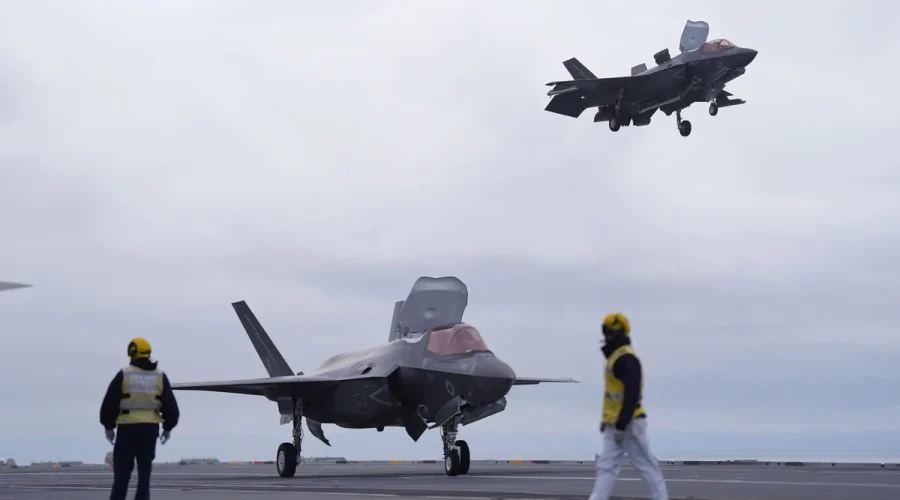
F 35 jets intercepted Russian plane – Last week, the UK’s Carrier Strike Group faced an unexpected encounter with a Russian maritime patrol aircraft in the Arctic region, which the Ministry of Defence (MoD) described as a deliberate approach. The incident occurred as the group conducted its operations, prompting a swift response from British F-35 fighter jets. According to the MoD, the Russian Bear-F plane maneuvered closely to the HMS Prince of Wales aircraft carrier, raising concerns about the safety and professionalism of the maneuver.
Details of the Encounter
On Thursday of the previous week, the Bear-F aircraft deployed a series of sonobuoys near the HMS Prince of Wales, according to the MoD. These sonobuoys, designed to float on the water’s surface, are used to detect submarines and other vessels through sonar technology. The Russian plane approached at a low altitude, maintaining an unusually close proximity to the carrier, which the UK military deemed a potential risk. Despite attempts to communicate via international frequencies, the Russian aircraft did not respond, leading to the interception by two F-35 jets.
“While operating in the Norwegian Sea as part of Operation Firecrest, the UK’s Carrier Strike Group was repeatedly approached by a Russian ‘Bear-F’ maritime patrol aircraft. The Bear-F passed at low altitude and unnecessarily close to HMS Prince of Wales, dropping a large number of sonobuoys in close proximity to the carrier. This activity was unsafe and unprofessional,” said an MoD spokesperson.
The interception lasted until the Russian plane vacated the area, with the UK jets escorting it to ensure the Carrier Strike Group remained secure. This event underscores the ongoing vigilance required in the Arctic, where strategic interests and potential tensions between nations are increasingly evident. The Bear-F, capable of serving both reconnaissance and bomber roles, is believed to have deployed tens of sonobuoys during the encounter, further intensifying the situation.
UK Carrier Strike Group Deployment
The UK’s Carrier Strike Group is currently stationed off the coast of Iceland, operating under NATO command. This deployment includes the flagship HMS Prince of Wales, the Type 45 destroyer HMS Duncan, and a contingent of F-35 jets. Supporting the group are Merlin and Wildcat helicopters, along with the RFA Tidespring, which provides logistical and operational assistance. The presence of 1,500 British personnel on board highlights the scale of the mission and the commitment to maintaining maritime security in the region.
The Arctic operations are part of broader NATO efforts to monitor and respond to activities in strategic waters. The Bear-F’s approach near the HMS Prince of Wales has drawn attention to the importance of air superiority in such regions. The MoD emphasized that the incident was not an isolated occurrence, reflecting a pattern of behavior by Russian forces that requires sustained countermeasures.
Defence Secretary’s Remarks on Russian Threats
Defence Secretary Dan Jarvis visited the HMS Prince of Wales over the weekend, engaging with UK forces stationed aboard the carrier. During his visit, he addressed the growing concerns surrounding Russian military activity, stating, “We should be clear-eyed about the fact that the threat from Russia exists in every domain, under the water, on the water, on the land, in the sky, in space, and in cyberspace as well.” Jarvis reiterated the need for Europe to strengthen its defense posture, acknowledging that recent statements from American officials highlight the urgency of the situation.
“Some of what the Americans have said in recent times is absolutely right,” Jarvis added. “Europe does need to step up and ensure that we have the resources necessary to protect our nation.” He also praised Andy Burnham, the likely next prime minister, for his understanding of the importance of national defense, asserting that Burnham would prioritize securing the UK’s interests.
These comments come amid heightened tensions between the UK and Russia, with the Bear-F incident serving as a recent example of the latter’s assertive tactics. Jarvis’s emphasis on multilateral cooperation underscores the interconnected nature of modern military threats. The Defence Secretary’s visit to the carrier also provided an opportunity to assess the readiness of the forces and their preparedness for potential escalations.
Additional News and Context
Meanwhile, the football world focused on England’s historic victory over Mexico in the World Cup 2026 qualifiers, with fans celebrating in pubs across the country. The triumph marked a significant milestone, leading to widespread enthusiasm among supporters. However, the excitement was briefly interrupted when Jordan Henderson, a key player for England, was hospitalized following a freak injury during a post-match celebration. His condition remains under review, but the incident has sparked discussions about the risks of high-intensity sports events.
Transfer news updates also dominated headlines, with several clubs eyeing potential deals. Arsenal is reportedly considering a striker acquisition, while Manchester United and Chelsea are exploring options to bolster their squads. Liverpool’s latest transfer moves, including interest in Guimaraes, have added to the anticipation around the upcoming season. These developments highlight the dynamic nature of the football market and the strategic decisions shaping the future of top-tier teams.
The combination of military and sports news reflects the diverse interests of the UK public, even as global events continue to influence both domains. The Bear-F incident serves as a reminder of the critical role played by air assets in modern naval operations, while the football matches provide a moment of national pride and unity. As the Carrier Strike Group continues its mission, the MoD remains vigilant, ready to respond to any potential threats in the Arctic and beyond.