
Farage told to ‘level with the public’ about support from convicted fraudster George Cottrell
Farage told to level with the public – Labour has intensified its push for Nigel Farage to disclose the full extent of financial backing he received from George Cottrell, a former fraudster. The call for transparency comes as new revelations emerge about the extent of Cottrell’s influence, including reports of funding for staff, security, and access to a London townhouse, as highlighted by The Sunday Times.
Scandal Over Financial Ties Sparks Political Firestorm
The controversy deepens as Cottrell’s connections to Farage are scrutinized. According to the Sunday Times, the ex-Ukip activist provided support that extended beyond mere donations, reportedly covering expenses for personal and campaign-related activities. This has raised questions about whether Farage’s political actions were indirectly bolstered by Cottrell’s criminal history, which includes a 2017 conviction for wire fraud in the United States.
“Reform’s excuses for the scandals engulfing Nigel Farage are getting pathetically weak. His top team must be wondering how many more times they will be wheeled out to defend the indefensible only for the rap sheet against him to grow just hours later.”
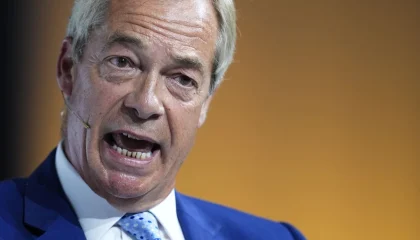
Labour Party chair Anna Turley has urged Farage to stop deflecting blame and instead acknowledge the implications of his association with Cottrell. “Nigel Farage must come out of hiding and level with the public,” she said, emphasizing the need for accountability. The Cabinet minister and Redcar MP criticized the political establishment for targeting Farage, suggesting they are using the allegations to undermine Reform UK’s growing influence.
Rules and Responsibilities Under Scrutiny
Under the rules governing MPs at the time of Farage’s 2024 election, he was required to register gifts exceeding £300, provided they were linked to his political activities. While he reported a £9,000 trip to Belgium donated by Cottrell, he only recently added a £15,000 expense for a US domestic flight, leaving other forms of support unaccounted for. This has sparked debate over whether the financial assistance from Cottrell should have been disclosed under the same rules.
Labour and the Liberal Democrats have joined forces to demand that Parliament’s standards commissioner investigate not only the £5 million gift from crypto-billionaire Christopher Harborne but also the potential irregularities involving Cottrell. The inquiry follows reports that Farage lobbied the Bank of England governor to halt plans for a state-backed digital currency, raising concerns about conflicts of interest.
Farage Defends His Actions Amid Growing Pressure
Farage has dismissed the allegations as part of an “establishment hit job,” insisting he has adhered to all regulations. In a recent statement, he stated, “I have done no wrongdoing, followed the rules, and I am now considering legal action against The Sunday Times.” His comments reflect a broader frustration with what he calls a political campaign to weaken Reform UK’s credibility.
Reform UK’s Treasury spokesman Robert Jenrick defended the relationship, noting that Cottrell is an “old friend” of Farage and holds “no formal role within Reform.” Despite this, the Sunday Times revealed that Cottrell distributed a business card bearing his name, the Reform UK logo, and Farage’s official email address, implying a more direct involvement than Jenrick acknowledged. The card was reportedly handed out before the general election, further complicating the narrative.
The Convicted Fraudster’s Role in Farage’s Campaign
Cottrell, who was jailed for eight months in 2017 for wire fraud, admitted to orchestrating a scheme that defrauded criminals on the dark web by impersonating a money launderer. His conviction has become a focal point in the current controversy, with critics arguing that his financial support for Farage’s campaign could have been seen as a reward for his criminal behavior.
Farage’s relationship with Cottrell dates back to the early days of Ukip, when the latter was a volunteer. The bond has continued, with Cottrell reportedly remaining a close adviser even after his sentencing. This ongoing connection has fueled accusations that Farage’s political activities may have been influenced by Cottrell’s illicit dealings, particularly in light of his recent advocacy for cryptocurrency.
Investigation and Possible Consequences
Parliament’s standards commissioner, Daniel Greenberg, is already examining whether Farage should have registered the £5 million gift from Mr Harborne. If the inquiry finds that he failed to disclose Cottrell’s support, the MP could face sanctions such as a Commons suspension. Such penalties might trigger a recall petition, forcing a by-election in his constituency.
Labour has also called for a financial watchdog probe into Farage’s role in promoting cryptocurrency. The party argues that his lobbying efforts could have benefited Reform UK’s key donor, Mr Harborne, raising questions about potential influence on policy decisions. This has added another layer to the scrutiny surrounding Farage’s financial relationships.
Cottrell’s continued involvement with Farage is underscored by his recent activities. The Sunday Times reported that he funded three social media staff members before the election and still allows access to a five-storey Georgian property near Buckingham Palace. These details suggest a sustained, behind-the-scenes influence that may have been overlooked in initial disclosures.
As the investigation unfolds, Farage faces mounting pressure to clarify the nature of his support from Cottrell. The political landscape is shifting, with Labour and Liberal Democrats positioning themselves as champions of accountability. Meanwhile, Farage’s team remains focused on defending their actions, even as new evidence emerges to challenge their narrative.
The debate over transparency in political financing is intensifying, with critics arguing that the current system allows figures with questionable pasts to maintain influence. As the standards commissioner’s findings take shape, the spotlight on Farage could illuminate broader issues about the ethics of political donations and the role of private individuals in shaping public policy.