
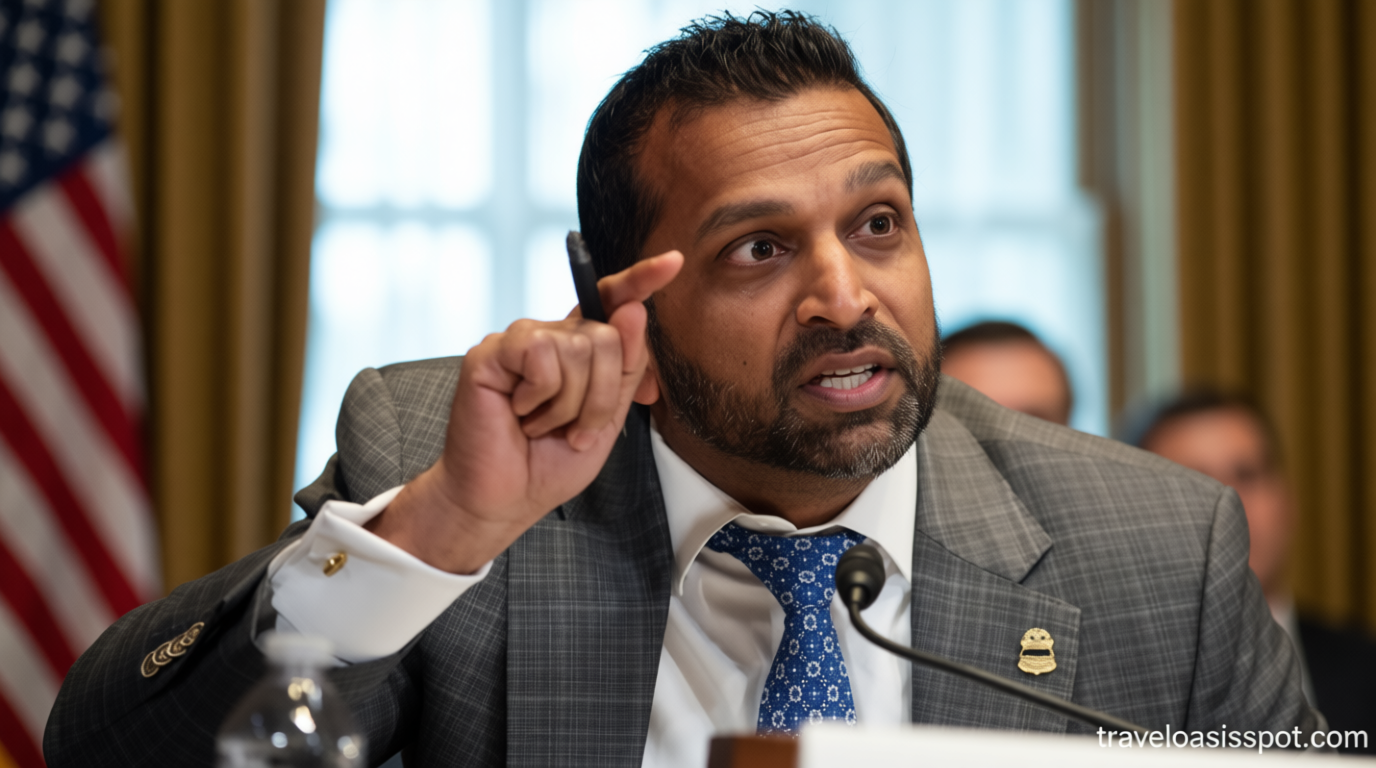
FBI Director Patel spars with lawmaker who raises reports of his behavior during Hill testimony
FBI Director Patel spars with lawmaker – During a Tuesday afternoon session of the Senate Appropriations Committee, FBI Director Kash Patel found himself in a contentious exchange with Senator Chris Van Hollen, a Maryland Democrat, over allegations of personal conduct. The meeting, part of a broader discussion on funding and oversight, took an unexpected turn when Van Hollen directly challenged Patel’s leadership. The senator highlighted recent media reports suggesting the director has engaged in excessive drinking, a claim that sparked immediate rebuttals from Patel. This verbal clash underscored the growing scrutiny surrounding Patel’s tenure and his ability to manage the FBI’s counterintelligence operations.
Van Hollen’s opening remarks laid the groundwork for the debate, emphasizing concerns about Patel’s public responsibilities. “Director Patel, I don’t care one bit about your private life,” the senator declared, his tone firm. “I don’t give a damn what you do on your own time and your own dime, unless and until it interferes with your public duties.” This statement, delivered in a clear and assertive manner, set the stage for the allegations. The senator cited reports from The Atlantic, which detailed incidents of Patel’s excessive drinking and unexplained absences. According to the article, these episodes had alarmed colleagues, casting doubt on his reliability in high-stakes roles.
“Director Patel, come on. These are serious allegations that were made against you,” Van Hollen said, his frustration evident.
Patel, however, dismissed the claims as exaggerated. During the hearing, he defended his conduct, asserting that he had never been drunk at work. “I’ve never been caught in a state of intoxication during official duties,” he stated. The director also pointed to the recent firing of counterintelligence agents, a move he argued was necessary to address internal challenges and maintain operational integrity. “The FBI cannot afford to have staff who are unreliable or compromised,” Patel explained, framing the issue as one of professional accountability.
Van Hollen, meanwhile, tied the allegations to the broader context of the FBI’s actions. He noted that the agency had sent subpoenas to reporters, potentially seeking to control the narrative around Patel’s behavior. “This isn’t just about your personal habits,” the senator said, “it’s about how you’re handling the agency’s responsibilities.” The senator’s comments suggested a perception that Patel’s leadership was being influenced by personal matters, which could jeopardize the FBI’s effectiveness in monitoring threats from Iran.
As the hearing progressed, the tension between the two officials escalated. Patel, seizing the opportunity, retaliated by accusing Van Hollen of associating with a known felon. The senator had met with Kilmar Abrego Garcia, a man mistakenly deported to El Salvador, during a previous session. Patel used this as a counterpoint, implying that Van Hollen’s credibility was compromised by his connections to Garcia. “You can’t just sling margaritas with a known felon and call it leadership,” Patel said, drawing a sharp contrast between Van Hollen’s personal actions and his public role.
“You cannot perform those public duties if you’re incapacitated,” Van Hollen said, pointing to instances where Patel’s staff had to force entry into his home due to his apparent intoxication.
Van Hollen swiftly denied the accusation, insisting that no alcohol was consumed during the meeting with Garcia. “That’s not what happened,” he clarified, emphasizing that the encounter was professional and necessary. The senator argued that the focus should remain on the allegations against Patel, not on his own interactions. “The issue here is whether the director is fit to lead,” Van Hollen stated, his tone unwavering. This back-and-forth highlighted the ideological divide between the two officials, with Van Hollen advocating for transparency and Patel defending his personal conduct.
The exchange took a dramatic turn when Van Hollen proposed a test to assess Patel’s drinking habits. The senator referenced a military-style evaluation, suggesting it could determine whether the director’s behavior posed a risk to his job performance. “I’ll take any test you’re willing to,” Patel replied, his response both defiant and open. The director challenged Van Hollen to match his own commitment to accountability, stating, “Let’s go. Side by side.” This challenge underscored the intensity of the debate, as both men sought to assert their authority in the proceedings.
As the hearing continued, the focus remained on the credibility of the reports and their implications for the FBI’s operations. Van Hollen’s allegations, though specific, raised questions about the director’s leadership style and the agency’s handling of internal conflicts. Patel’s counterattack, meanwhile, sought to shift the narrative, framing the senator’s actions as evidence of bias. The exchange, though brief, revealed deeper tensions within the political landscape, as each side tried to validate their stance.
The controversy also sparked discussions about the role of media in shaping public perception of government officials. The Atlantic’s report had become a focal point, with critics arguing that it provided credible evidence of Patel’s behavior, while defenders claimed it was a sensationalized account. Patel’s decision to sue the publication added another layer to the debate, as he sought to discredit the narrative and protect his reputation. The legal action, however, did little to quell the political heat, with the senator’s claims gaining traction among colleagues and the public.
Senate Appropriations Committee members observed the clash with interest, noting that the hearing had become a microcosm of the larger ideological battles within Congress. The discussion on funding and oversight had evolved into a personal and professional showdown, with each senator’s statements reflecting their priorities. Van Hollen, known for his investigative approach, framed the conversation as a necessary check on executive power, while Patel emphasized the need for unity and focus on national security threats.
As the session concluded, the debate over Patel’s conduct remained unresolved. The senator’s allegations and the director’s rebuttals had left the committee with more questions than answers, setting the stage for further scrutiny. The incident not only highlighted the personal dynamics at play but also underscored the challenges of maintaining public trust in leadership. With the FBI at the center of political discourse, the outcome of this exchange could have lasting implications for the agency’s credibility and the director’s ability to navigate the remaining months of his term.
The hearing served as a reminder of how personal conduct can intersect with institutional responsibility, creating a complex web of accountability. For Van Hollen, the moment was an opportunity to push for transparency, while for Patel, it was a chance to defend his image. The senator’s willingness to challenge the director’s actions, even in the face of counterattacks, demonstrated his commitment to holding leaders to the same standards. Meanwhile, Patel’s response suggested a strategic effort to reframe the narrative, positioning himself as a resolute figure in the face of criticism.
Ultimately, the exchange reflected the broader tensions between personal and professional conduct in public service. As the committee moved forward, the details of Patel’s behavior and Van Hollen’s accusations would likely continue to influence the political landscape. The meeting had already sparked conversations about the balance between accountability and discretion, with implications for how officials are judged in an era of heightened scrutiny. Whether the test proposed by Van Hollen would be implemented or not, the hearing had marked a pivotal moment in the ongoing debate over leadership and integrity within the FBI.





