
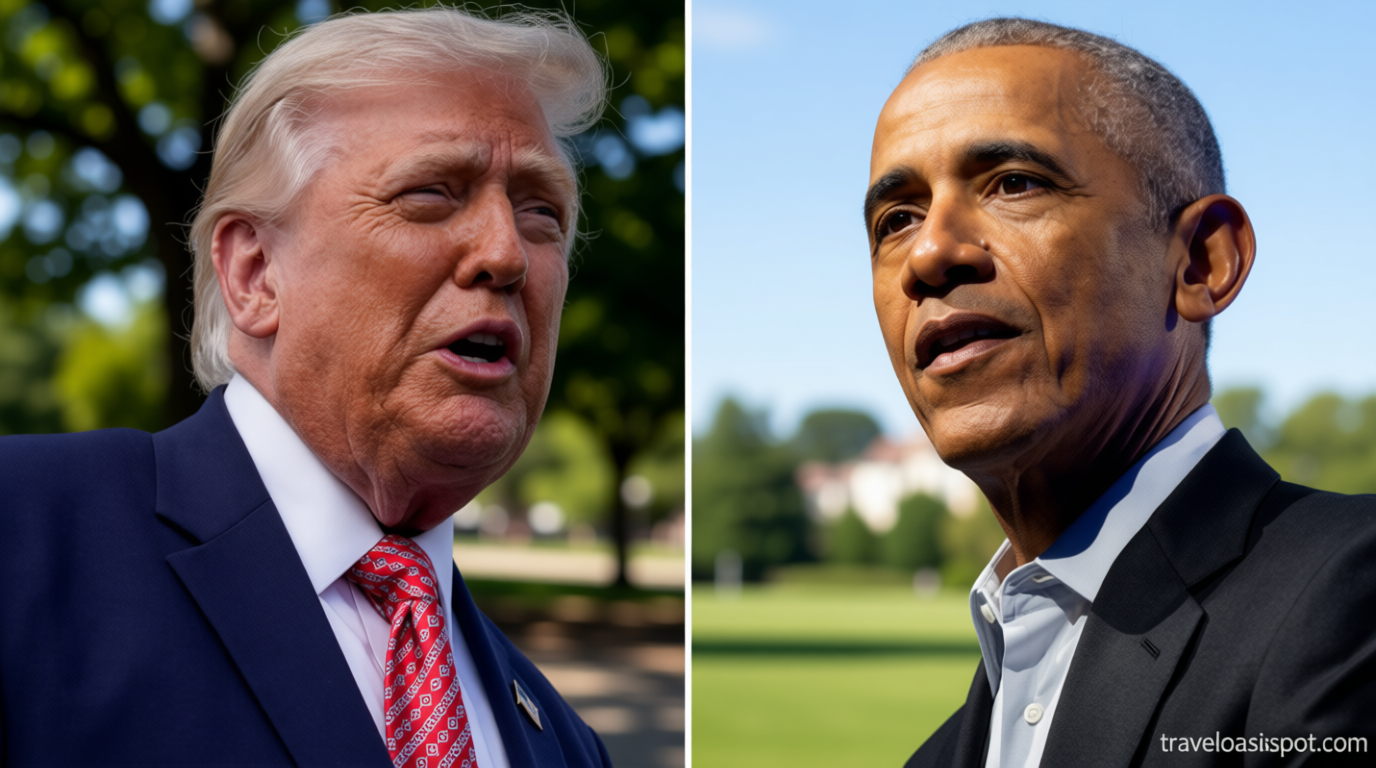
Trump’s Late-Night Posting Spree Targets Obama with Fabricated Claims
In wild late night posting spree – Donald Trump, the former president, intensified his social media activity during a notable late-night posting spree, launching a series of attacks on former leader Barack Obama. This late-night posting spree, which began late Monday and continued into Tuesday, featured a mix of debunked theories and misleading statements, aiming to reframe political narratives and reinforce his claims of systemic betrayal. Over several hours, Trump’s posts centered around past elections, his opponents, and a cascade of sensationalized allegations, all designed to generate attention and drive engagement on digital platforms.
Fake Quotes and Misattributed Claims
A key element of the late-night posting spree involved a fabricated quote attributed to Louisiana Senator John Kennedy. The statement claimed Obama had improperly received $120 million under his healthcare reform initiative, a figure not supported by his administration’s records. The
“Kennedy” demanded that Obama return $120 million that the former president supposedly earned in connection with his Obamacare health care law
was later traced back to a satirical publisher known for crafting deceptive stories targeting conservatives. This tactic of misattribution is a recurring feature of Trump’s digital strategy, often used to bolster his claims with the perceived authority of credible sources.
Fact-checking organizations like Lead Stories highlighted the recurring use of this method, noting that the accusation about Obama’s financial dealings was spread across multiple platforms. Kennedy, when asked by NOTUS, stated:
“Somebody told me there was something floating around on the internet about me accusing President Obama of stealing $120 million or something. I didn’t say that. I don’t know the basis of it.”
Such instances underscore how the late-night posting spree leverages fragmented narratives to create confusion and amplify misinformation.
Wiretapping Allegations and Historical Claims
During the late-night posting spree, Trump revisited the claim that Obama wiretapped Trump Tower in 2016, referencing a video that included the late John F. Kennedy Jr. The clip described Obama’s actions as “a million times worse than anything Nixon did during Watergate,” with the former president given the code name “Renegade.” However, the Justice Department had previously stated there was no evidence to support the wiretapping accusation. This recurring theme of historical exaggeration is a hallmark of Trump’s approach to social media campaigns, often blending old claims with new ones to sustain audience interest.
Other posts in the spree recycled unfounded conspiracy theories about the Obama administration, including the assertion that Hillary Clinton used a private email server to leak classified information. These claims, while popularized during the 2016 election, have since been debunked by multiple investigations. The late-night posting spree also introduced a fabricated “Birth Certificate Scandal,” which was used to question Obama’s eligibility for the presidency, despite no credible evidence supporting the claim.
Strategic Reposting and Unsubstantiated Allegations
Trump’s late-night posting spree included a video featuring Tulsi Gabbard, who at the time was a presidential candidate, making baseless claims about Obama and Clinton influencing Biden’s administration. The video was cited as part of a broader pattern of “reigning in” political leaders, even though Gabbard provided no evidence to back her assertions. Another post accused Obama of orchestrating a treasonous plot, labeling him a “Trojan horse for the Marxists,” a charge with no factual foundation.
These late-night posting spree tactics often rely on emotionally charged language to provoke immediate reactions. By repurposing content and assigning it to credible figures, Trump’s strategy aims to create the illusion of truth, even when the original sources are satirical or unrelated. The repetition of these claims across platforms underscores the effectiveness of such methods in shaping public perception, particularly in the fast-paced environment of social media.
2020 Election Disinformation and Recurring Patterns
The late-night posting spree also revived conspiracy theories from the 2020 election, which Trump lost to Joe Biden. Posts referenced former national security adviser Michael Flynn, who falsely claimed the election had been “stolen” despite official certifications confirming its legitimacy. These recycled narratives serve to maintain a consistent attack pattern, linking past events to current political dynamics. The repetition of such claims during the late-night posting spree suggests a deliberate effort to keep the conversation alive and reinforce the narrative of election fraud.
Throughout the late-night posting spree, Trump





