
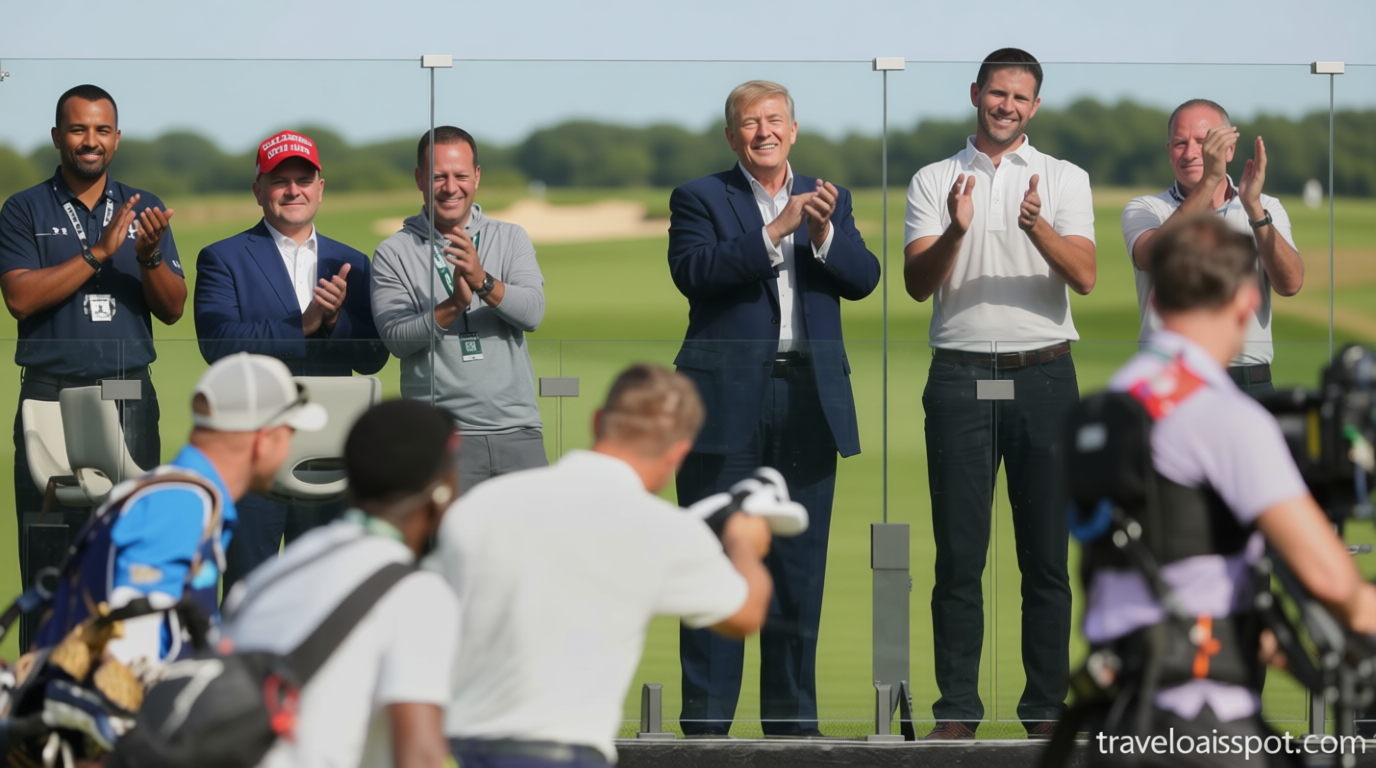
Trump’s role as LIV Golf host renews scrutiny over conflicts of interest
Trump s role as LIV Golf – The recent hosting of a LIV Golf event by President Donald Trump at his Virginia estate has sparked renewed debate about potential ethical dilemmas. Critics argue that the Trump family may be profiting from the president’s office while aligning with a golf league funded by Saudi Arabia, a nation under investigation for human rights violations. This situation has drawn particular attention as the government in Riyadh has long been accused of supporting a project that could undermine global perceptions of its governance.
Ethics in Question
For years, Trump’s golf courses have served as a platform for LIV Golf, a league backed by Saudi Arabia’s Public Investment Fund. The partnership has been scrutinized for its implications, with experts questioning whether the Trump administration is prioritizing financial interests over moral considerations. The Saudi government’s decision to halt funding for LIV after the 2026 season has not entirely quelled these concerns, as the league continues to operate under its financial support.
The controversy deepens when considering Saudi Arabia’s broader strategy in sports. The kingdom has invested heavily in global sports initiatives, including its soccer league, which has signed top athletes to elevate its international profile. In 2021, it secured a 10-year agreement with Formula 1 to host annual races, further embedding itself in high-profile sporting events. These actions have led to accusations of “sportswashing,” a term used to describe how nations use sports to mask political or social controversies.
“Saudi Arabia is a murderous, authoritarian, anti-democratic region,” said Kathleen Clark, a law professor specializing in government ethics at Washington University in St. Louis. “The president’s willingness to engage with this league is a clear example of his priorities.” Clark’s statement underscores the tension between Trump’s public role and his private business ventures, which critics claim are receiving undue influence through his political position.
Financial Transparency Concerns
Several ethics experts have expressed unease about the lack of transparency surrounding Trump’s financial dealings. The president’s assets are managed through a trust controlled by his children, and he has asserted that his time in office is separate from his business activities. However, the hosting of LIV events at his properties challenges this claim, with analysts suggesting that the Trump family could be benefiting from the league’s success.
“There are no conflicts of interest,” stated White House spokeswoman Anna Kelly in a statement to CNN last year. Yet, this assertion has been met with skepticism. Richard Painter, a corporate law professor at the University of Minnesota Law School, warned that the issue extends beyond golf tournaments. “This is just the beginning,” he told CNN. “The message has been sent globally: if you want to align with the Trump administration, partner with the Trump family or their golf ventures.”
The Saudi Arabian government has consistently denied allegations of human rights abuses, including the 2018 killing of Jamal Khashoggi. Officials maintain they had no knowledge of the journalist’s death and have criticized reports as biased. Despite these denials, the incident remains a focal point for critics, who argue that the golf league’s presence in Trump’s media empire serves as a subtle endorsement of Saudi policies.
Broader Business Ties
The golf events are just one of several instances where Trump’s business interests intersect with his presidential duties. During his second term, the administration has accepted a $400 million luxury jet from Qatar, dined with wealthy cryptocurrency investors, and sold a Trump-branded smartphone. These actions have fueled debates about whether the president is prioritizing private gains over public accountability.
For example, Trump’s recent engagement with his cryptocurrency coin has drawn criticism for its perceived ties to influential backers. Critics note that the White House has hosted dinners with individuals linked to the project, raising questions about the potential influence of these financial relationships on policy decisions. Similarly, the promotion of his Scotland golf properties has been seen as a way to capitalize on his political standing, even as he navigates international scrutiny.
During a meeting with Saudi Crown Prince Mohammed bin Salman last year, Trump’s remarks on Khashoggi’s murder highlighted the administration’s approach to human rights issues. When asked about the journalist’s killing, the president dismissed the question, calling Khashoggi “extremely controversial” and suggesting the incident was used to embarrass the crown prince. Trump also insisted that bin Salman had no knowledge of the event, a claim that has been contested by intelligence agencies.
Despite the Saudi government’s efforts to distance itself from the allegations, Trump’s public praise for the crown prince during their meeting has raised eyebrows. The event, which bore the hallmarks of a state visit, saw the president laud bin Salman’s record on human rights, a stance that critics argue contradicts the evidence. This duality has intensified questions about whether Trump’s personal and political interests are being conflated.
Meanwhile, LIV Golf’s presence at Trump’s properties has provided a new venue for the league to expand its reach. The tournament, held in Sterling, Virginia, coincided with Trump’s participation in another professional event at his Doral, Florida course. This pattern of hosting events at his own facilities has drawn comparisons to previous instances where his business interests were intertwined with public affairs.
As the Trump administration continues its tenure, the focus on conflicts of interest remains sharp. While officials have defended their actions, the accumulation of these business ties has created a complex web of potential ethical violations. Analysts argue that the lack of clear boundaries between Trump’s personal ventures and his public responsibilities could erode public trust in his leadership.
In an effort to address these concerns, the White House has emphasized that Trump’s assets are in a trust managed by his children, ensuring that his family’s financial interests are distinct from his presidential duties. However, the continued association with LIV Golf and Saudi Arabia’s funding sources has left many skeptical. The league’s connection to the kingdom’s human rights record, coupled with Trump’s active involvement, has painted a picture of strategic alignment rather than neutrality.
As the debate over Trump’s ethical conduct evolves, the implications of his business decisions extend far beyond golf. The administration’s acceptance of gifts, partnerships, and promotional opportunities has been seen as a sign of prioritizing private interests. Whether these actions are viewed as opportunistic or justified depends on the perspective of those evaluating the president’s influence on policy and public opinion.
Conclusion
Trump’s hosting of the LIV Golf event has reignited discussions about the balance between public service and personal profit. The connection to Saudi Arabia’s funding and its human rights record has placed the Trump family at the center of these ethical questions. As the nation grapples with the potential conflicts, the events at Trump’s properties serve as a reminder of the challenges in maintaining transparency in leadership. The ongoing scrutiny reflects a broader concern about the influence of private interests on political decisions, a debate that is far from settled.





