King Honors 20th Anniversary of Royal Regiment of Scotland with Statue Unveiling
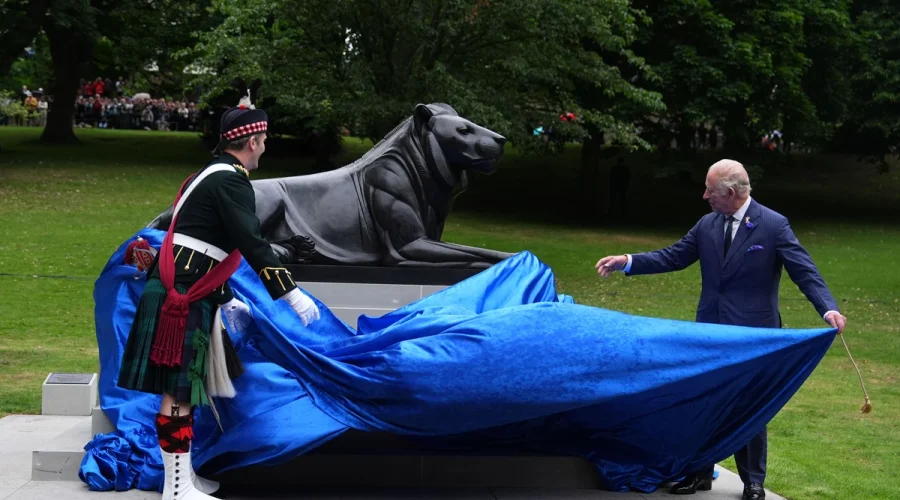
King celebrates achievements of Royal Regiment – On the occasion of its 20th anniversary, King Charles marked the milestones of The Royal Regiment of Scotland by unveiling a bronze statue that symbolizes the regiment’s commitment to service, sacrifice, and enduring pride. The ceremony, held in Edinburgh’s Princes Street Gardens, brought together serving personnel, their families, and veterans to witness the event, which celebrated the unit’s legacy and contributions to the British military.
A Symbol of Military Excellence and Valor
The King, who serves as the regiment’s Colonel-in-Chief, highlighted the unit’s remarkable achievements during the unveiling. “Your battalions have consistently ranked among the most operationally deployed in the British Army, demonstrating professionalism, adaptability, and courage in every theatre,” he stated. This acknowledgment underscored the regiment’s role in global conflicts and its steadfast dedication to national service.
“Your battalions have consistently ranked among the most operationally deployed in the British Army, demonstrating professionalism, adaptability, and courage in every theatre.”
Charles also paid tribute to the sacrifices made by the regiment’s members, noting that these high standards are achieved through dedication and risk. “We remember today that these high standards come at a cost,” he added. “We remember therefore with solemn pride the 23 officers and soldiers who have been killed in action since 2006, their sacrifice is the foundation upon which your reputation stands, and their memory endures in the regiment’s spirit and purpose.”
Ceremonial Traditions and Historical Significance
Before the statue unveiling, the regiment participated in the Freedom of the City of Edinburgh ceremony. In full ceremonial dress, the troops paraded from the Palace of Holyroodhouse, the King’s official residence, through the city center. The procession passed by the City Chambers, where the Lord Provost and Lord Lieutenant of Edinburgh received the salute. This tradition, rooted in the regiment’s long-standing connection to the region, highlighted its cultural and military importance.
The Royal Regiment of Scotland holds a distinguished position as the senior line infantry regiment of the British Army. Formed on March 28, 2006, by merging six existing Scottish infantry units—the Royal Scots, the King’s Own Scottish Borderers, the Royal Highland Fusiliers, The Black Watch, The Highlanders, and the Argyll and Sutherland Highlanders—the regiment represents a legacy of service and unity. Its formation marked a significant step in consolidating Scotland’s military heritage into a single, cohesive force.
“The distinction and reputation of the regiment is reinforced still further by the ceremonial duties you conduct, perhaps most notably three years ago now for our coronation, but also so movingly, following the death of the late Queen, your former colonel-in-chief.”
Charles emphasized the symbolic weight of the statue, which serves as a testament to the regiment’s enduring values. “In unveiling this statue, we reaffirm the trust placed in this regiment to uphold its gallant heritage to serve with distinction, and to honor those who have gone before,” he said. “May this monument stand as a symbol of service, sacrifice, and enduring pride for generations to come.”
Sculptor’s Vision: A Lion of Resilience and Readiness
The statue, crafted by Edinburgh-based artist Kenny Hunter, was selected after winning a competitive design process. Hunter’s work captures the essence of a young soldier poised for action, embodied by a bronze lion in a relaxed yet alert posture. The sculpture’s details reflect both the regiment’s strength and its readiness to respond to challenges.
“It’s reclining and in a relaxed pose, but you get the sense it’s seen something on the horizon that has piqued its interest.”
When asked about the lion’s symbolism, Hunter explained: “The not yet mature lion represents a soldier still developing their skills, yet fully prepared to face the demands of duty.” This interpretation aligns with the regiment’s ethos of growth and resolve, emphasizing that even in moments of peace, vigilance is essential. “Everybody wants peace, but when things go awry you want people to be ready,” he concluded.
Global Impact and National Identity
The Royal Regiment of Scotland has played a pivotal role in numerous international missions, from Afghanistan to Iraq and beyond. Its 20-year history is marked by contributions to global security and a deep-rooted connection to Scotland’s national identity. The statue, placed in a prominent public space, aims to honor this dual legacy—both as a military unit and as a representation of Scottish resilience.
Charles’s address also touched on the regiment’s evolving role in modern warfare. While acknowledging its combat prowess, he praised the unit for maintaining ceremonial traditions that strengthen its bond with the nation. The coronation parade and the tribute to the late Queen’s former colonel-in-chief illustrate how the regiment balances operational readiness with national symbolism.
Transfer News: Key Developments in Football Recruitment
As the football transfer window heats up, several high-profile moves have captured attention. Arsenal has reportedly pursued a deal for Marseille’s star player Barcola, signaling a potential shift in their midfield strategy. Meanwhile, Manchester United is exploring options to sign a new forward, with Scott emerging as a top target for the Red Devils.
Chelsea, on the other hand, has finalized a major acquisition, securing a deal that has been in the works for weeks. The club’s latest addition is expected to bolster their attacking options ahead of the new season. Liverpool, too, has made progress in their recruitment efforts, with a notable update on their potential signing from a European league.